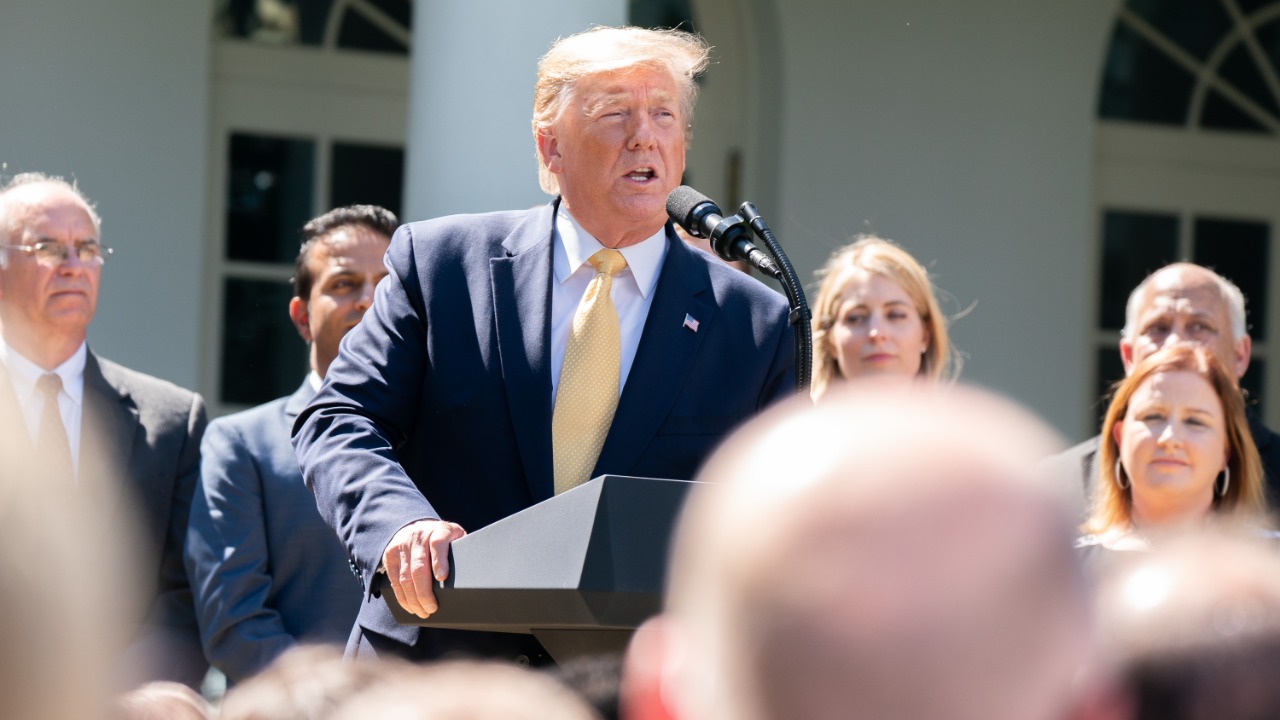
Inflation in the United States is no longer raging, but it is not fully tamed either, and the political response is veering into territory that would have been unthinkable a few years ago. With price growth stuck at 2.7% and households still feeling the sting of higher food and borrowing costs, President Donald Trump is now championing a hard cap on credit card interest rates that would amount to direct price controls on a core piece of consumer finance. I see a collision coming between the promise of quick relief for cardholders and the risks of reshaping the credit market by presidential fiat.
The inflation backdrop Trump is trying to rewrite
The starting point for this fight is an economy where headline price growth has cooled but not disappeared. Recent data show US inflation holding at 2.7%, with core inflation surprising on the upside at 2.6%, a reminder that underlying pressures are still sticky even as central bankers look for room to keep cutting interest rates. Another set of figures underscores the same point, noting that US Inflation Remains Steady 2.7%, which is close to many policymakers’ targets but still high enough to keep real wages and savings under pressure. In that environment, the politics of prices are almost as important as the economics, and the temptation to reach for visible, populist tools is strong.
For households, the headline number only tells part of the story. New figures show prices up 2.7% year over year, but food costs are rising even faster, with food inflation running at 3.1%, which is exactly where families feel the squeeze every time they walk into a supermarket. When I look at that backdrop, it is easy to see why a president would want to be seen taking on the cost of borrowing, especially on credit cards that many Americans now use to bridge the gap between paychecks and grocery bills.
How Trump’s 10% cap would work
Into this fraught landscape, President Donald Trump has stepped with a proposal that would directly limit what lenders can charge on revolving credit. On January 9, 2026, On January 9, 2026, President Donald Trump announced via Truth Social that he supports a temporary 10% cap on credit card interest, with the limit set to apply for two years beginning on January 20, 2026. In that post, President Donald Trump framed the move as a way to stop what he sees as abusive pricing by card issuers, using his Truth Social megaphone to argue that a 10% ceiling would give borrowers breathing room under tighter credit conditions.
The proposal is already rippling through financial markets. Shares in banks and credit card firms have fallen after President Donald Trump floated the cap, with investors suddenly forced to price in the possibility that a major profit center could be constrained by law. The reaction reflects how radical a nationwide 10% limit would be compared with current practice, where the average credit card interest rate is far higher and risk-based pricing is central to how issuers manage borrowers with thin or damaged credit files.
Populist alliances and Republican backlash
What makes this episode even more striking is the strange-bedfellows coalition it has started to create. Senator Elizabeth Warren has said that Trump called her to work on credit card interest rate caps, a remarkable outreach from a Republican president to one of his fiercest Democratic critics on economic policy. According to her account, Trump last week proposed capping credit card interest at 10% in a Truth Social post and then followed up directly, signaling that he is willing to borrow ideas long favored by progressive figures like Elizabeth Warren and Bernie Sanders if it helps him claim the mantle of consumer champion.
Inside his own party, however, the reaction has been far colder. Sudiksha Kochi reports that Many Republicans are flatly rejecting President Trump’s proposal, warning that a hard cap could distort markets and limit access to credit, with some arguing that heavy-handed intervention almost always has unintended consequences. That intraparty split is unusual in an era when Republicans on Capitol Hill have often rallied around Trump’s economic agenda, and it highlights how far this idea sits from traditional conservative skepticism of price controls.
Economic risks: who wins and who loses
From an economic standpoint, the appeal of a 10% ceiling is obvious for anyone carrying a balance at 24% on a card from Capital One or Citi, but the trade-offs are more complicated once I look past the headline. Analysts who have weighed in on President Trump’s proposal to cap credit card interest at 10% note that, while it could save existing borrowers substantial sums, it might also prompt issuers to tighten standards, cut rewards, or introduce new fees to compensate. Right now, the average credit card interest rate is well above 10%, and forcing lenders to accept a lower return on riskier customers could mean that those customers simply lose access to revolving credit altogether.
Wall Street is already gaming out those scenarios. Under threat from Trump, Wall Street banks are wagering they can fend off strict controls by arguing that they are not ripping off credit card borrowers but instead pricing risk in a way that keeps credit widely available. At the same time, Trump economist Kevin Hassett has floated a new idea of a government-branded product, with Kevin Hassett, who serves as National Economic Council Director Kevin Has, suggesting a so-called “Trump card” as an alternative if a blanket 10% cap proves unworkable. That kind of hybrid approach, mixing public branding with private issuance, would mark yet another experiment in using the presidency to reshape consumer finance.
Politics of price controls in an age of 2.7% inflation
What I find most revealing about this episode is how it reframes the politics of inflation now that the headline rate is closer to target. With Inflation still at 2.7%, and food prices up 3.1%, Inflation is not “whipped” in the eyes of many voters, and Trump is seizing on that frustration to justify direct intervention in a market that has long been left to banks and card networks. The fact that he is embracing a tool more commonly associated with Elizabeth Warren and Bernie Sanders shows how fluid ideological lines have become when it comes to punishing perceived corporate excess.
At the same time, the backlash from Many Republicans on Capitol Hill and the alarm in financial markets captured by Jan and Nick Edser at Reuters suggest that this fight is only beginning. Whether the 10% cap becomes law, morphs into a narrower program like a “Trump card,” or simply serves as a bargaining chip, it signals a new willingness by President Donald Trump to use the power of his office to dictate prices in the name of fighting inflation that is officially at 2.7% but feels much higher to many Americans. I expect that tension between statistical success and lived experience to define the next phase of the inflation debate, and credit cards are unlikely to be the last target.
More From The Daily Overview

Silas Redman writes about the structure of modern banking, financial regulations, and the rules that govern money movement. His work examines how institutions, policies, and compliance frameworks affect individuals and businesses alike. At The Daily Overview, Silas aims to help readers better understand the systems operating behind everyday financial decisions.

