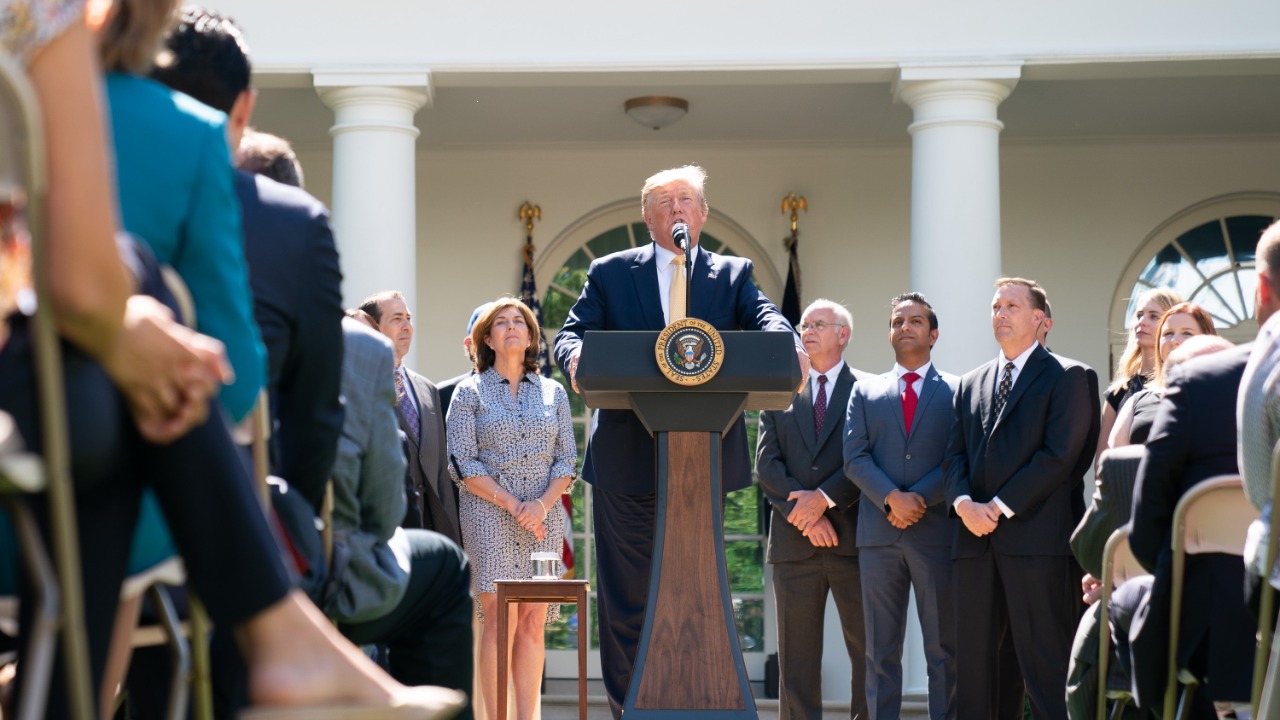
President Donald Trump has finally put a branded health proposal on the table, and the reaction from the policy world has been less a sigh of relief than a collective double take. The Great Healthcare Plan arrives with sweeping promises to slash costs, protect patients and send cash directly to households, yet even seasoned analysts are struggling to map those ambitions onto the fine print. As they work through the documents and speeches, the central story is not just what is in the plan, but how little of it adds up for the people who have to implement it.
At its core, the new framework attempts to recast the federal role in health care financing while preserving President Trump’s political pledge to replace the Affordable Care Act with something “better.” The White House is pitching it as a way to lower premiums, crack down on middlemen and redirect money to families, but the details are scattered across a glossy policy booklet, public remarks and follow up briefings that often raise more questions than they answer.
The big promises and the missing roadmap
The administration’s own blueprint, a document labeled The Great Healthcare Plan, lays out a sweeping vision that ranges from insurance reforms to drug pricing and rural care, but it reads more like a campaign brochure than a legislative draft. In that booklet, the White House describes a multi‑pillar strategy to cut costs, expand choice and protect patients, yet many of the most consequential ideas are framed as aspirations rather than concrete statutory changes, leaving policy professionals parsing each section of the plan for operational detail that often is not there.
President Donald Trump has tried to fill that gap with rhetoric, telling supporters that his Great Healthcare Plan will lower prices for “all Ameri” and send savings “directly to you,” a message amplified in official communications from The White House. In a separate announcement labeled President Trump Announces The Great Healthcare Plan, the administration again leans on broad language about lowering healthcare prices for Ameri without spelling out how those reductions would be measured or enforced, a gap that has left even sympathetic experts asking how the announcement translates into law.
What the policy actually tries to do
When I strip away the slogans, the clearest through line is a shift in how federal dollars flow through the system. In a video outlining the initiative, President Trump says his plan would reduce insurance premiums by “stopping government payoffs to big insurance companies and sending that money directly to you,” a formulation that suggests redirecting existing subsidies into individual accounts rather than traditional marketplace assistance, a concept echoed in reporting on the video. That same framework describes cutting back on insurance subsidies and pairing the shift with a cost‑sharing cap, but it stops short of specifying income thresholds, benefit levels or how the new structure would interact with employer coverage.
On prescription drugs, the administration is leaning heavily on Most Favored Nation style pricing, pledging to codify arrangements that would peg what Medicare pays to the lowest price available in other developed countries. Budget analysts who have reviewed that plank say the Codify Most Favored Nation, or MFN, proposal would likely reduce certain drug costs and generate modest savings, but they also warn that the impact is limited by carve‑outs and implementation risks, a tension that shows up in independent assessments of the MFN policy. The plan also takes aim at pharmacy benefit managers, with Inside Trump advisers signaling a threat to eliminate some prescription drug middlemen entirely, a move described in coverage of Inside Trump that has rattled parts of the pharmaceutical supply chain.
Experts ask how, not just what
Health policy specialists who have spent years modeling insurance reforms say the problem is not only the ambition of the Great Healthcare Plan, but the lack of a clear path from talking points to statutory language. Some analysts quoted in early coverage say it is too early to tell how soon the proposal could affect people’s coverage or costs, especially with Congress likely to rewrite major sections, and they note that even the timing of President Trump’s signature on key components remains uncertain, a point underscored in reporting that asks What comes next. Others have been blunter, arguing that the White House has offered a political brand rather than a governing blueprint, with one prominent critic describing the health gambit as a sham that amounts to only a few paragraphs on a webpage, a searing assessment captured in analysis of Why Trump.
One of the sharpest flashpoints is how the plan treats people with medical histories that made them vulnerable before the Affordable Care Act. Legal and policy experts note that the Great Healthcare Plan Leaves Open Questions for People with Pre, Conditions, because it gestures at protections for those with pre‑existing conditions without replicating the Affordable Care Act’s full set of guarantees, a concern detailed in a quick take that explicitly says the Great Healthcare Plan, Leaves Open Questions for People, Pre, Conditions and contrasts it with safeguards from the Affordable Care Act, as seen in Great Healthcare Plan. Actuaries warn that even subtle changes to underwriting rules or benefit mandates could leave millions of patients with chronic illnesses facing higher premiums or fewer options, a risk that is difficult to quantify without more legislative text.
Industry and rural America push back
While policy wonks pore over the documents, the health care industry has already begun to mobilize against key elements. Several major health care industry groups are publicly opposing President Donald Trump’s new health care plan, arguing in a public statement that the framework would destabilize markets and shift costs onto patients, a coordinated response summarized in a social post that begins, “Several major health care industry groups are publicly opposing President Donald Trump’s new health care plan. Here’s why they say…,” language that appears in a post labeled Several. Trade associations representing insurers, hospitals and drugmakers have signaled that redirecting subsidies into individual accounts and imposing aggressive international reference pricing could squeeze their margins without a clear mechanism to maintain coverage levels.
At the same time, President Trump is trying to sell the plan as a lifeline for rural communities that have seen hospitals close and providers consolidate. In a roundtable focused on rural health, he touted a $50 billion rural health plan funded by cutting Medicaid “waste, fraud, abuse,” saying that funding for the healthcare by an unprecedented $50 billion would improve the condition of rural hospitals and that “Nobody thought that was going to happen,” a line attributed to Tru in coverage of the event, which also notes his claim that “We increased funding for rural, rural communities,” as described in $50 billion. Yet rural health advocates warn that cutting Medicaid to finance new initiatives could leave low‑income patients worse off, especially in states that rely heavily on federal matching funds.
Voters caught between rhetoric and reality
For ordinary Americans, the Great Healthcare Plan is landing as a swirl of lofty promises and technical caveats that are hard to reconcile with their monthly bills. Among the ideas circulating in official summaries is a proposal to redirect funding previously used to offset insurance premium costs directly into Americans’ health savings accounts, a shift that would give individuals more control over spending but also more exposure to risk, a tradeoff described in reporting that notes Among the concepts were moving subsidy dollars into accounts for Among the. One expert, identified as Cox, has warned that the president’s new strategy could create problems for vulnerable Americans, leaving them with no options if subsidies shrink or protections erode, a concern repeated in coverage that quotes Cox saying the changes could affect millions of Americans.
More From The Daily Overview

Nathaniel Cross focuses on retirement planning, employer benefits, and long-term income security. His writing covers pensions, social programs, investment vehicles, and strategies designed to protect financial independence later in life. At The Daily Overview, Nathaniel provides practical insight to help readers plan with confidence and foresight.

