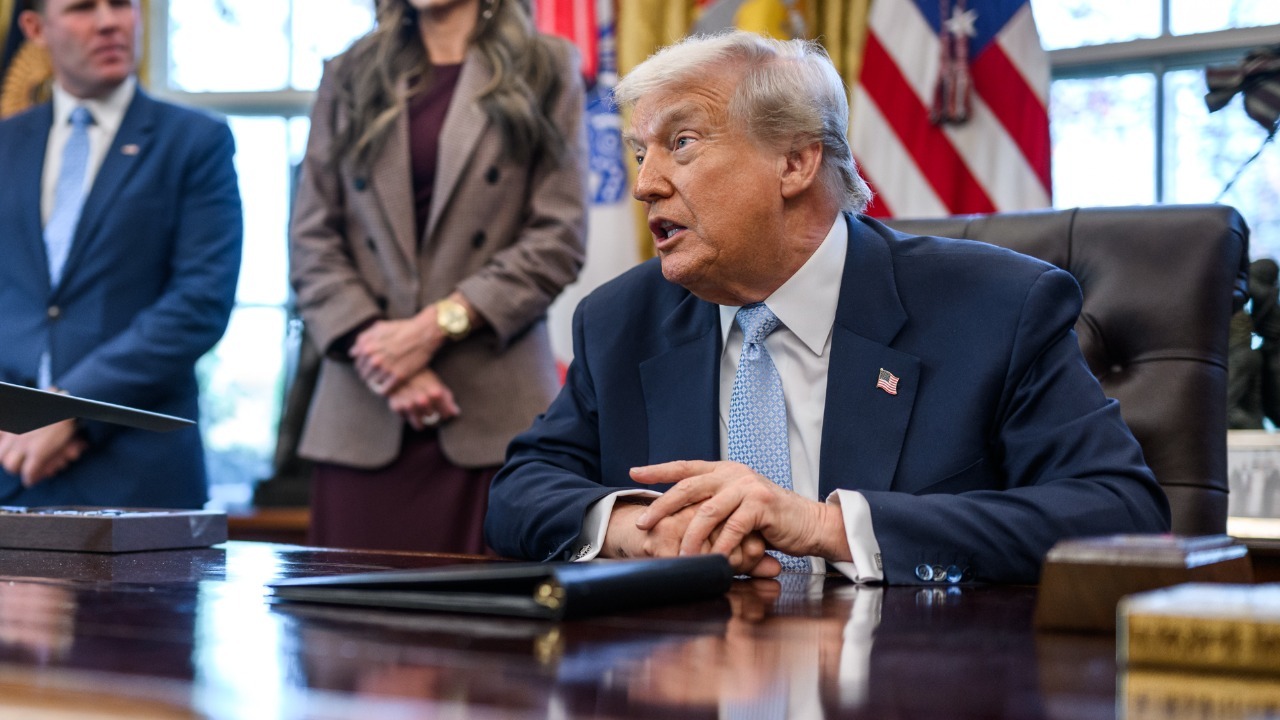
World Liberty Financial’s quiet march toward a federal bank charter has turned a niche crypto experiment into a live test of how far a sitting president’s business interests can reach into the regulated banking system. The firm’s push to become a trust bank is colliding with unresolved questions about conflicts of interest, regulatory independence, and the true risk profile of a token ecosystem closely associated with President Donald Trump’s family. I see the bid as a stress test not only for crypto oversight but for the guardrails that are supposed to separate presidential power from private gain.
The Trumps’ crypto web meets the banking system
The Trumps have not treated digital assets as a side hustle, they have built a sprawling crypto footprint that now includes memecoins, mining operations, and a still-evolving platform called World Liberty Fin. That ecosystem is anchored by World Liberty Financial, often shortened to WLFI, which presents itself as a decentralized finance protocol developed by its namesake company and is reported to be sitting on billions of dollars’ worth of unsold tokens. According to public descriptions, World Liberty Financial (WLFI) is structured to let users earn yields and move value across a network that the Trump family has aggressively promoted.
That promotion has had tangible market effects. On major exchanges, the WLFI token is now tracked as a tradable asset, with one World Liberty Financial token recently priced at $0.183183 USD, up 8.16% over a single day, and tied to a circulating supply of 26.74B. Those figures underscore why the project’s next move matters: a token with that footprint, backed by a president’s family and now seeking a foothold inside the federal banking perimeter, raises questions that go far beyond speculative trading.
A trust bank charter bid with political shadows
World Liberty Financial has now taken the most consequential step yet by applying for a national trust bank charter with the Office of the Comptroller of the Currency, a move that would effectively plug the Trump-linked crypto venture into the core of the U.S. financial system. The company disclosed that it had filed for a national banking license with the Office of the, and separate reporting describes the effort under the banner “World Liberty Seeks US Banking License In Trump Crypto Push,” noting that The OCC recently approved trust charters for several other crypto focused institutions. In that context, World Liberty Financial is trying to position its application as part of a broader modernization of banking rather than a one off political outlier.
The firm’s own messaging stresses that the bank charter bid is meant to balance institutional grade safeguards with the flexibility of digital assets, with executives arguing that a trust bank could segregate customer assets and professionalize risk management. Coverage of the application notes that the World Liberty Seeks narrative hinges on convincing regulators that independent professionals, not the Trump family, will run day to day operations. Yet the fact that President Donald Trump remains in office while his family’s firm asks The OCC for a national charter is precisely what has set off alarms among ethics lawyers and banking specialists.
Stablecoins, BitGo, and the USD1 question
World Liberty Financial’s banking ambitions are tightly bound to its stablecoin strategy, which has already drawn scrutiny from academics and policymakers. Back in August, banking law professor Todd Phillips published an analysis of how the Trump family’s expansion into stablecoins, crypto lending, and related services could intersect with federal oversight, warning that a presidential family’s control over a dollar linked token could distort regulatory judgment. That critique has taken on new urgency as Todd Phillips and others point out that a trust bank charter would give World Liberty Financial a direct line into the very system that is supposed to police stablecoin reserves.
The technical structure of the project adds another layer. At the time World Liberty Financial first rolled out its USD1 stablecoin, it did so in partnership with the crypto firm BitGo, which was responsible for issuing the token and managing reserves while it pursued its own trust bank license. Reporting on that arrangement notes that At the launch, BitGo’s separate application raised questions about whether a Trump linked platform could effectively piggyback on another firm’s regulatory status. Now, with World Liberty Financial itself seeking a charter, the question is whether the OCC will treat the USD1 model as a reason to grant a license or as a warning sign that the project is racing ahead of proper vetting.
Regulatory guardrails and conflict-of-interest alarms
For regulators, the core issue is not whether a crypto firm can run a trust bank but whether a president’s own company can do so without compromising oversight. One key analysis frames the situation bluntly: President Donald Trump’s crypto firm World Liberty Financial is asking the Office of the Comptroller of the Currency to approve a charter while the same administration controls the broader regulatory agenda. That Key concern is whether OCC staff can evaluate the merits of the application free from political pressure, especially if the bank would handle reserves for USD1 and custody for WLFI tokens that directly affect the Trump family’s wealth.
Lawmakers have already signaled that they see World Liberty Financial as part of a broader pattern of self dealing in the digital asset space. During Anti Crypto Corruption Week in Washington, DC, Ranking Member Maxine Waters and Committee Democrats used a series of presentations to argue that Trump aligned crypto ventures were benefiting from a deregulatory push that Congress was being asked to ratify. In one of those events, held in Washington and billed as Day 2 of Anti Crypto Corruption Week, they highlighted World Liberty Financial as a case study in how legislative changes could lock in advantages for a sitting president’s business. That political backdrop makes it harder for The OCC to treat the charter bid as a routine fintech application.
Optics, GENIUS Act compliance, and the road ahead
World Liberty Financial has tried to blunt those criticisms by emphasizing compliance and patriotic branding, a strategy that has played out both in regulatory filings and on social media. The company has said that its proposed trust bank will be structured to comply with the GENIUS Act as well as anti money laundering rules, presenting the charter as a way to bring Trump linked crypto fully inside the law. Supporters have amplified that message, with Eric Trump publicly celebrating the application and posting a bald eagle emoji as the firm touted its GENIUS Act alignment and its role in building what it calls a pro America financial alternative. The symbolism is clear: the Trumps want voters and investors to see WLFI not as a conflict but as a nationalist project.
Behind the optics, the mechanics of the application are moving quickly. World Liberty Financial has confirmed that it applied for an OCC trust bank charter through a vehicle called World Liberty Trust Company, a de novo institution that would hold all reserve assets backing USD1 and provide custody for the broader ecosystem. According to a press release cited in market coverage, According to the firm, that structure is meant to reassure users that stablecoin reserves are fully segregated and professionally managed. Separate reporting confirms that World Liberty Financial as a crypto venture explicitly linked to President Donald, and that the trust company would sit at the center of the Trump family’s digital asset empire.
More From TheDailyOverview

Silas Redman writes about the structure of modern banking, financial regulations, and the rules that govern money movement. His work examines how institutions, policies, and compliance frameworks affect individuals and businesses alike. At The Daily Overview, Silas aims to help readers better understand the systems operating behind everyday financial decisions.

