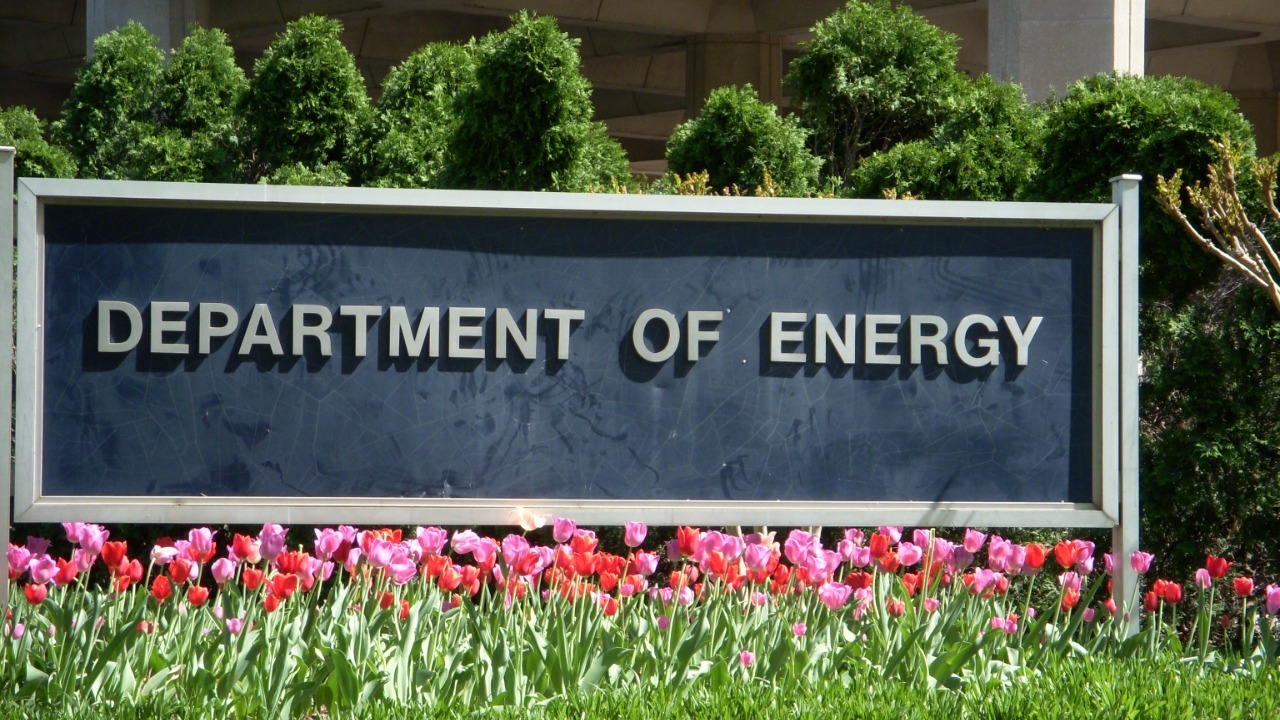
Greg Beard took charge of the U.S. Department of Energy’s Office of Energy Dominance Financing on January 29, 2026, becoming the new director of what the agency calls the largest energy lender in the world. According to the department, the office now oversees more than $289 billion in available loan authority, positioning it as a central player in how the federal government steers capital across the energy system. Beard’s elevation from senior advisor to director, announced in an official department statement, comes as policymakers argue over whether public financing should prioritize fossil fuels, low‑carbon technologies, or an “all of the above” mix that emphasizes reliability.
The stakes are unusually high because the office sits at the intersection of climate policy, industrial strategy, and grid security. Its lending decisions can determine whether large projects (pipelines, gas‑fired plants, nuclear facilities, transmission lines, or utility‑scale renewables) move forward on bankable terms. With global institutions also reconsidering their own energy portfolios, the U.S. shift toward “energy dominance” is being watched closely by investors, foreign governments, and technology companies racing to secure power for data‑hungry artificial intelligence infrastructure.
From Loan Programs Office to Energy Dominance
The entity Beard now leads did not exist in its current form two years ago. The Department of Energy’s Loan Programs Office, long known for backing early‑stage clean energy projects and sometimes described as a major energy transition lender, was rebranded and structurally reshaped into the Office of Energy Dominance Financing. That change was codified when Congress passed H.R. 1 in the 119th Congress, amending Section 1706 of the Energy Policy Act to create the new program and spell out its mandate. The updated statute directs the office to finance capacity or output increases and to support forecastable electric supply for grid reliability, language that explicitly favors dispatchable resources such as natural gas and nuclear while still allowing room for storage‑backed renewables.
The regulatory architecture has been revised in parallel. In October 2025, DOE issued an interim final rule amending 10 CFR Part 609 to broaden eligibility criteria for energy and infrastructure projects, aligning day‑to‑day lending practice with the new congressional guidance. The office retains its legacy authorities under the former Loan Programs Office framework, as reflected on the Energy Dominance Financing portal, but those tools now serve a different policy vision centered on reliability, domestic production, and “dominance” in global energy markets. For borrowers, the shift means that projects once championed for their emissions benefits now must also clear a higher bar on grid services and firm capacity.
Billions Pulled Back from Wind and Solar
Beard’s tenure as senior advisor before becoming director coincided with an aggressive cleanup of the previous administration’s lending book. In a recent year‑in‑review communication, EDF leadership reported that the office scrutinized $104 billion in principal loan obligations inherited from prior leadership. Following that review, the office de‑obligated approximately $29.9 billion, revised roughly $53.6 billion in commitments, and eliminated about $9.5 billion specifically tied to wind and solar projects. Those moves align with Energy Secretary Chris Wright’s earlier pledge that the department would not proceed with a large tranche of loans approved under the Biden administration, signaling a decisive break with the earlier emphasis on subsidizing large‑scale renewables.
The scale of the pullback is reverberating through the power sector. Under the prior Loan Programs Office leadership, deals totaling $108 billion were obligated during the tenure of former Chief Investment Officer Christopher Creed, who has since moved into the private sector. Stripping nearly $30 billion from that pipeline sends a clear message to renewable developers that federal credit support is no longer assured, even for projects that previously cleared technical and financial due diligence. For utilities and grid operators already contending with rising demand from electrification and data centers, the question is whether replacement financing for firm or near‑firm capacity (gas, nuclear, storage, or hybrid projects) can arrive fast enough to avoid reliability crunches in the late 2020s.
Political Pressure on Specific Projects
The new posture has not remained confined to broad policy statements; it is being tested project by project. In June 2025, Republican Senator Josh Hawley of Missouri sent a pointed letter urging DOE to terminate a $4.9 billion conditional loan for the Grain Belt Express, a high‑voltage transmission line intended to move wind power from the Plains to Midwestern and Eastern markets. Hawley cast the project as a threat to reliability and local control, illustrating how individual lawmakers can zero in on specific loans within the EDF portfolio and attempt to reshape the office’s priorities through public pressure. His intervention also underscored the political vulnerability of long‑lead transmission projects that rely on federal backing to bridge financing gaps and mitigate permitting risk.
That vulnerability became more visible when federal support for a separate major transmission proposal was canceled or withdrawn, a move that reporting by a national political outlet linked to broader tensions between the administration’s skepticism of green power and the technology industry’s urgent need for new electricity supply. AI‑focused data centers require enormous amounts of round‑the‑clock power, and many technology companies have signed long‑term contracts for renewable generation paired with transmission upgrades. When federal backing for those enabling lines disappears, it can leave developers scrambling to secure alternative capital or reconfigure projects, potentially delaying capacity additions that fast‑growing regions and digital infrastructure now assume will be available.
A Global Tilt Toward Fossil Fuel Lending
The U.S. shift toward energy dominance is part of a wider rebalancing in international finance. At the World Bank, President Ajay Banga has been seeking board approval for an “all‑above‑ground” energy strategy that would loosen earlier constraints on financing fossil fuel projects so long as they meet certain development and emissions criteria. According to detailed wire reporting, the proposed changes would mark a notable departure from the institution’s prior tilt toward renewables and could unlock new support for gas‑fired power and related infrastructure in emerging markets. That would echo the EDF’s emphasis on dispatchable supply and grid stability, suggesting a convergence between U.S. domestic policy and multilateral development finance.
For countries in the Global South, this evolving stance may open up additional pathways to fund gas pipelines, power plants, and transmission lines that have struggled to attract concessional capital in recent years. But it also raises questions about whether expanded fossil lending risks locking in higher emissions trajectories just as climate‑vulnerable nations push for more ambitious decarbonization commitments. The EDF’s decisions will feed into that debate: if the United States directs a large share of its public lending capacity toward hydrocarbons and firm baseload projects, it could influence how other export‑credit agencies, development banks, and private lenders weigh the trade‑offs between reliability, affordability, and climate targets.
Information Flows, Transparency, and Market Signals
As the Energy Dominance Financing office reshapes its portfolio, information about which projects advance or stall is becoming a critical input for investors and policymakers. Trade publications and wire services monitor DOE announcements closely, while specialized platforms such as industry newsrooms aggregate corporate reactions and deal disclosures that might otherwise be missed. For developers seeking to understand the evolving risk appetite in Washington, these outlets function as an informal early‑warning system, signaling which technologies and geographies are gaining favor and which are falling out of the lending mainstream.
On the corporate side, communications teams and project sponsors increasingly rely on digital distribution tools to shape the narrative around federal loan applications and approvals. Services that allow companies to log in and circulate transaction updates, such as automated release portals, help ensure that major milestones reach investors, local stakeholders, and potential offtakers at the same time. That transparency can cut both ways: it builds support for projects that secure EDF backing, but it also exposes politically sensitive deals to scrutiny from lawmakers, advocacy groups, and competitors, who may lobby for revisions or cancellations.
For Beard, managing the office now means more than adjudicating individual loan applications; it requires navigating a dense web of political expectations, market signals, and international trends. The rebranded office retains powerful statutory tools and a vast lending capacity, but its choices over the next several years will determine whether “energy dominance” translates into a more resilient, diversified grid or a narrower bet on fossil heavy reliability. With global institutions reconsidering their own energy strategies and private capital watching closely, the EDF’s portfolio under Beard will serve as a real‑time barometer of how the United States balances climate goals against the drive for secure, abundant power in an AI‑accelerated economy.
More From The Daily Overview
*This article was researched with the help of AI, with human editors creating the final content.

Grant Mercer covers market dynamics, business trends, and the economic forces driving growth across industries. His analysis connects macro movements with real-world implications for investors, entrepreneurs, and professionals. Through his work at The Daily Overview, Grant helps readers understand how markets function and where opportunities may emerge.

