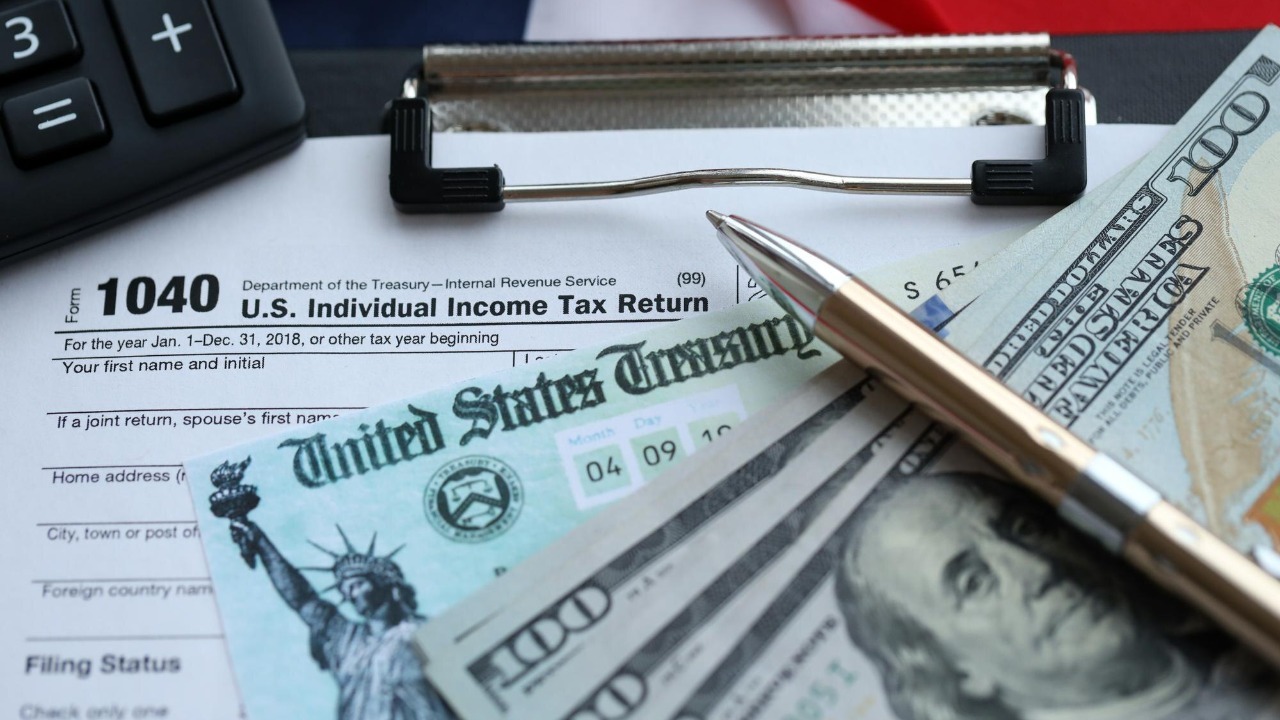
Millions of households are being told to brace for unusually big checks when they file their 2025 returns in early 2026, with officials openly talking about typical families coming out ahead by roughly $1,000 to $2,000 compared with recent years. The driver is a sweeping new tax package that reshapes how much is taken out of paychecks, how tips and deductions are treated, and how families with low and middle incomes are credited. Put simply, the rules have shifted so that a wide slice of workers could see their tax refund jump by something close to $2,000 if they qualify for the most generous provisions.
At the same time, the federal government is layering in targeted payments and rebate-style relief that interact with the regular filing process, which is already administered by the IRS. That combination of structural tax cuts and one-off support is why administration officials, tax analysts, and advocates are all using the same phrase for 2026: very large refunds.
Why 2026 refunds are expected to be “very large”
The core reason I expect 2026 to look different from a typical filing season is that the tax code itself has been rewritten in ways that reduce what many workers owe for 2025, while paycheck withholding has not fully caught up. Reporting on Why “very large” tax refunds are coming in 2026 describes “Major Tax Law Changes Took Effect for the” 2025 tax year, cutting taxes for millions of workers and setting up “substantial refunds when they file.” Because employers have been slow to adjust withholding tables, many people are effectively overpaying during the year and will get that money back in one shot.
Officials are not shy about the scale. One analysis of Key Points on the new law, described as the One Big Beautiful Bill Ac in the reporting, notes that Refunds will be larger than typical because the legislation cut liabilities while employers kept taking out more than the new law required. That mismatch is why the same sources say many Americans could see much bigger checks than they are used to, with refunds described as “very large” compared with recent years.
The One Big Beautiful Bill Act and how it changes your taxes
The legislative engine behind these windfalls is a package widely referred to in coverage as the One Big Beautiful Bill Act, which rewires several pillars of the individual tax system at once. A detailed breakdown of the Changes explains that for the 2025 return, there is no tax on tips and there is a deduction of up to $25,000 for certain expenses, with that cap indexed annually for 2026 through 2029. Eliminating federal income tax on tips directly benefits service workers who have historically had to track and report every dollar, while the $25,000 deduction opens a new path for households with sizable eligible costs to shrink their taxable income.
Those structural shifts sit on top of the broader rate cuts and credit expansions that the One Big Beautiful Bill Ac analysis ties to larger Refunds. When you combine no tax on tips, a fresh $25,000 deduction bucket, and lower marginal rates, it is easy to see how a typical filer’s final tax bill can fall by four figures. If their employer has been withholding as if the old rules still applied, the difference between what they paid in and what they owe becomes the kind of refund that can cover a month’s rent or a used-car down payment.
Trump’s promise of the “largest tax refund season of all time”
President Donald Trump has leaned into these mechanics as a political and economic selling point, telling voters to expect what he calls the largest tax refund season of all time. Coverage of Trump and What to expect notes that the White House is explicitly promising bigger checks for working families once they file their returns, framing the new law as a way to let people “keep more of what they earn” after the fact. The political message is straightforward: the administration wants taxpayers to associate a sudden jump in their refund with the president’s signature legislation.
Advisers have gone further, sketching out what those numbers might look like on average. In one account of a senior aide’s comments on How Much Could the Average Tax Refund Be, the official said the typical household could see an increase of $1,000 to $2,000 per household compared with recent years. That range lines up with independent estimates that pair the One Big Beautiful Bill Act’s cuts with unchanged withholding, and it is the basis for the headline claim that your 2026 refund could be roughly $2,000 higher if you fall into the sweet spot of beneficiaries.
What Treasury officials say about the coming windfall
While the White House has focused on the politics, the clearest technical explanation has come from the Treasury Department. Treasury Secretary Scott Bessent has been explicit that the surge in refunds is not a gimmick but the arithmetic result of new rules colliding with old paycheck settings. In an interview highlighted in a report on Treasury Secretary Scott Bessent, he explained that the refunds stem from tax changes that took effect after many workers had already set their tax withholding levels. For working families across the country, he said, that means a meaningful cash infusion in the first quarter of 2026.
Bessent’s comments dovetail with broader coverage of Why Larger Refunds Are Expected, which emphasizes that Americans will soon get “very large refunds” of up to $2,000 per household. The Treasury chief’s framing is that this is a one-time adjustment period as the system catches up to the new law, but for households that have been squeezed by inflation and high borrowing costs, the timing is fortuitous. A refund that is $1,000 or $2,000 bigger than usual can be the difference between treading water and finally paying down a lingering credit card balance.
Who benefits most: waitresses, welders, seniors, moms and dads
The winners from this shift are not confined to any one profession, but some groups are poised to gain more than others. Reporting on the 2026 tax season notes that Americans are on track to see the largest tax refund season in US history, with Waitresses, welders, seniors, moms and dads singled out as groups that will have more money in their pockets to put food on the table and afford essentials. Service workers benefit from the no-tax-on-tips rule, blue-collar workers see relief from lower rates and new deductions, and parents gain from expanded family-focused provisions.
Another report on the same theme underscores that Waitresses in particular stand to gain because their tips are no longer taxed at the federal level under the new law, while welders and other skilled trades see benefits from more generous write-offs for tools and training. Seniors, especially those on fixed incomes, are helped by targeted adjustments to standard deductions and credits that reduce their taxable income. For moms and dads, the combination of child-related credits and lower overall rates translates into refunds that can cover child care, school clothes, or a long-delayed car repair.
How the $2,000 figure fits with rebate checks and direct deposits
The headline number that keeps surfacing is $2,000, but it shows up in several different contexts that I have to separate. One thread involves a proposed rebate-style payment that has been widely described as Trump’s $2,000 rebate check for 2026: What we know so far. According to that reporting, Some Americans may get rebate checks of $2,000 on top of their regular refunds, with eligibility tied to income and filing status. The same coverage notes that the administration has linked these payments to the broader promise of “very large refunds” next year, effectively stacking a one-time rebate on top of the structural tax changes.
Another thread involves the mechanics of how money will actually reach people’s bank accounts. One report explains that the IRS Approves $2,000 Direct Deposit for January, describing how the IRS disbursement process is set up so that eligible taxpayers can receive funds by direct deposit or paper check. A separate fact-check on IRS $2000 Direct Deposit for January 2026 – Eligibility, Dates, and Claim Process stresses that there is no universal $2,000 payment for every American, and that some people may instead see smaller amounts, such as $200, depending on their situation. Taken together, the picture is that $2,000 is a realistic upside for many households when you combine larger refunds with targeted payments, but it is not a guaranteed minimum.
Sorting fact from fiction on “January $2,000” rumors
Because the numbers are so eye-catching, misinformation has flourished, especially around the idea that everyone will automatically receive a $2,000 transfer at the start of the year. The same fact-check on Fact Check: Is This a $2,000 program makes clear that there is no blanket promise of a $2,000 windfall for every adult, and that some of the viral posts are conflating different policies. It notes that while some households may indeed receive $2,000, others might only qualify for $200 or nothing at all, depending on their income, tax liability, and whether they meet the Eligibility, Dates, and Claim Process criteria.
That nuance matters, because it shapes how people plan for bills, rent, and debt payments. A separate explainer on Final guidance for Americans emphasizes that while Americans will soon get “very large refunds” of up to $2,000 per household, the phrase “up to” is doing a lot of work. The safest assumption is that your personal outcome will depend on your 2025 income, how much was withheld from your paychecks, whether you qualify for new deductions like the $25,000 cap, and whether you fall into any of the targeted groups for rebate-style checks or Direct Deposit for January programs.
Key rule changes for retirees and older filers
Retirees and older Americans are often the most anxious about tax changes, and the 2026 season brings specific tweaks that can work in their favor. An overview of 2026 rules notes that If you are 65 or older and you file jointly, you can access enhanced standard deductions and other age-based adjustments that lower your taxable income. Those provisions sit alongside the broader cuts from the One Big Beautiful Bill Act, meaning older couples can stack age-related relief on top of the new law’s general rate reductions.
The same analysis stresses that Most of the new rules are designed to simplify filing for seniors who rely on Social Security, pensions, and modest investment income, rather than to complicate their returns. When you combine higher standard deductions for those 65 or older and you file jointly with the possibility of larger refunds tied to over-withholding, it becomes plausible that a retired couple could see their 2026 refund jump by close to $2,000 compared with what they have grown used to, especially if they had taxes withheld from IRA distributions or part-time work under the old assumptions.
How to position yourself now for a bigger 2026 refund
With the rules largely set, the main lever individual taxpayers still control is how accurately their withholding and estimated payments reflect their actual 2025 liability. The official IRS site already encourages workers to review their W-4 forms and use online calculators to avoid both underpayment penalties and unpleasant surprises at filing time. In the context of the One Big Beautiful Bill Act, that advice cuts both ways: if you want the largest possible refund, you might tolerate some over-withholding, but if you prefer more cash in each paycheck, you can adjust now and still benefit from the underlying tax cuts.
Administration allies who have talked through Other aspects of the policy say the sweet spot for many households will be to let 2025 play out under the current withholding tables, then reassess after they see how big their 2026 refund actually is. If it comes in at the high end of the projected $1,000 to $2,000 per household range, they can decide whether to dial back withholding for 2026 and beyond. Either way, the combination of lower tax rates, new deductions, and potential rebate-style payments means that for a large share of Americans, the 2026 filing season is shaping up to be the most lucrative in recent memory.
More From TheDailyOverview

Julian Harrow specializes in taxation, IRS rules, and compliance strategy. His work helps readers navigate complex tax codes, deadlines, and reporting requirements while identifying opportunities for efficiency and risk reduction. At The Daily Overview, Julian breaks down tax-related topics with precision and clarity, making a traditionally dense subject easier to understand.