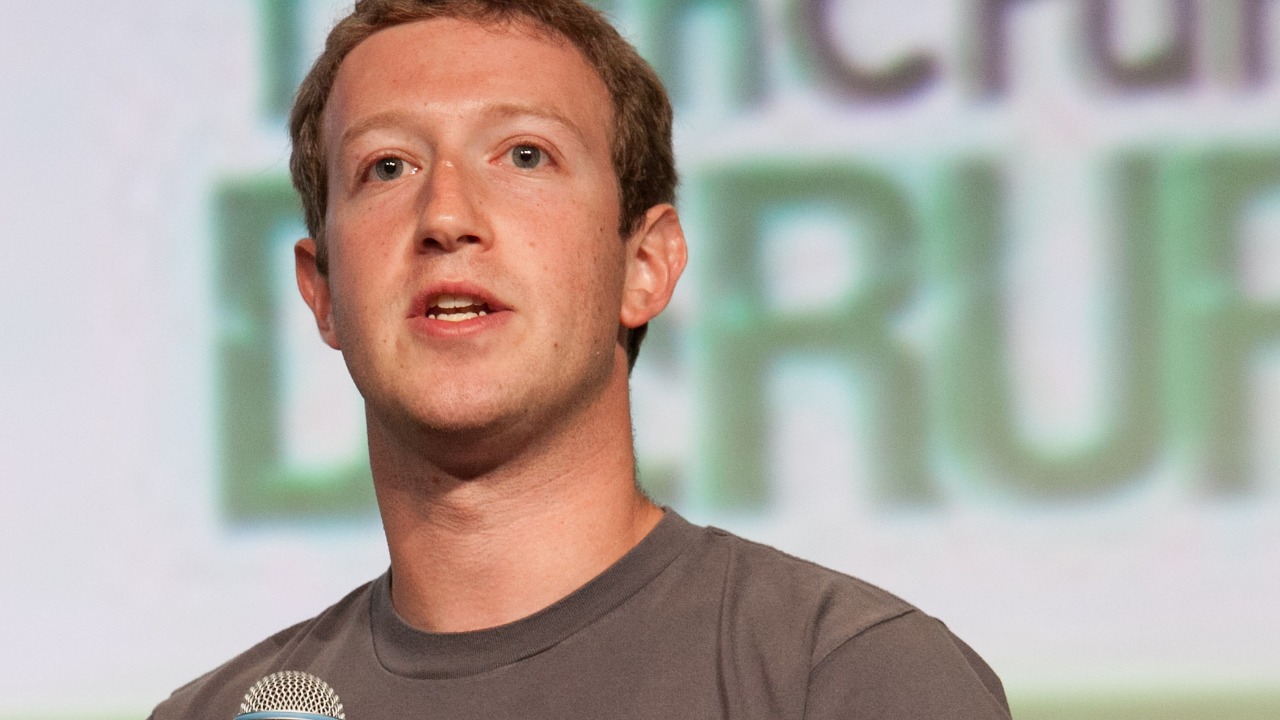
Mark Zuckerberg has quietly severed a signature link between his philanthropy and the immigration movement he once helped bankroll. After more than a decade of support, the Chan Zuckerberg Initiative has stopped funding FWD.us, the pro-immigration and criminal justice reform group he cofounded, leaving a conspicuous gap in the advocacy landscape. The move lands at a moment when immigration remains central to national politics and when tech billionaires are reordering their public priorities around artificial intelligence and science.
The decision is not just a budget line change, it is a signal about where one of Silicon Valley’s most influential figures now wants to spend his political and reputational capital. By stepping back from FWD.us while ramping up investments in research and AI, Zuckerberg and Priscilla Chan are redefining what their philanthropy is for, and what causes are no longer at the top of the list.
The quiet break with FWD.us
The most concrete shift is financial: FWD.us did not receive any funding from Mark Zuckerberg, Priscilla Chan, or their philanthropy in 2025, the first year in the organization’s history that their money did not arrive. People familiar with the group’s finances have described this as a clean break rather than a temporary pause, a change that effectively ends a founding benefactor’s role in sustaining the group’s operations. That absence is especially striking because FWD.us had been built with Zuckerberg’s backing from the start, and its budget and ambitions were long calibrated around the expectation that his support would continue.
Inside the Chan Zuckerberg Initiative, staff had already been told that immigration advocacy was no longer a central focus, and the funding cutoff to FWD.us is the clearest external proof of that internal shift. The organization’s leaders now have to navigate a future in which a key early patron has stepped away, even as they continue to present themselves as a national voice on immigration and criminal justice reform. The fact that FWD.us is now operating without any money from Zuckerberg, Chan, or CZI has been confirmed by people familiar with the matter who described how FWD.us did not receive funding from those sources in 2025.
How Zuckerberg helped build FWD.us
To understand the significance of the split, it helps to remember how central Zuckerberg was to FWD.us in the first place. He did not simply write checks, he was key to building the group as a high-profile vehicle for Silicon Valley’s push on immigration reform, lending his name, network, and credibility to the project. When FWD.us launched in 2013, it was framed as a way for the tech industry to speak with one voice on issues like visas for high-skilled workers and a pathway to citizenship, and Zuckerberg’s involvement signaled that this was not a side project but a priority for one of the sector’s most powerful executives.
That early role also meant that other donors and political figures saw FWD.us as a reflection of Zuckerberg’s own policy agenda. The group’s campaigns, from television ads to lobbying on Capitol Hill, were widely understood to be backed by his fortune and his peers. People familiar with the organization’s history have emphasized that Zuckerberg was key to building FWD.us, and that his decision to step away now marks a sharp departure from that founding vision.
CZI’s evolving mission and the pivot to science and AI
The funding cutoff is part of a broader reorientation inside the Chan Zuckerberg Initiative. In November, Zuckerberg and Chan announced that they would shift CZI’s focus toward science and artificial intelligence, signaling that the philanthropy’s future would be defined less by traditional policy advocacy and more by research and technology. That pivot reflects a belief that breakthroughs in areas like biology, computing, and AI infrastructure can deliver large-scale social benefits, and that CZI is better positioned to accelerate those fields than to keep underwriting contentious political fights.
People familiar with the internal discussions have described how this change had been in the works for several years, as CZI leaders evaluated which programs aligned most closely with their long term goals. The renewed emphasis on scientific discovery and AI has already translated into concrete moves, including a push for more computing power and specialized hardware. In public remarks, Zuckerberg and Chan have framed this as a natural evolution of their mission, and their decision to concentrate CZI’s resources on science and AI, including a desire for more GPUs and research capacity, was underscored when Zuckerberg and Chan shifted CZI’s focus in that direction.
A broader retreat from public policy advocacy
The end of CZI’s support for FWD.us is not an isolated decision, it fits into a pattern of Zuckerberg stepping back from overt political advocacy. Earlier in his career, he was willing to attach his name to specific legislative goals, from immigration reform to criminal justice changes, and to fund campaigns that directly targeted lawmakers. In recent years, however, he has moved toward a quieter posture, focusing more on philanthropy framed as neutral science and less on high profile policy fights that can draw partisan fire.
People familiar with CZI’s internal strategy have described this as a deliberate retreat from advocacy, one that has been unfolding for several years rather than arriving overnight. The shift has been visible in staffing, with fewer roles dedicated to public policy campaigns, and in grantmaking, with more money flowing to research institutions and less to political coalitions. Reporting on the decision to halt support for FWD.us has emphasized that Zuckerberg’s CZI stops funding pro immigration advocacy as part of this broader recalibration.
Meta CEO Mark Zuckerberg’s political recalibration
Mark Zuckerberg’s changing relationship with FWD.us also reflects his evolving position as Meta CEO at a time of intense political scrutiny. As the leader of a company that runs Facebook, Instagram, and WhatsApp, he is regularly pulled into debates over content moderation, election integrity, and misinformation, and every public stance he takes can be read through a partisan lens. Reducing his visible role in hot button policy campaigns like immigration may be a way to limit additional flashpoints while he navigates regulatory and political pressure on Meta itself.
Observers have noted that Zuckerberg’s public persona has shifted from outspoken reformer to more guarded executive, one who prefers to talk about products, virtual reality, and AI rather than legislation. The decision to cut off a pro-immigration group he founded fits that trajectory, suggesting a desire to narrow the range of issues on which he is seen as an activist. Coverage of the move has highlighted how Meta CEO Mark Zuckerberg cuts off the pro immigration group for the first time in its history, underscoring the political implications of that choice.
What the split means for FWD.us
For FWD.us, losing a founding patron is both a financial and symbolic blow. The group has built its identity around being a heavyweight in immigration and criminal justice debates, with the backing of some of the tech industry’s most prominent figures. Without Zuckerberg’s money and the implicit endorsement that came with it, FWD.us must convince other donors and partners that it can still operate at the same scale and maintain its influence in Washington and across the states.
The organization’s leaders now face the challenge of filling a funding gap while preserving staff, campaigns, and long term projects that were designed with a different resource base in mind. People familiar with the situation have said that the split has left the immigration and criminal justice reform group without Zuckerberg’s funding, raising questions about how it will sustain its work. Reporting on the decision has stressed that the split has left the group without that support and has prompted speculation about whether this signals a change in Zuckerberg’s stance on immigration or simply a reordering of his priorities.
Critics see a calculated image shift
The decision to end CZI’s support for FWD.us has drawn criticism from commentators who see it as part of a broader effort by Zuckerberg to rehabilitate his image without taking on politically risky causes. Some have argued that he is eager to present himself as a champion of neutral, future oriented projects like AI and science, while quietly stepping away from messy policy fights that could alienate users, regulators, or investors. In that reading, the move is less about a change of heart on immigration and more about brand management.
One pointed critique framed Zuckerberg as a man of principle only when those principles align with his business and reputational interests, suggesting that his dedication to causes like immigration reform fades when they no longer serve that purpose. That commentary noted that his nonprofit has been planning this shift for several years, even as it continued to benefit from the goodwill generated by earlier advocacy. The argument that his nonprofit has cut ties with the immigration advocacy group he cofounded, after the change had been in the works for several years, was sharpened in a piece that opened with the line, “Behold Mark Zuckerberg: man of principle”, casting the move as a calculated retreat.
Supporters insist the mission has not changed
People close to Zuckerberg and CZI push back on the idea that the funding cutoff reflects a loss of interest in immigration or criminal justice reform. They argue instead that the mission of expanding opportunity and addressing systemic problems has not changed, even if the tools and focus areas have. In their view, investing in science and AI can ultimately help solve some of the same underlying challenges by improving education, health, and economic opportunity, and CZI’s leaders continue to see themselves as working toward long term social impact.
Those allies also point out that Zuckerberg remains engaged in national conversations, including at the highest levels of government, and that he has not withdrawn from public life. He has met and dined with political leaders, including at the White House’s new ballroom, and continues to be a central figure in debates over technology and the economy. Supporters emphasize that his core mission has not shifted, even as his philanthropy’s portfolio has, noting that “that mission hasn’t changed” even as he has met and dined with national leaders and overseen a widely discussed multibillion US investment from Meta.
What Zuckerberg’s move signals for tech philanthropy
The break with FWD.us is likely to reverberate beyond one organization, because it offers a glimpse into how tech philanthropy may evolve in the coming years. As AI and advanced computing become the dominant obsessions of Silicon Valley, more donors may follow Zuckerberg and Chan in steering money toward labs, GPUs, and research institutes, and away from direct policy advocacy. That shift could leave advocacy groups that once relied on tech fortunes scrambling to replace support, even as they continue to fight over issues like immigration, privacy, and criminal justice.
At the same time, the move underscores how closely tech philanthropy is intertwined with the business and political fortunes of its founders. When a figure as prominent as Zuckerberg decides that the risks of visible advocacy outweigh the benefits, it sends a message to peers who are watching how Washington, regulators, and the public respond. The fact that CZI’s decision to cut ties with FWD.us coincides with a high profile pivot to science and AI, and with Meta’s own massive investments in those areas, suggests that the next era of billionaire giving may be defined less by lobbying and more by infrastructure, research, and technology that can be framed as apolitical even when its consequences are anything but.
More From TheDailyOverview

Silas Redman writes about the structure of modern banking, financial regulations, and the rules that govern money movement. His work examines how institutions, policies, and compliance frameworks affect individuals and businesses alike. At The Daily Overview, Silas aims to help readers better understand the systems operating behind everyday financial decisions.