The federal government tracks every late arrival, lost bag, and bumped passenger on major U.S. carriers, and the data paints a clear picture of which airlines deliver and which ones consistently frustrate travelers. Using operational performance records spanning more than two decades alongside independent customer satisfaction surveys fielded through early 2025, a ranking of the 10 biggest domestic airlines reveals sharp divides between the best and worst performers. For anyone booking flights this year, the gap between the top and bottom of this list can mean the difference between a smooth trip and hours of delays, missing luggage, and unanswered complaints.
How the Rankings Were Built
No single metric captures what makes an airline good or bad. This ranking draws from several independent data streams to balance operational reliability against the passenger experience. The U.S. Department of Transportation’s Bureau of Transportation Statistics publishes annual on-time rankings covering 2003 through 2024, defining “on-time” as arriving or departing within 15 minutes of schedule, and those historical tables provide the backbone for punctuality comparisons. Layered on top are the DOT’s own consumer protection reports, which track mishandled baggage, wheelchair and scooter mishandling, involuntary denied boardings, tarmac delays, and formal passenger complaints filed with the federal government.
Customer satisfaction adds a second dimension. The American Customer Satisfaction Index scores airlines on a 0‑to‑100 scale using survey data, and its detailed airline benchmarks break results into components such as timeliness of arrival, baggage handling, and boarding experience. J.D. Power’s 2025 North America Airline Satisfaction Study, fielded from March 2024 through March 2025, segments rankings by cabin class (first and business, premium economy, and economy or basic economy), and its published findings inform how different passenger types rate each carrier. A separate analysis by The Wall Street Journal combined DOT records with Anuvu Pulse data to build a multi‑metric methodology weighing on-time performance, cancellations, long delays, baggage handling, tarmac delays, involuntary bumping, and DOT passenger complaints, and that comparative framework helps contextualize how carriers stack up in real-world operations. Taken together, these sources create a ranking that reflects both what the numbers say and what passengers actually feel.
Top Tier: Delta and Alaska Lead the Pack
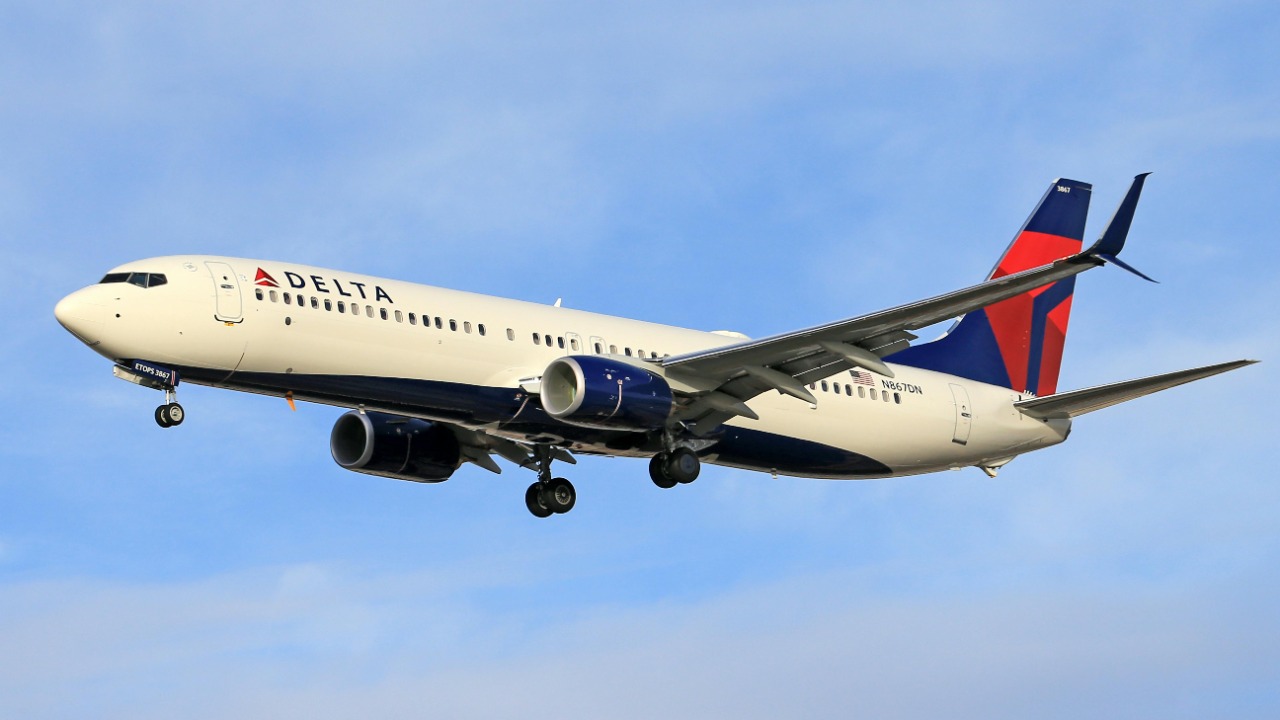
Delta Air Lines and Alaska Airlines have separated themselves from the field across nearly every measurement. Delta consistently posts strong on-time arrival rates in the Bureau of Transportation Statistics dataset, and its relatively low complaint volumes per enplanement show up clearly in the DOT’s 2024 consumer reports. The Wall Street Journal’s analysis also placed Delta near the top when combining cancellation rates, tarmac delays, and baggage performance into a single score, reinforcing its reputation as a dependable choice on busy domestic routes. J.D. Power’s 2025 study, which surveyed passengers across cabin segments, ranked Delta highly in premium economy satisfaction, suggesting that its investments in mid-tier cabins are resonating with travelers who want more comfort without paying for full business class.
Alaska Airlines, meanwhile, earned the highest score among carriers in the ACSI travel study covering 2023 through 2024, according to the organization’s latest release. Passengers gave Alaska strong marks for boarding experience, in‑flight service, and perceived value, and its customer-first culture has become a differentiator in a crowded market. The carrier’s West Coast‑heavy route network tends to produce fewer weather-related disruptions than hubs in the Midwest or Northeast, which helps its on-time numbers and reduces the risk of cascading delays. Together, Delta and Alaska represent the clearest choices for travelers who prioritize reliability and satisfaction in roughly equal measure, especially on routes where both carriers compete directly.
The Solid Middle: Southwest, United, and JetBlue
Southwest Airlines has long traded on its no‑change‑fee policy and open seating as differentiators, and its operational numbers remain respectable. The carrier’s on-time performance in the BTS dataset typically lands in the middle of the pack, and its baggage handling rates benefit from a simpler point‑to‑point route model that avoids the connection‑heavy networks where bags most often go astray. The Wall Street Journal’s multi‑metric ranking credited Southwest for relatively low cancellation rates and fewer DOT complaint submissions compared to several legacy rivals, indicating that its operational discipline still pays off for many travelers. Still, Southwest’s December 2022 meltdown, which stranded hundreds of thousands of passengers, continues to shadow its reputation even as its recent metrics have stabilized and its internal systems have been overhauled.
United Airlines and JetBlue Airways occupy a complicated middle ground. United has invested heavily in fleet modernization and premium cabin products, and its improved scores in the J.D. Power class-based rankings reflect gains in first and business segments where lie‑flat seats and upgraded catering matter most. But its economy experience and complaint volumes remain average at best, leaving many coach passengers underwhelmed relative to the price they pay. JetBlue, once a darling of budget‑conscious flyers for its free Wi‑Fi and generous legroom, has seen satisfaction erode as it trimmed amenities and raised ancillary fees in response to cost pressures. Both carriers sit in a zone where operational performance is adequate but not exceptional, and customer sentiment swings widely depending on the cabin class, route congestion, and whether flights touch delay‑prone hubs.
Below Average: American, Hawaiian, and Frontier
American Airlines consistently ranks in the lower half on mishandled baggage rates in the DOT’s monthly consumer reports. The August 2024 Air Travel Consumer Report, revised in early 2025, provides detailed DOT tables covering flight delays, cancellations, tarmac‑delay reporting, mishandled baggage and wheelchairs or scooters, oversales and denied boarding, and consumer complaints, and American’s performance across several of those key metrics lags rivals like Delta, Alaska, and Southwest. Its massive hub‑and‑spoke network, anchored at Dallas‑Fort Worth and Charlotte, generates high connection volumes that amplify delay cascading and baggage mishandling, especially during peak travel periods and severe weather events.
Hawaiian Airlines, now in the process of integration following its acquisition by Alaska Air Group, has seen its standalone metrics become harder to isolate as schedules and fleets are gradually aligned. Historically, Hawaiian posted strong on-time numbers on its inter‑island routes but weaker performance on long‑haul mainland flights where mechanical issues or crew scheduling problems had outsized effects due to limited backup aircraft. Frontier Airlines, a Denver‑based ultra‑low‑cost carrier, draws frequent complaints about fees, seat comfort, and customer service responsiveness, and its satisfaction scores sit well below the industry average in ACSI reporting. Travelers choosing Frontier typically accept these tradeoffs in exchange for rock‑bottom base fares, but the data suggests those savings come at a measurable cost in reliability and overall experience, particularly when irregular operations force rebooking or overnight stays.
Near the Bottom: Allegiant and Spirit
Allegiant Air and Spirit Airlines round out the lower ranks, and the reasons are structural rather than incidental. Both carriers operate ultra‑low‑cost models that rely on high aircraft utilization, thin staffing margins, and aggressive fee structures that unbundle everything from carry‑on bags to seat assignments. When disruptions hit, these airlines have fewer spare planes and crews to recover quickly, which drives up cancellation rates and long delays relative to their size. The BTS on‑time definition, which counts a flight as late only if it arrives more than 15 minutes behind schedule, actually understates the problem for these carriers because their delays tend to cluster at the extreme end, often exceeding 45 minutes or resulting in outright cancellations that never show up as late arrivals at all.
Spirit Airlines filed for Chapter 11 bankruptcy protection in late 2024, a development that has raised questions about its long‑term viability and near‑term service quality as it restructures. Even before that filing, Spirit’s on-time performance in the BTS annual time‑table series placed it at or near the bottom among reporting carriers, underscoring persistent operational challenges. Allegiant, which focuses on leisure routes connecting small cities to vacation destinations, avoids some of the congestion problems that plague carriers at major hubs but still generates elevated complaint rates relative to its modest passenger counts. For budget travelers weighing these options, the fare advantage can evaporate quickly when a single cancellation forces rebooking on another carrier at full price, erasing any upfront savings and adding stress to what was supposed to be a low‑cost getaway.
What the Data Misses and Why It Matters
One persistent blind spot in federal airline rankings is that the DOT’s on‑time and complaint data only covers carriers reporting under the Airline Service Quality Performance program. The Bureau of Transportation Statistics continues to update these series monthly, with service quality data through May 2025 now available in interactive form, and the latest monthly release shows how delays, cancellations, and mishandled baggage fluctuate with seasonal travel peaks. But smaller regional affiliates that operate flights under major airline brands often report under the mainline carrier’s code, which can mask performance differences between a well‑run regional partner and one that struggles with staffing or maintenance. For passengers, a ticket that appears to be on a top‑ranked airline may actually be flown by a regional operator with very different reliability.
Another limitation is that satisfaction surveys and complaint data tend to capture the extremes (very good and very bad experiences), while routine, uneventful flights leave little trace in the record. The American Customer Satisfaction Index’s travel study notes that factors like seat comfort, in‑flight entertainment, and staff courtesy can move scores significantly, yet those elements may matter less to a business traveler who values punctuality above all else. Academic analysts at institutions such as the University of Michigan’s Ross School of Business, which hosts the ACSI program on its campus platform, have emphasized that airline choice is often about matching an individual traveler’s priorities to a carrier’s specific strengths and weaknesses. A family flying once a year to a beach destination may tolerate more risk in exchange for a low fare, while a weekly commuter might gladly pay extra for a track record of on‑time arrivals and responsive customer service.
How Travelers Can Use These Rankings
For travelers, the goal is not simply to avoid the worst airlines but to make informed tradeoffs based on route, budget, and tolerance for disruption. Federal data and independent surveys together offer a roadmap. A traveler who values punctuality above all can lean heavily on the BTS on‑time history to favor carriers like Delta and Alaska, which have demonstrated consistency over many years rather than just a single good season. Those more concerned with how they are treated when things go wrong might prioritize airlines with lower complaint ratios and higher satisfaction scores in ACSI and J.D. Power reporting, even if their raw on‑time percentages are only slightly better than average.
At the same time, federal consumer reports provide granular insight into specific pain points. The DOT’s 2024 air travel summaries break out mishandled baggage rates, oversales, and disability‑related incidents by carrier, allowing passengers who travel with checked bags, mobility devices, or tight connections to identify airlines that handle those situations more reliably. Combining those operational statistics with the customer‑focused measures on the ACSI’s industry dashboard gives a fuller picture of what to expect from each airline before clicking “purchase.” In a market where the difference between the best and worst large carriers can mean the loss of a vacation day or an important business meeting, using these rankings as a guide can turn raw data into practical protection for your time, money, and peace of mind.
More From The Daily Overview
*This article was researched with the help of AI, with human editors creating the final content.

Grant Mercer covers market dynamics, business trends, and the economic forces driving growth across industries. His analysis connects macro movements with real-world implications for investors, entrepreneurs, and professionals. Through his work at The Daily Overview, Grant helps readers understand how markets function and where opportunities may emerge.

