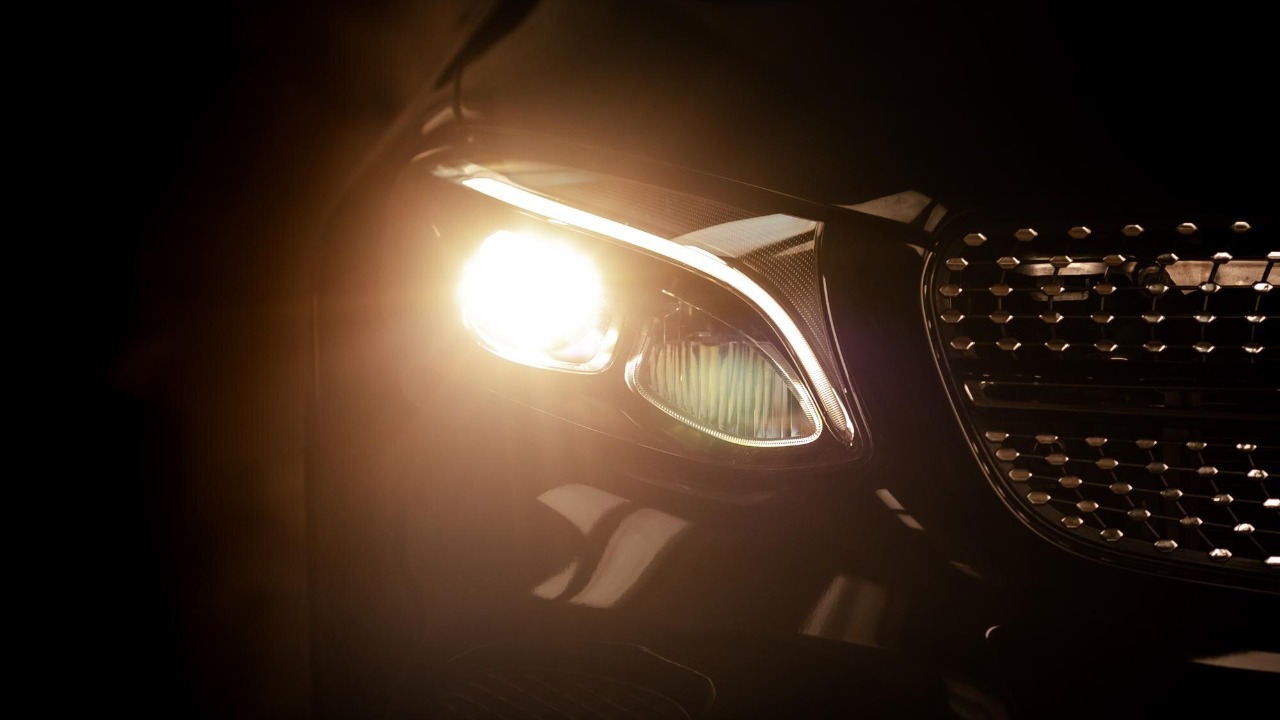
New federal rules allowing advanced headlight technology on American vehicles are creating an unexpected side effect, a widening gray area around aftermarket lighting that could leave drivers exposed to fines, failed inspections, and denied insurance claims. The National Highway Traffic Safety Administration has cleared Adaptive Driving Beam headlights for new cars, but the same regulatory framework that enables this upgrade also tightens the legal risks for anyone swapping in cheap LED or HID kits from online retailers. For drivers tempted by a $30 bulb kit instead of a $1,000 factory-compliant upgrade, the financial math may not work out the way they expect.
How Adaptive Driving Beams Changed the Rules
NHTSA finalized a rule permitting Adaptive Driving Beam headlights on new vehicles, a move the agency said would improve safety for drivers while also providing better visibility for pedestrians and cyclists. ADB systems work by automatically shading portions of the high beam that would otherwise strike oncoming traffic or vehicles ahead, delivering more light where it helps and less where it blinds. The technology had been available in Europe and Asia for years before U.S. regulators updated Federal Motor Vehicle Safety Standard 108 to accommodate it, and the new rule effectively brought American headlight regulations in line with global practice while retaining strict performance-based limits.
The final rule, cataloged in the Federal Register as 87 FR 9916 under docket NHTSA-2022-0013, did not simply add a new gadget to the approved list. It also reinforced the existing compliance architecture that governs every headlight sold or installed in the United States. That architecture, built on FMVSS 108, specifies that headlamps must emit white light and prohibits any addition that impairs required lighting effectiveness. ADB systems meet those standards through precision engineering and sensor arrays, but the rule’s existence has created a false sense of permission among consumers who assume that “smarter headlights” means any headlight swap is fair game. In reality, the same standard that allows sophisticated adaptive beams also makes it easier for regulators, inspectors, and insurers to point to clear lines that many aftermarket products cross.
Why Aftermarket Kits Keep Failing Federal Standards
The gap between what online sellers promise and what federal law requires is wide enough to drive a lawsuit through. NHTSA’s Office of Chief Counsel has stated plainly that it knows of no HID conversion kit that complies with FMVSS 108. That interpretation letter also clarified a point that catches many buyers off guard: a “DOT” marking stamped on an aftermarket bulb is the manufacturer’s own self-certification, not a government seal of approval. The agency noted potential civil penalties for selling or installing noncompliant kits, which means both the retailer and the vehicle owner could face enforcement action if the lighting changes are found to reduce the effectiveness of the required lamps or create glare for other road users.
The enforcement record backs up the warning. NHTSA recalled Hikari aftermarket LED headlight bulbs under recall ID 21E002000 because the bulbs may create excessive glare and brightness and fail to comply with FMVSS 108. That recall is not an isolated case but rather a signal of how the agency treats bulbs that throw too much light in the wrong direction. When a halogen housing receives an LED or HID bulb it was never designed to focus, the result is scattered, blinding output that endangers other drivers and violates the same standard ADB technology was built to satisfy. For consumers, the key takeaway is that an inexpensive kit claiming “plug-and-play” compatibility may in practice be incompatible with the legal and engineering assumptions built into the original headlamp assembly.
The regulatory text itself leaves little room for creative interpretation. Under Section S6.2.1 of 49 CFR 571.108, no person may add equipment that impairs the effectiveness of required lighting, a phrase regulators have consistently read to include glare that blinds or distracts other drivers. Table I of the same standard lists headlamps as white, which means yellow-tinted bulbs or colored overlays can also fall outside compliance even if they appear brighter or more stylish to the owner. A driver who installs a yellow beam kit for aesthetic reasons could technically be operating a vehicle that no longer meets federal lamp color requirements, and that technical violation becomes much more significant if an officer, inspector, or crash investigator documents it in an official report.
The Insurance Risk Most Drivers Overlook
Non-compliant headlights create a paper trail that works against vehicle owners at the worst possible moment (after a crash). When an insurer investigates a nighttime collision, the condition of the vehicle’s lighting system is standard evidence, often documented through photos, repair estimates, and police narratives. If an adjuster or police report notes aftermarket bulbs that produce excessive glare or fail to meet FMVSS 108, the insurer has grounds to argue that the vehicle was modified in a way that contributed to the accident. Policy language in many auto insurance contracts includes exclusions for vehicles altered in violation of federal safety standards, and a lighting modification that NHTSA itself has flagged as noncompliant provides clear documentation for a coverage denial or a reduction in payout.
The financial exposure goes beyond a rejected claim. A driver found operating with noncompliant headlights in a state that requires periodic vehicle inspections could face a failed inspection, a fix-it ticket, and the cost of reverting to compliant equipment before the car can be legally registered again. In states without inspections, the risk shifts almost entirely to the post-accident phase, where the stakes are higher and where plaintiffs’ attorneys can use evidence of noncompliant lighting to argue negligence. The cost difference between a $30 aftermarket LED kit and a properly engineered, FMVSS 108-compliant headlight assembly often runs into hundreds of dollars, but that gap shrinks to nothing compared to the five- or six-figure liability exposure of an uninsured or underinsured crash in which illegal headlights are cited as a contributing factor.
State Lawmakers Are Paying Attention
Federal enforcement is not the only pressure point. New York’s state legislature introduced the Brightness Emission Analysis for Motorist Safety Act, known as the BEAMS Act under Bill 2025-A9093, which requires the state transportation department to conduct a study on LED headlights. The proposal reflects growing concern at the state level that LED glare has become a road safety problem distinct from the federal ADB conversation. By directing officials to gather data on brightness, beam patterns, and driver complaints, lawmakers are laying the groundwork for targeted responses that could differentiate between factory-installed systems and aftermarket conversions that push light output beyond what surrounding traffic can safely tolerate.
If the study produces findings that link certain LED installations to accident rates or widespread driver discomfort, it could lead to state-level enforcement mechanisms that go beyond what federal regulators currently apply day to day. Those tools could range from updated inspection criteria that specifically flag noncompliant bulbs, to state statutes that set maximum glare thresholds or explicitly prohibit certain types of conversion kits. For drivers, the message is that headlight choices are moving out of the purely personal customization realm and into a space where state and federal rules converge. As ADB systems become more common on new vehicles, the contrast between compliant, adaptive lighting and improvised aftermarket solutions is likely to sharpen, and the legal tolerance for the latter is likely to narrow rather than expand.
What Drivers Should Do Before Modifying Headlights
For motorists considering a lighting upgrade, the safest course is to treat the headlight system as a safety-critical component rather than a cosmetic accessory. That means favoring complete, vehicle-specific assemblies that were engineered and tested to meet FMVSS 108, rather than generic bulb swaps that promise dramatic gains in brightness without addressing beam control. Consulting the owner’s manual, checking for manufacturer-approved accessory options, and confirming that any replacement carries a legitimate certification for use in the United States can help avoid products that fall into the noncompliant gray zone. Where uncertainty remains, professional installers who are familiar with both federal and state requirements can provide guidance on what will pass inspection and avoid regulatory scrutiny.
Equally important is recognizing that not every new technology advertised online has actually been cleared for use on public roads. Adaptive Driving Beam systems approved under the recent NHTSA rule are integrated designs that pair specific lamps, sensors, and control software; they are not simple “ADB bulbs” that can be dropped into an older housing. Drivers who want the benefits of adaptive lighting may need to wait for those systems to filter into the used-vehicle market or consider factory-equipped models, rather than trying to approximate the effect with cheap hardware. In the meantime, keeping factory-spec headlights in good repair, ensuring lenses are clear, and using compliant replacement parts offers a straightforward way to improve visibility without inviting the regulatory, financial, and safety risks that come with questionable aftermarket kits.
More From The Daily Overview
*This article was researched with the help of AI, with human editors creating the final content.

Elias Broderick specializes in residential and commercial real estate, with a focus on market cycles, property fundamentals, and investment strategy. His writing translates complex housing and development trends into clear insights for both new and experienced investors. At The Daily Overview, Elias explores how real estate fits into long-term wealth planning.

