For shoppers across the Southeast, the disappearance of Harveys Supermarket is not coming with liquidation banners or teary farewell ads. Instead, the 113-year-old grocery name is fading out through a series of quiet store shutdowns and a corporate rebrand that signals a deeper shift in how Americans buy food. The low-key exit captures a broader retail reset in which legacy banners vanish while discount formats and national chains tighten their grip.
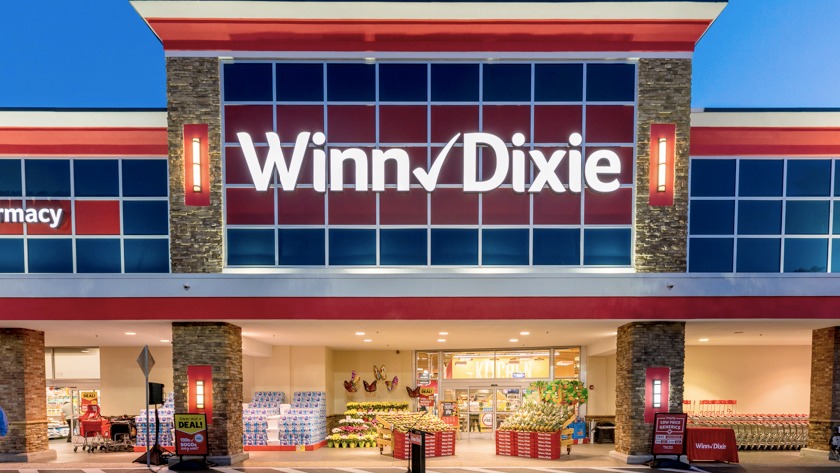
At the center of this transition is The Winn-Dixie Company, the new name for the grocer long known as Southeastern Grocers, which is folding Harveys into a streamlined portfolio. The move is unfolding just as more than 300 other retail locations, from department stores to dollar chains, are slated to close across the country, underscoring how fragile local shopping options have become. I see the Harveys story as a case study in consolidation: efficient on paper, but potentially punishing for workers, small towns, and anyone who relied on a neighborhood store that is suddenly gone.
The quiet end of a 113-year-old name
The most striking part of Harveys’ retreat is how little noise it is making for a brand that has been around for 113-year-old. Under The Winn-Dixie Company, which is rebranding from Southeastern Grocers in early 2026, all Harveys Supermarket locations are slated to close rather than be refreshed or expanded. That choice effectively retires a century-old banner in favor of a tighter corporate identity, a move that prioritizes balance sheets and brand clarity over nostalgia.
The company’s own framing is that the rebrand will simplify operations and marketing, but the practical outcome is that Harveys Supermarket disappears from the map while the Winn-Dixie name survives. The decision to shutter every Harveys store underlines how aggressively The Winn-Dixie Company is pruning its portfolio, with Under The Winn brand emerging as the flagship. I read that as a bet that one stronger label, backed by centralized logistics and pricing, can compete more effectively than a patchwork of regional names that each require their own promotions and customer outreach.
From Southeastern Grocers to Winn-Dixie: strategy by subtraction
The rebranding from Southeastern Grocers to The Winn-Dixie Company is more than a cosmetic name change, it is a strategic reset that treats underperforming banners as expendable. By eliminating Harveys, the company is shedding a chain that often served smaller or lower-income markets where margins are thin and competition from dollar stores and discounters is intense. In that context, closing stores rather than investing in remodels or new formats looks like a decision to concentrate capital where returns are more predictable.
What is missing so far is a detailed public explanation of how many Harveys stores are closing and how many workers will be affected, a silence that mirrors how other retailers have handled retrenchment. The Facebook post highlighting that a 113-year-old grocery chain is quietly closing stores in 2026 captures the mood of customers who feel blindsided when a familiar sign comes down overnight, and it links directly to Southeastern Grocers shifting into its new identity. I see that opacity as part of a broader pattern in which companies manage investor expectations carefully while leaving communities to piece together what the closures mean for jobs and food access.
Aldi’s expansion and the rise of the discount playbook
While Harveys is being wound down, discount grocers are moving in the opposite direction, using store openings and selective closures to sharpen their footprint. Aldi has already shown how ruthlessly it will manage real estate, confirming that it will permanently close its store at 1712 S. 108th St. in West Allis, Wisconsin, after its lease expired and traffic slipped. That decision came even though there is another Aldi just 3.3 miles away, a reminder that the chain is willing to walk away from a site if it no longer fits its density and profitability model.
At the same time, Aldi is leaning into growth, with 2026 expansion plans that target both new and existing markets as it adds locations and remodels older ones. The company has signaled that it will keep pushing into more regions, using its limited-assortment, private-label-heavy format to undercut traditional grocers on price while still drawing middle-income shoppers. Those ambitions are laid out in detail in coverage of Aldi’s 2026 expansion, which describe a pipeline of new stores that could easily absorb some of the demand left behind when regional names like Harveys vanish.
Public reaction to Aldi’s moves shows how consumers are caught between appreciating low prices and worrying about shrinking choice. In Wisconsin, shoppers discussing the West Allis closure pointed out that their lease was up and it is traffic and customer counts that drive these decisions, even as they noted another Aldi 3.3 miles away and mentioned other banners like Sunfresh that are also struggling. That conversation, captured in a post about Aldi in Wisconsin, hints at a future where discount chains cluster in profitable corridors while leaving other neighborhoods with few full-service options.
A broader retail pullback: Kroger, Walgreens and Big Lots
The Harveys closures are unfolding against a national backdrop in which many household names are trimming their store counts. Among grocery and convenience stores with locations closing in 2026 are Kroger, Walgreens and Big Lots, all of which are reassessing where brick-and-mortar still makes sense. Kroger has already confirmed that it will shut additional sites over the next 18 months, a timeline that overlaps with the Harveys wind-down and suggests that even the largest players are not immune to shifting shopping habits and rising operating costs.
Beyond groceries, more than 300 US retail stores, including locations of Yankee Candle, Macy’s, and Kroger, are set to close by the end of 2026 as chains respond to e-commerce pressure, higher wages, and changing consumer routines. That figure, cited in a rundown of More than 300 closures, shows that Harveys is part of a much larger retrenchment that spans categories from apparel to home goods. I expect that as these shutdowns accumulate, the pressure on remaining grocers to capture displaced spending will intensify, accelerating the shift toward chains with the scale to absorb higher costs and the technology to run leaner operations.
What this means for workers, towns and the next five years
For employees and local economies, the quiet nature of these closures can be as damaging as the closures themselves. Workers at Harveys locations are likely to face a mix of transfers, severance, or outright job loss, depending on whether nearby Winn-Dixie stores can take them on, yet there has been little public detail about those pathways. When I look at how other chains have handled similar moves, such as the store reductions listed for Kroger, Walgreens and, the pattern is clear: announcements emphasize strategic focus and shareholder value, while the human impact is treated as a secondary detail.
For small towns and rural communities, the loss of a Harveys can mean the difference between having a full-service grocer nearby and relying on a dollar store with limited fresh food. It is tempting to assume that chains like Aldi or other discounters will automatically fill every gap, but the evidence suggests they are far more selective, clustering in areas where population density and income levels support their model. Coverage of the 113-year-old grocery chain’s closures, including the note that Another Milwaukee Aldi even as others open, underscores how uneven that replacement can be. I expect that in many rural counties, the net effect over the next five years will be fewer full-line grocery options, more reliance on long drives, and a heavier burden on older residents and those without cars.
More From The Daily Overview
*This article was researched with the help of AI, with human editors creating the final content.

Grant Mercer covers market dynamics, business trends, and the economic forces driving growth across industries. His analysis connects macro movements with real-world implications for investors, entrepreneurs, and professionals. Through his work at The Daily Overview, Grant helps readers understand how markets function and where opportunities may emerge.