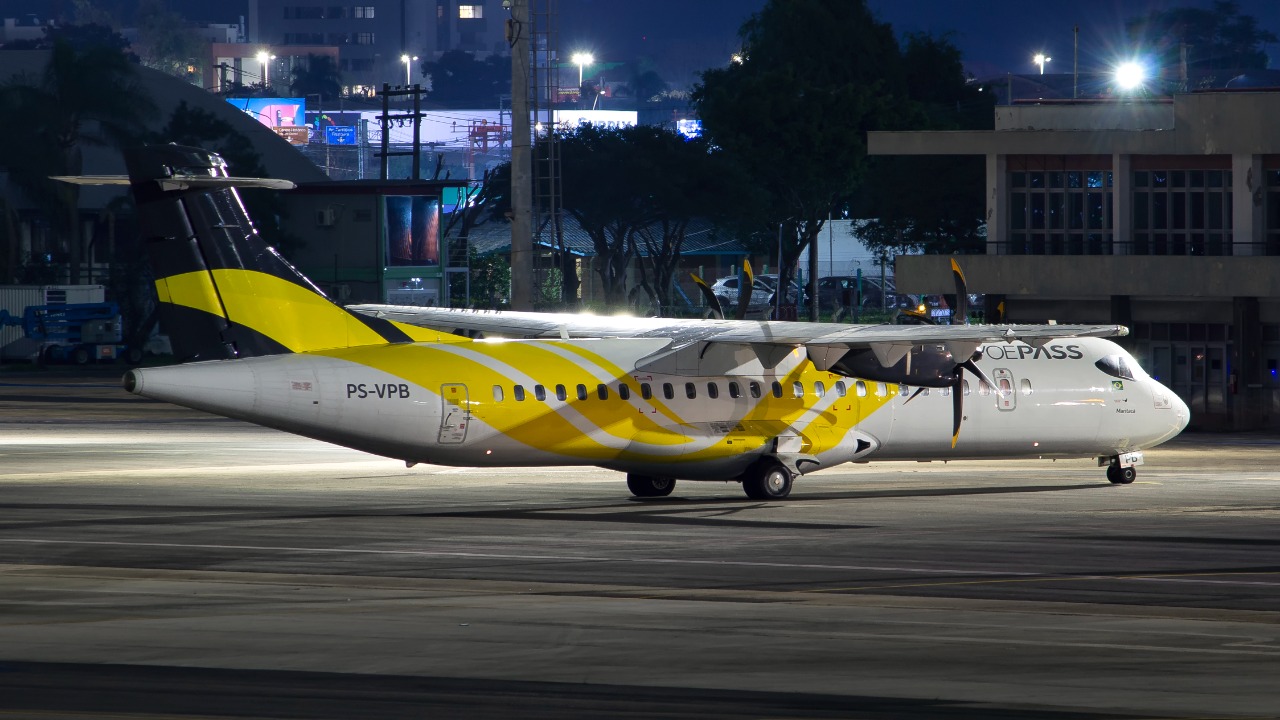
A regional Brazilian carrier and several international airlines serving Venezuela lost the ability to operate flights after regulators and government officials moved to suspend or withdraw permissions, leaving passengers scrambling for alternatives. In Brazil, regulators grounded Voepass after concluding the airline had not addressed safety irregularities flagged after a crash that killed 62 people last year, according to the Associated Press. Separately, Venezuela withdrew operating permits from six international airlines amid rising diplomatic friction with the United States, cutting off key routes in and out of the country, according to The Guardian.
Voepass Grounded After Fatal Crash Fallout
Brazil’s national aviation agency suspended Voepass’ operating license after determining the airline had not resolved safety irregularities that regulators flagged months earlier. The agency had issued a mandate in October requiring the carrier to address specific operational deficiencies, but a subsequent review found those issues still unresolved, according to the Associated Press. The suspension cited both ongoing safety risks and the airline’s violation of conditions that regulators had set for it to keep flying.
The suspension follows last year’s crash involving a Voepass aircraft that killed 62 people. The crash put the carrier under intense scrutiny, and an October mandate was intended to force measurable safety improvements within a set window. When inspectors later found the airline had not met those benchmarks, the agency suspended its operating license, according to the Associated Press. Voepass cannot resume operations until it demonstrates compliance with the conditions regulators have imposed.
Venezuela Strips Permits From Six Carriers
Separately, Venezuela’s government withdrew operating permits from six international airlines as tensions between Caracas and Washington escalated. The permit revocations followed a government ultimatum tied to the broader diplomatic standoff, effectively barring the carriers from operating in Venezuela. The International Air Transport Association was cited by The Guardian in connection with the suspensions.
Several of the affected airlines had already suspended or reduced service to Venezuela on their own, citing safety-driven concerns about operating in the country’s airspace. The Venezuelan government’s ultimatum effectively formalized what had been a partial withdrawal, but the permit revocations carry a different weight: they block the carriers from returning even if conditions change, at least until Caracas reverses the decision. For passengers who relied on those routes, the ban eliminates options that were already thinning.
Safety Failures vs. Political Retaliation
The two groundings share an outcome but stem from fundamentally different causes. In Brazil, the Voepass suspension is a textbook regulatory enforcement action. An airline failed to meet safety conditions after a deadly accident, and the agency responsible for air safety did what it is designed to do. The process followed a clear sequence: a fatal crash, an investigation, a corrective mandate, a compliance review, and then a license pull when the airline fell short. That timeline, while slow by some measures, reflects how aviation safety enforcement typically works in countries with functioning regulatory systems.
Venezuela’s airline bans operate on a different logic entirely. The permit withdrawals are tied to geopolitical friction, not to any documented safety deficiency on the part of the six carriers. The government’s ultimatum framed the decision as a response to external pressures, and the airlines caught in the crossfire include carriers that had already scaled back Venezuelan operations for their own safety reasons. Treating both events as equivalent misses the distinction between a regulator protecting passengers and a government using aviation access as a political tool.
What Stranded Passengers Face Now
For travelers holding Voepass tickets in Brazil, the suspension means the airline’s flights are canceled with no clear restart date. The airline cannot resume service until it satisfies regulatory conditions, and the agency has given no public timeline for when that review might happen. Passengers on domestic Brazilian routes served by Voepass will need to rebook with other carriers, potentially at higher fares given the sudden reduction in available seats on those corridors.
The situation in Venezuela is arguably worse for affected travelers because the ban covers six international airlines at once. Passengers trying to enter or leave the country through those carriers now face a near-total loss of commercial options on certain routes. Unlike the Voepass case, where other Brazilian airlines can absorb displaced demand, Venezuela’s aviation market was already constrained before the bans. Fewer carriers were willing to fly there, and the ones that remained now face the same political risk that led to the permit revocations.
Budget Travel’s Structural Vulnerability
Both events expose a pattern that budget travelers in Latin America know well: affordable air service sits on thin margins and thinner institutional support. Low-cost carriers operate with less financial cushion than legacy airlines, which means a regulatory suspension or a government ban hits harder and faster. Voepass was already a smaller player in Brazil’s domestic market, and its grounding removes capacity that larger carriers have little incentive to replace at the same price point. The passengers most affected are those who depended on Voepass precisely because it was cheaper.
In Venezuela, the dynamic is different but the outcome is similar. International airlines that served the country were already operating at reduced capacity, and the government’s decision to revoke permits eliminates what remained. Budget-conscious travelers, including members of the Venezuelan diaspora who relied on those routes to visit family, lose access to flights that were already difficult to book and expensive relative to regional norms. The concentration of cancellations in a single day amplifies the disruption because there is no gradual wind-down period for passengers to adjust.
A Pattern Worth Watching Across the Region
Much of the commentary around these two events has treated them as isolated incidents, one about safety and the other about politics. That framing is technically accurate but misses a broader trend. Across Latin America, budget airlines face a growing squeeze from two directions at once. Regulators in countries like Brazil are tightening enforcement after high-profile accidents, which is necessary but can remove carriers from the market faster than replacements emerge. At the same time, governments in countries like Venezuela are willing to weaponize aviation access for diplomatic leverage, with little regard for the passengers caught in between.
The risk is that both forces accelerate at once. Stricter safety enforcement is the right response to incidents like the Voepass crash, but if it consistently removes budget carriers without creating conditions for new entrants, the result is a market with fewer options and higher prices for the travelers who can least afford it. Political bans like Venezuela’s add a layer of unpredictability that discourages airlines from entering or expanding in the region at all. Taken together, these pressures could reshape Latin American aviation in ways that benefit neither safety nor access.
What Comes Next for Both Airlines
Voepass faces a straightforward but demanding path back to service. The airline must address every safety irregularity that Brazilian regulators identified, submit to a new compliance review, and receive clearance before a single plane can take off. Given the severity of the original crash and the airline’s failure to meet its October deadline, regulators are unlikely to rush that process. The suspension holds until the agency is satisfied, and there is no public indication of when that might be.
For the six airlines banned from Venezuela, the path is less clear because it depends on political conditions rather than technical compliance. The permit revocations are tied to the diplomatic standoff with the United States, and reversing them would require a shift in that relationship or a change in the Venezuelan government’s posture. Neither outcome is imminent based on the current trajectory. Passengers and airlines alike are left waiting on forces well outside the aviation system, with no regulatory checklist that can bring flights back.
More From The Daily Overview
*This article was researched with the help of AI, with human editors creating the final content.

Grant Mercer covers market dynamics, business trends, and the economic forces driving growth across industries. His analysis connects macro movements with real-world implications for investors, entrepreneurs, and professionals. Through his work at The Daily Overview, Grant helps readers understand how markets function and where opportunities may emerge.

