The federal government has frozen a vast swath of COVID-era aid in Minnesota, triggering what officials describe as the largest mass suspension of Small Business Administration borrowers in U.S. history. Nearly 7,000 people tied to pandemic relief programs are now locked out of future SBA support as investigators dig into an alleged $400 million fraud scheme involving emergency loans. The scale of the crackdown signals a new phase in Washington’s effort to unwind what went wrong in the rush to keep businesses alive during COVID.
The unprecedented SBA blacklist
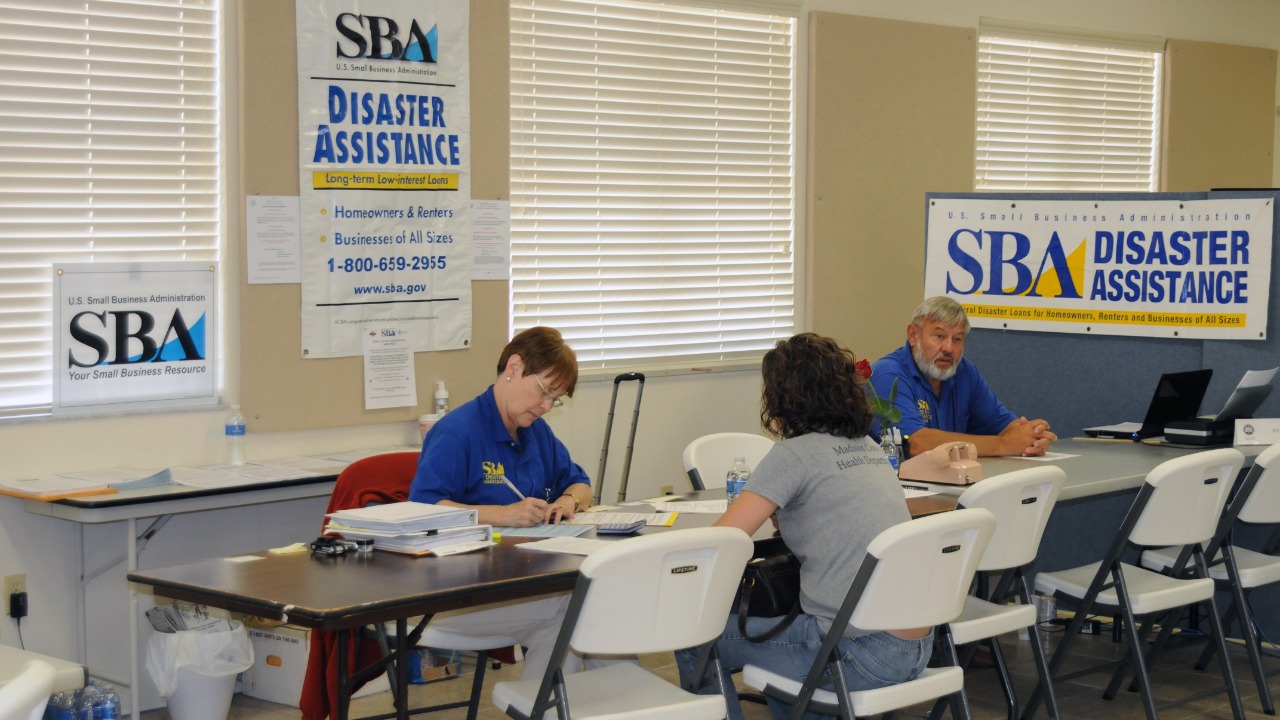
The Small Business Administration has taken the rare step of cutting off thousands of borrowers from its programs at once, effectively creating the biggest internal blacklist the agency has ever acknowledged. Federal officials say roughly 6,900 Minnesota borrowers are now suspended over suspected abuse of Paycheck Protection Program and disaster loans that were meant to stabilize employers during the COVID crisis, a move that sweeps up a large slice of the state’s pandemic-era aid recipients in a single action linked to a suspected $400 million scheme. The SBA has framed the suspensions as a necessary response to evidence that emergency funds were siphoned away from legitimate small businesses.
Behind the headline numbers is a sprawling portfolio of loans that federal investigators now view as tainted. Officials say the suspended Minnesota borrowers were collectively approved for approximately 7,900 loans, totaling roughly $400 m in pandemic assistance, a figure that underscores how deeply the alleged fraud penetrated COVID relief pipelines. According to the SBA Administ, those loans are now under review for potential prosecution and repayment, with the agency signaling that it is prepared to claw back funds wherever investigators can prove wrongdoing.
How Minnesota became ground zero
What makes Minnesota stand out is not just the dollar amount, but the concentration of suspect loans tied to one state’s approval pipeline. Federal officials say the suspended borrowers were all approved through Minnesota-linked programs that processed pandemic applications at high speed, a structure that appears to have created openings for inflated payrolls, phantom employees, and shell companies. Reporting on the suspensions notes that the affected borrowers are connected to both PPP and COVID disaster loans, suggesting that fraudsters may have layered multiple programs to maximize payouts during the height of the emergency response. A social media notice highlighting that the SBA suspends 6,900 Minnesota borrowers over suspected $400 m in improper aid during the COVID response underscores how the alleged scheme spanned both PPP and disaster programs.
State officials are now under intense scrutiny for how those applications were vetted. Federal correspondence describes thousands of pandemic-era loan borrowers approved by Minnesota over potential fraud, and local coverage notes that the state’s own systems are being examined alongside the federal review. One detailed account of the suspensions explains that the SBA has flagged thousands of pandemic-era loan borrowers approved by Minnesota over potential fraud, with investigators warning that Minnesota is likely just the first state to face this level of scrutiny. That warning, reported in coverage of how the SBA suspends thousands of borrowers, hints at a broader national audit that could extend far beyond Minnesota’s borders.
Trump, Loeffler, and the political stakes
The crackdown is unfolding under President Donald Trump, who has publicly tied the Minnesota probe to a wider promise to clean up pandemic-era abuses. Trump has said his administration will not stop until it finds out what happened in Minnesota, casting the investigation as part of a broader push to restore confidence in federal aid programs that were stretched to their limits during COVID. In one account of the probe, Trump is quoted as viewing the Minnesota case as an opportunity to show that his administration is serious about accountability for children and small businesses that were supposed to benefit from relief funds, a message that aligns with the topics flagged around Minnesota, COVID loans, the Small Business Administration, and Loan oversight.
At the agency level, SBA Administrator Kelly Loeffler has become the face of the enforcement push. On Thursday, Administrator of the Small Business Administration Kelly Loeffler announced on X that nearly 7,000 Minnesota borrowers were being banned from future SBA loan programs, a sweeping move that she framed as essential to protect taxpayers and honest entrepreneurs. A detailed local report from WASHINGTON, KTTC, notes that On Thursday, Administrator of the Small Business Administration, or SBA, confirmed that nearly 7,000 Minnesota borrowers are now barred from SBA programs, underscoring how the blacklist reaches beyond the current investigation into long term access to federal support. The same enforcement posture is echoed in a separate account from The Confused, which describes how SBA Administrator Kelly Loeffler announced a major crackdown on pandemic-era fraud, with Minnesota as the first state and others expected to follow, highlighting the broader political and policy stakes of the crackdown.
Loeffler has also used sharper language to describe the alleged misconduct, signaling that the agency is prepared to push cases toward prosecutors. In a message highlighted in national coverage, she wrote that the SBA will pursue those who stole from pandemic programs and will not stop it until the fraud is rooted out, a stance that aligns with Trump’s own framing of the Minnesota probe. One detailed political report notes that SBA Administrator Kelly Loeffler announced the suspension of thousands of Minnesota borrowers as Gov Tim Walz’s administration faces questions about how state-level vetting failed, and quotes her pledge that “we will not stop it” until the fraud is addressed, underscoring how the SBA is tying its credibility to the outcome of this investigation.
The $400 million question: what happened to the money
At the heart of the scandal is a simple but staggering question: how did roughly $400 million in emergency aid end up under suspicion in a single state. Federal summaries of the probe describe a suspected $400 m fraud scheme involving PPP and disaster loans, with investigators now tracing where the money actually went and whether borrowers misrepresented payrolls, business operations, or pandemic impacts. One national account notes that these Minnesota borrowers were collectively approved for approximately 7,900 loans, totaling roughly $400 million, and that the SBA’s actions are part of a broader federal investigation into related schemes in Minnesota, underscoring how the $400 million figure is not a rough guess but a defined pool of loans now under review.
Other accounts put the scandal in even starker terms, describing a Minnesota $400 Million Fraud Explodes moment in which Trump Suspends Nearly 7,000 Borrowers Amid Scandal and The Small Business Administration moves to lock down suspect accounts. In that framing, Minnesota, Million Fraud Explodes, Trump Suspends Nearly, and Borrowers Amid Scandal are not just dramatic phrases but shorthand for a complex web of applications, approvals, and payouts that slipped through the cracks during the pandemic rush. A separate national summary titled Feds Suspend Nearly 7,000 MN Borrowers In $400M PPP, EIDL Fr, highlighted under New, Yahoo, Creators, Top Stories, Amy and, Feds Suspend Nearly, reinforces that 7,000 M and $400 are the operative figures in the federal narrative about how much money is at stake and how many borrowers are now under a cloud, with the $400 total becoming a national shorthand for the scandal.
What comes next for borrowers and taxpayers
For the thousands of Minnesotans caught up in the suspensions, the immediate impact is severe: they are frozen out of new SBA support while investigators sort out who committed fraud and who may simply have been swept up in a broad dragnet. Local coverage notes that nearly 7,000 Minnesota borrowers have been banned from SBA loan programs, with WASHINGTON, KTTC, reporting that On Thursday, Administrator of the Small Business Administration confirmed the bans and warned that the review could lead to referrals for criminal charges or civil recovery. That means legitimate small businesses that relied on PPP or disaster loans may now find themselves unable to access new SBA-backed credit, even as they try to prove that their paperwork was accurate and their need was real, a tension that will test how precisely the ban was drawn.
More From The Daily Overview

Silas Redman writes about the structure of modern banking, financial regulations, and the rules that govern money movement. His work examines how institutions, policies, and compliance frameworks affect individuals and businesses alike. At The Daily Overview, Silas aims to help readers better understand the systems operating behind everyday financial decisions.