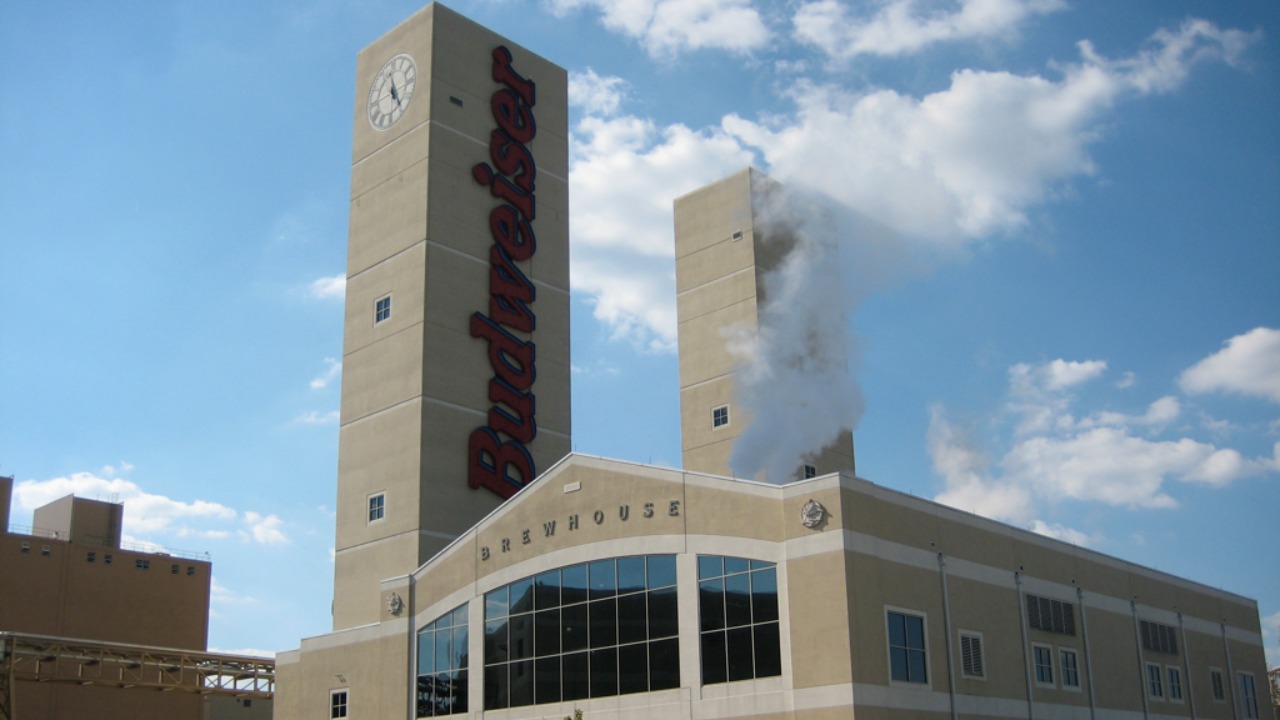
The last Budweiser brewery in the Bay Area is headed for a permanent shutdown, ending a decades long run as one of Fairfield’s most visible industrial anchors. The closure follows years of shifting beer demand and a costly modernization push that failed to keep the site viable, culminating in a steep financial hit that the company is no longer willing to absorb.
As the plant winds down production ahead of a final shutdown in early 2026, hundreds of workers, local officials and nearby businesses are bracing for the loss of a regional employer that once symbolized industrial stability. I see the decision as a revealing snapshot of how global beer giants now treat aging facilities, even in historically strong markets like Northern California.
The last Bay Area Budweiser brewery runs out of time
For years, the Fairfield complex has been the face of Budweiser in Northern California, a sprawling brewery off the interstate that signaled the brand’s presence long before anyone reached a taproom in San Francisco or Oakland. That visibility is precisely what makes its shutdown so striking: the world’s largest beer company is walking away from its last Bay Area facility even as the region’s population and nightlife have grown. That retreat underscores how little geography matters when a multinational decides a plant no longer fits its production map.
The Fairfield site is more than a factory; it is a landmark that has drawn visitors for tours and tastings, helped define the city’s industrial corridor and sat within reach of major regional attractions. The brewery’s location near other regional draws, including destinations highlighted in local visitor guides, made it part of a broader Bay Area day trip circuit. Its closure will leave a conspicuous gap in that landscape, both visually and economically, even before the final batch is brewed.
A phased shutdown and a hard number: 238 jobs
The wind down is not a distant abstraction for the people who work there. According to a state WARN notice, the Fairfield plant’s last day of operation is set for Feb. 22, 2026, and the company has pegged the number of affected workers at a precise 238. That figure is not just a statistic; it represents a full shift’s worth of brewers, maintenance crews, lab techs, drivers and support staff whose livelihoods are tied to a facility that now has an expiration date.
The shutdown will not happen overnight. The company has told regulators that the Fairfield Budweiser plant will close in stages over roughly two weeks in February, a phased approach that allows production to taper off while equipment is idled and reassigned. That schedule, detailed in a notice about the Fairfield Budweiser closure, gives employees a timeline but not necessarily a soft landing, since only a fraction are likely to transfer to other facilities as the company concentrates brewing elsewhere.
Corporate strategy: consolidation after costly upgrades
From the company’s perspective, the Fairfield shutdown is part of a broader restructuring rather than an isolated retreat. Executives have said that, over the last five years, they have poured nearly $1 billion into updating and modernizing U.S. manufacturing, a capital push that included new packaging lines, energy efficiency projects and other upgrades. That investment, described in a statement that begins with the phrase Over the last five years, is now being used to justify closing older or less efficient plants that no longer fit the optimized network.
The Fairfield Budweiser facility is one of three breweries on the chopping block after a corporate review of operations. After that review, the company decided to close its facilities in Fairfield, Calif and Merrimack, New Hampshire, along with a site in New Jersey, while shifting some production to other breweries that still have room to grow. That consolidation, described as a response to changing beer sales and the need to run fewer plants at higher capacity, helps explain why a site that recently saw overhauls, new lighting and repairs is still being shuttered.
Jobs erased and a city budget squeezed
For Fairfield, the closure is not just a corporate rebalancing; it is a direct hit to the local labor market and public finances. Anheuser-Busch has formally told state officials that more than 200 jobs will be erased by the shutdown, a number that aligns with the WARN tally and underscores how few roles can be salvaged. I see that as a stark reminder that even long tenured industrial employers can vanish quickly once a corporate spreadsheet tips against them.
The ripple effects extend beyond payrolls. Local reporting on the Fairfield Budweiser closure has highlighted how the plant’s departure will strain city utilities and tax revenues, with officials warning that residents and businesses may face rate increases when the site closes. One account framed it bluntly, noting that When the site closes, the city will lose a major water and sewer customer, forcing fixed costs to be spread across a smaller base. That kind of fiscal shock is difficult to offset quickly, especially when the departing employer has been embedded in the local budget for decades.
From brewery icon to logistics hub
Even as brewing winds down, the Fairfield property is already being repositioned for a different kind of industrial future. City leaders have said the company plans to sell the facility to the Goodman Group, a global logistics and warehouse developer that specializes in large scale distribution centers. The announcement that The Anheuser Busch plant would be converted into a logistics focused property signals a shift from beer to boxes, with trucks and fulfillment operations likely replacing brewery tours and bottling lines.
That transition mirrors a broader pattern in industrial real estate, where aging manufacturing sites in well located corridors are being snapped up for e commerce and regional distribution. The Fairfield complex, which has long been part of a cluster of industrial and commercial properties cataloged in local business listings, is a natural candidate for that kind of reuse. The question is whether the new jobs that follow will match the wages, benefits and stability that brewery work once provided.
A national retrenchment, not just a local story
Fairfield’s loss is part of a multi state contraction that reflects how the beer market has shifted. Anheuser and Busch have acknowledged that they are closing breweries in three states as beer sales dip and operations are consolidated across the country, a strategy laid out in a briefing on brewery closures that hit facilities in New Jersey, California and New Hampshire. I read that as a clear signal that the company is betting on fewer, larger plants to serve wide territories, even if that means abandoning long standing regional outposts.
The Fairfield Budweiser shutdown also follows a period in which the company touted significant investments in other locations, including potential production shifts to a Central New York plant that could absorb some of the volume from Merrimack and Fairfield. That reallocation underscores a hard truth for host communities: once a company decides to concentrate production elsewhere, local performance and loyalty matter less than the efficiencies promised by a reconfigured national network.
Community shock and the politics of loss
Inside Fairfield, the announcement landed with a mix of disbelief and resignation. Local leaders described being blindsided by the decision, even as they acknowledged that the beer industry has been under pressure from changing consumer tastes and rising costs. Coverage of the reaction captured how The Anheuser Busch Budweiser Brewery in Fairfield had been a steady contributor to local and regional tax bases, with one analysis tying the broader brewery retrenchment to $3.3 million in federal losses. That kind of number gives mayors and state lawmakers a concrete figure to point to when they argue that industrial closures are not just private business decisions but public finance events.
The emotional impact is harder to quantify but just as real. Video coverage of the announcement showed workers and neighbors processing the news that Anheuser Busch would close the Fairfield Budweiser plant, with the clip’s 2:35 runtime capturing both corporate talking points and raw community reaction. I am struck by how often those scenes repeat across the country: a familiar logo, a plant gate, and a countdown to closure that leaves people scrambling to rewrite their own timelines.
What the Fairfield shutdown says about big beer’s future
Stepping back, the Fairfield decision illustrates how large brewers are rebalancing their portfolios in an era of fragmented demand. Anheuser and Busch are not just trimming capacity; they are reshaping where and how they brew, favoring sites that can handle multiple brands and packaging formats at scale. The Fairfield Budweiser facility, once a flagship, now looks like a casualty of that shift, even though Anheuser Busch has emphasized the overhauls, new lighting and repairs it completed there in recent years.
At the same time, the Fairfield story is a reminder that even iconic brands like Budweiser are no longer guaranteed a brick and mortar presence in every major region they serve. As the company leans on a smaller set of mega breweries and a patchwork of contract arrangements, communities that once saw a local plant as a permanent fixture are learning how quickly that assumption can collapse. For Fairfield, the final chapter of its Budweiser era will be written not in foam and barley but in WARN notices, redevelopment plans and the long work of figuring out what comes after the last truck rolls out.
More From TheDailyOverview

Grant Mercer covers market dynamics, business trends, and the economic forces driving growth across industries. His analysis connects macro movements with real-world implications for investors, entrepreneurs, and professionals. Through his work at The Daily Overview, Grant helps readers understand how markets function and where opportunities may emerge.

