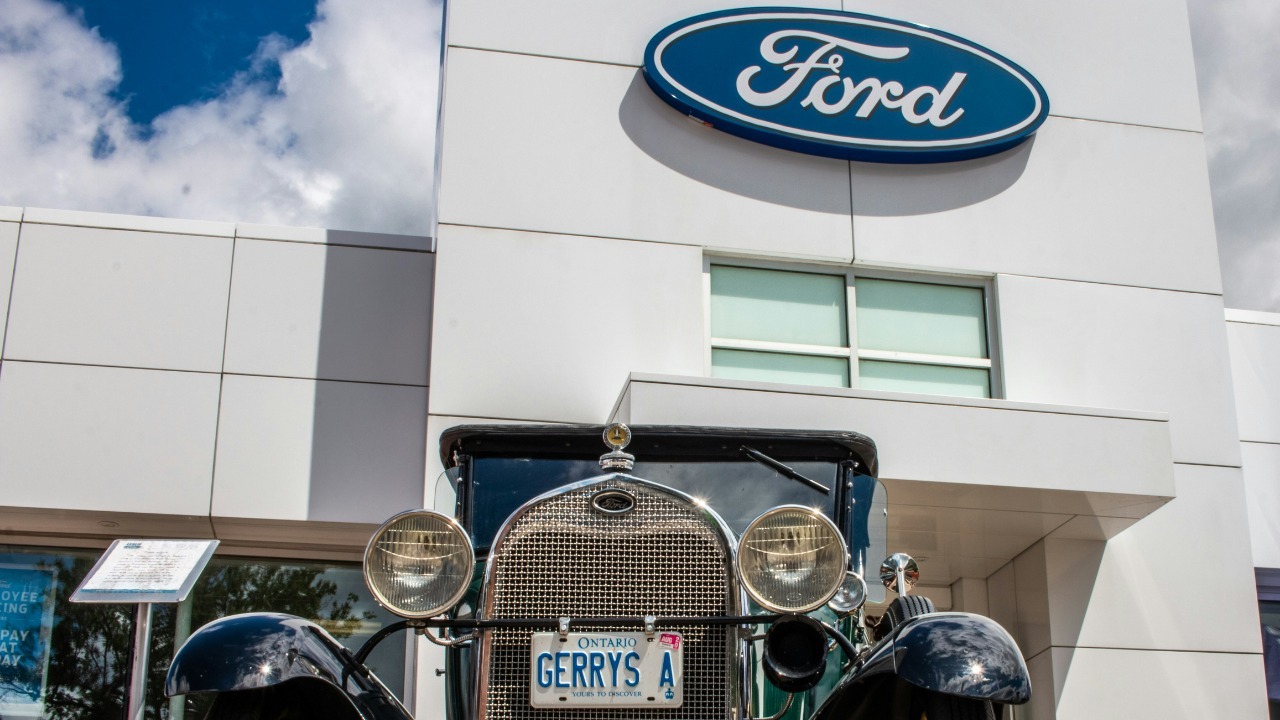
Ford is putting tens of thousands of white-collar staff on notice, telling them bluntly that their jobs depend on changing how they work. The company has warned that 25,000 U.S. salaried employees must adjust their behavior or risk being fired, sharpening a broader internal crackdown on attendance and performance. The message lands as Ford tightens its return-to-office rules and signals that flexibility now comes with far less slack.
Ford’s 25,000-employee warning, in plain terms
When Ford Motor Company recently informed 25,000 U.S. salaried workers that they needed to “change behavior” or face termination, it turned a simmering internal debate into an unmistakable line in the sand. The company framed the directive as a performance and conduct issue, not just a scheduling tweak, effectively telling a huge slice of its white-collar workforce that continued employment is contingent on meeting new expectations. In a climate where many employers are still tiptoeing around post-pandemic norms, Ford’s decision to spell out that 25,000 people are on a short leash stands out as a deliberate show of resolve.
The warning is not an abstract policy note, it is a targeted message to U.S. salaried staff that Ford sees as falling short of its standards. Internal communications described how Ford Motor Company expects these employees to correct course or accept the risk of losing their jobs. That kind of language, paired with the precise figure of 25,000, signals a shift from gentle nudges to explicit consequences, and it sets the tone for how the automaker now intends to manage everything from office presence to day-to-day accountability.
How a stricter return-to-office policy set the stage
The behavioral crackdown did not emerge in a vacuum. Earlier this year, Ford ordered the majority of its office-based staff back on site four days a week, a sharp pivot from the looser hybrid arrangements many employees had grown used to. Before the new policy came into effect, workers had more latitude to decide when to be in Dearborn or other hubs, and some had built their caregiving and commuting routines around that flexibility. The updated mandate, which required most people to be physically present four days a week, quickly became a flashpoint as employees weighed the cost of compliance against family obligations and long drives.
That tension was especially acute for caregivers and those living far from Ford’s main campuses. Some staff described how the stricter schedule upended arrangements for children and aging parents, while others pointed to the strain of crowded offices and limited parking. Reporting on the shift detailed how Ford ordered the majority of its employees back four days a week and how that return-to-office policy impacted caregivers who had relied on more flexible schedules. By the time the “change behavior or be fired” message landed, many workers already felt the ground had moved under their feet.
Emails, all-hands meetings, and the threat of termination
Once the four-day mandate kicked in, some employees began receiving emails that went far beyond routine reminders. In the days after Ford announced the stricter schedule, messages landed in inboxes warning that failure to comply with office attendance rules could lead to “discipline up to and including termination.” Those notes, according to people who saw them, were not framed as hypothetical scenarios but as direct consequences for anyone who continued to skip required in-office days. The language left little doubt that the company was prepared to use its disciplinary process to enforce the new norms.
Accounts from current and former staff describe how these warnings arrived shortly after the policy shift, catching some by surprise. One person who recently left the company recalled how In the days after Ford tightened its rules, attendance emails explicitly raised the possibility of being fired. That escalation was reinforced in internal gatherings, where leaders emphasized that the hybrid model was not optional. In an all-hands for a team within Ford Enterprise Technology, managers told staff that the office arrangement was a “two-way street,” but also made clear that ignoring the rules would carry consequences. Together, the emails and meetings translated the broad “change behavior” message into a concrete threat: show up, or risk your job.
Employee backlash and confusion over the message
Not everyone inside the company interpreted the warnings the same way. Some Ford employees say they have been told outright that they could be fired for not going back to the office, and they describe a climate where missing hybrid days feels like a career-ending gamble. Workers who spoke about the policy said the tone of the emails and conversations left them feeling that even minor deviations from the schedule could be treated as insubordination. For those already juggling caregiving or long commutes, the idea that a single misstep might trigger “discipline up to and including termination” added a layer of anxiety to every calendar decision.
At the same time, there are signs that parts of leadership recognize the rollout has not always landed as intended. One manager, identified as Isaac, acknowledged that some of the internal communications had “missed the mark” and said he had asked for them to be corrected. That admission suggests an internal debate over how hard to lean on the threat of firing versus emphasizing collaboration and support. Reports on the backlash describe how Some Ford workers say they have been warned they could be fired for missing office requirements, while separate coverage notes that Isaac has pushed to fix communications that went too far. That split between strict enforcement and attempts at clarification has left many employees unsure whether the company is primarily seeking compliance or making examples.
What the crackdown reveals about Ford’s culture shift
Viewed together, the four-day mandate, the disciplinary emails, and the 25,000-employee warning point to a deeper cultural shift inside Ford. The company is signaling that it wants a more tightly managed, in-person workforce at a time when its industry is under pressure to deliver complex products like the F-150 Lightning and Mustang Mach-E on aggressive timelines. By tying job security to “behavior,” Ford is effectively arguing that consistent presence and adherence to policy are now core performance metrics, not soft expectations. That stance aligns with a broader corporate trend toward reasserting managerial control after several years of pandemic-era flexibility.
Yet the way the shift is being felt on the ground is more complicated. Some Ford employees say they have been warned they could be fired for skipping required hybrid days, and they describe overcrowded workspaces in Dearborn that make the commute feel less like a productivity boost and more like a box-checking exercise. Accounts from Some Ford staff describe a disconnect between leadership’s insistence on in-person collaboration and the reality of crowded floors and limited meeting space. In one report, Three current and former employees said the emails threatened “discipline up to and including termination” while they were simultaneously dealing with overcrowded workspaces in Dearborn. That tension raises a basic question about what kind of culture Ford is building: one centered on trust and outcomes, or one where physical presence and strict rule-following are the primary measures of commitment.
Why this matters beyond Ford’s walls
Ford’s hard line is likely to resonate far beyond its own campuses, because it crystallizes a choice many large employers are now weighing. By explicitly telling 25,000 U.S. employees to “change behavior” or risk being fired, the company is testing how far a legacy manufacturer can push in reclaiming pre-pandemic norms without triggering a talent exodus. Other firms that are frustrated with half-empty offices and inconsistent performance will be watching to see whether Ford’s approach delivers better results or simply breeds resentment. If the automaker manages to stabilize attendance and output without major attrition, it could embolden peers to adopt similarly blunt tactics.
At the same time, the episode highlights the reputational and retention risks of leaning too heavily on threats. Workers who feel singled out or confused by mixed messages may start looking for employers that still offer genuine flexibility, especially in competitive fields like software and advanced engineering that Ford needs for its electric and connected vehicles. Coverage of the internal warning notes how Ford Tells U.S. salaried staff to “Change Behavior” or “Be Fired,” underscoring just how stark the company’s language has become. Whether that stance ultimately strengthens Ford’s culture or undermines it will depend on what happens next: if the company pairs its tough talk with clearer communication, better office conditions, and real support for caregivers, it may yet convince skeptical employees that the new rules are about shared success rather than one-sided control.
More From TheDailyOverview

Grant Mercer covers market dynamics, business trends, and the economic forces driving growth across industries. His analysis connects macro movements with real-world implications for investors, entrepreneurs, and professionals. Through his work at The Daily Overview, Grant helps readers understand how markets function and where opportunities may emerge.

