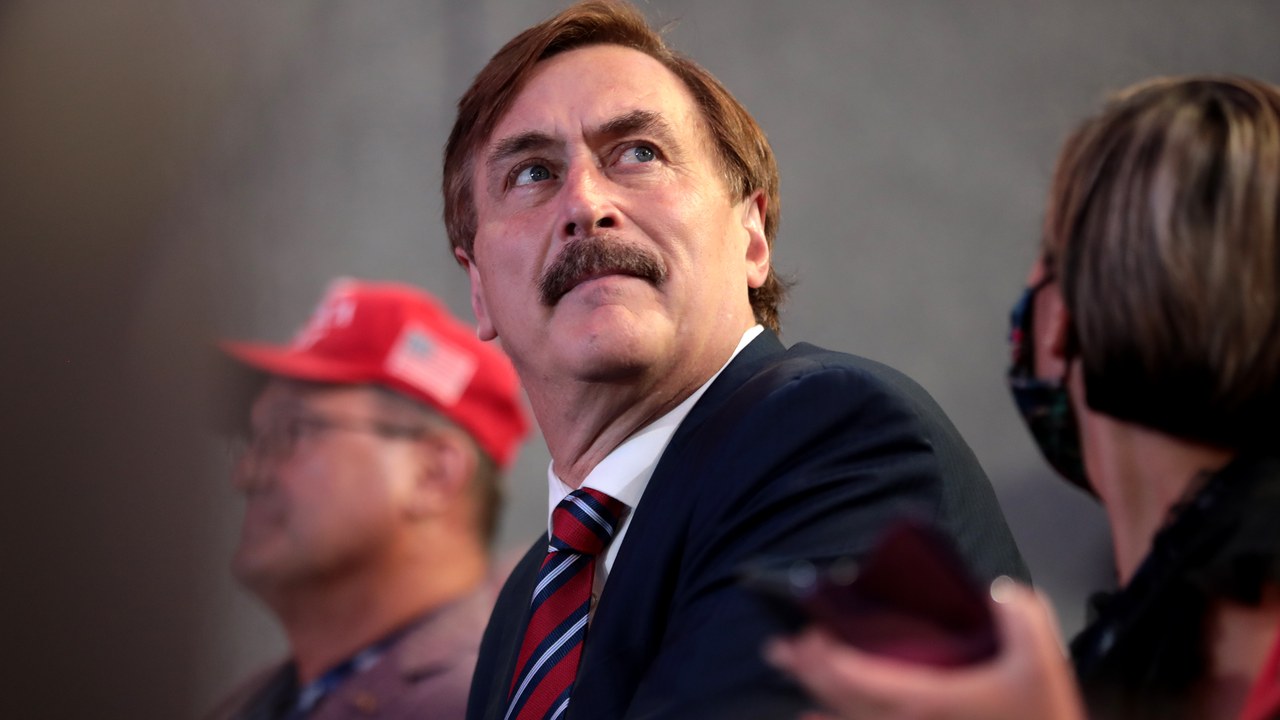
Minnesota Republicans just handed President Donald Trump one of the sharpest rebukes of his second-term endorsement run. On Tuesday, state House Speaker Lisa Demuth won the Republican primary for governor, beating MyPillow founder and steadfast Trump ally Mike Lindell even though the president had personally thrown his weight behind Lindell. The result sets up a November showdown between Demuth and Democratic Sen. Amy Klobuchar, and it gives the state GOP the nominee that party leaders spent months insisting was their only realistic chance to end a losing streak that stretches back two decades.
The loss was not close enough to call a squeaker. Lindell, one of the most visible faces of the Trump movement and a tireless promoter of the president’s false claims about the 2020 election, could not convert that loyalty into a win even in a low-turnout Republican primary. For a president who treats his endorsement as proof of his grip on the party, Minnesota was a blunt reminder that the base does not always march where he points.
Trump’s Pick Fell to the Speaker of the House
Unofficial returns posted by the Minnesota Secretary of State showed Demuth well ahead of Lindell and businessman Kendall Qualls, who had carried the state party’s official endorsement heading into the vote. Under Minnesota law the numbers stay unofficial until the State Canvassing Board certifies them later in August, but the margin was wide enough that the race was called on election night.
Demuth is no fringe figure inside her own party. As the sitting Speaker of the Minnesota House, she has spent the past two years steering a chamber split almost evenly between Republicans and Democrats, a balancing act she turned into the central credential of her campaign. That record became her whole pitch: an argument that she, not a national celebrity, was the Republican best equipped to actually win statewide. The primary result rewarded the institutional choice over the movement one, the sitting Speaker over the pillow magnate.
Lindell’s Baggage Followed Him Into the Primary
Lindell entered the race as the highest-profile candidate on the ballot, but much of the attention around him was a liability. According to the Associated Press race call, some Republican leaders in the state had openly questioned his electability, challenged his residency, and raised doubts about his business record before a single vote was counted. He also faced an allegation that he physically abused a former girlfriend, which he has denied, along with questions about whether he met the state’s residency requirements, which he also rejected.
Beyond the personal controversies, Lindell carried a political one. He was among the most aggressive backers of Trump’s false 2020 election-denial claims, a stance that thrilled the party’s most committed activists but worried Republicans who feared it would sink him in a general election. Trump has lost Minnesota in all three of his presidential runs, and his administration’s immigration enforcement surge in the state has fueled weeks of unrest, giving skeptics inside the GOP even more reason to doubt that a Lindell candidacy could break through with the moderate voters a statewide win requires.
Demuth’s Pitch: The Republican Who Can Actually Win
Where Lindell ran on loyalty and celebrity, Demuth ran on electability and results. She campaigned on having gone toe-to-toe with Democratic Gov. Tim Walz in budget negotiations, casting herself as a conservative who could fight for the party’s priorities without alienating the swing voters who decide Minnesota elections. She has promised to make combating fraud in state government programs a centerpiece of her bid, an issue with real resonance in a state that has been rocked by high-profile public-money scandals.
The stakes for the party are hard to overstate. Minnesota Republicans have not won a governor’s race in more than two decades, one of the longest such droughts in the country, and every cycle that ends in defeat deepens the sense that the state is drifting out of reach. Demuth’s supporters argued that nominating a proven, disciplined legislator rather than a polarizing national figure was the only way to change that math. On Tuesday, enough primary voters agreed to give her the chance.
A Mixed Night for Trump as Kingmaker
The Minnesota result did not come in a vacuum, and it was not a clean defeat for the president. Across a night of primaries in six states, Trump’s endorsement record was decidedly mixed. In South Carolina, his pick for an open Senate seat advanced out of a crowded field into a runoff, and in Wisconsin, Trump-backed Rep. Tom Tiffany won the Republican nomination for governor in a landslide with the party united behind him.
Those wins complicate any tidy narrative that the president’s grip on Republican voters is slipping. But the Minnesota loss lands harder because Lindell was not a marginal endorsement — he was a close personal ally whom Trump singled out for support. That the president’s clout could carry Tiffany to a blowout while failing to lift Lindell suggests the endorsement still moves votes when the candidate is credible, and cannot rescue one who is not. It is a distinction that will matter as Trump wades into more primaries with his approval sitting at a second-term low.
Now Comes Klobuchar
Demuth’s reward for winning is a general-election fight against one of the most durable names in Minnesota politics. Sen. Amy Klobuchar, a four-term Democrat first elected in 2006, won her party’s primary decisively and pivoted to the governor’s race after Walz declined to seek a third term. She brings statewide name recognition, a deep fundraising network, and a long record of winning even in Republican-leaning parts of the state.
For Demuth, the path is steep but not imaginary. She will argue that Klobuchar represents a tired Democratic establishment presiding over rising costs, program fraud, and unrest, while she offers a fresh, disciplined alternative. For Republicans nationally, the race becomes a test of whether the party can finally flip a governorship it has coveted for a generation, and whether choosing an electable nominee over a Trump-anointed one was the smart bet or a missed chance to energize the base. The answer will not come until November, but Minnesota Republicans have made their choice about how they want to fight for it.
This article was produced with the assistance of AI tools and reviewed by an editor prior to publication.

Elias Broderick specializes in residential and commercial real estate, with a focus on market cycles, property fundamentals, and investment strategy. His writing translates complex housing and development trends into clear insights for both new and experienced investors. At The Daily Overview, Elias explores how real estate fits into long-term wealth planning.


