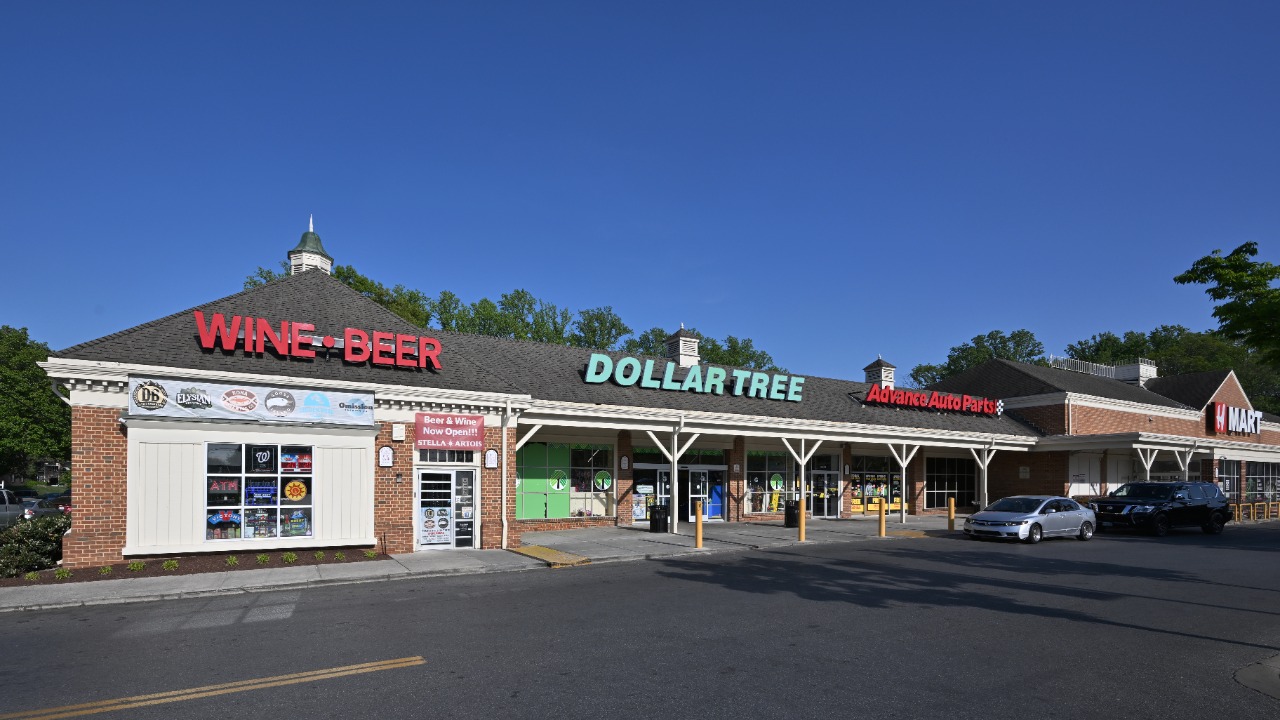
The country’s biggest dollar-store operator is shrinking fast, as hundreds of locations go dark and a $1 billion divestiture reshapes the bargain chain’s footprint. The closure of approximately 695 stores and the sale of the Family Dollar business are rippling through working-class neighborhoods that long relied on ultra-cheap staples and quick convenience. What looks like a balance-sheet cleanup from the corporate side is landing as layoffs, empty storefronts, and a scramble for alternatives on the ground.
At the center of this upheaval is a strategic bet that a leaner network of higher performing stores, paired with a more flexible pricing model, can succeed where the old “everything’s a dollar” promise has started to crack. I see a company trying to pivot under pressure from inflation, shifting consumer habits, and years of underinvestment, even as communities absorb the shock of lost jobs and fewer nearby options for basics.
The 695-store shutdown and what “portfolio optimization” really means
The headline number is stark: the company has acknowledged that it has shuttered approximately 695 stores as part of what it calls a portfolio optimization review. As of February 1, 2025, those closures were already executed, turning a corporate buzzword into a concrete wave of darkened doors and displaced workers. The company framed the move as a way to prune underperforming locations and refocus capital on stronger markets, but for employees and shoppers, the optimization label does little to soften the reality of lost paychecks and longer drives for groceries and household goods.
The timing underscores how quickly the retrenchment has unfolded. The company’s update, reported on Nov 23, 2025, made clear that, “As of February 1, 2025, we had closed approximately 695 stores identified under the portfolio optimization review,” tying the closures to a deliberate, months-long process rather than a sudden panic. The language around that review suggests a methodical culling based on sales, profitability, and lease terms, yet it also signals a strategic retreat from marginal neighborhoods where the chain once expanded aggressively. In practice, portfolio optimization here means a smaller, more selective map of stores and a willingness to walk away from communities that no longer fit the model.
From aggressive expansion to a $1 billion Family Dollar exit
The closures are unfolding alongside an even bigger structural shift: the decision to sell the Family Dollar business for roughly $1 billion in cash. The Company announced on Jul 6, 2025 that it had completed the sale of its Family Dollar business to Brigade Capital Management, L.P. and its affiliates, describing how NASDAQ DLTR would receive approximately $1 billion in cash, subject to certain adjustments. I read that move as a tacit admission that the long effort to integrate and turn around Family Dollar had stalled, and that the parent company saw more value in cashing out than in continuing to pour resources into a struggling banner.
That exit caps a decade-long experiment in scale that never fully delivered on its promise. The Company is effectively unwinding a major acquisition and narrowing its focus back toward the core Dollar Tree brand, even as it keeps supplying merchandise to the spun-off chain under a transition arrangement. Selling Family Dollar for $1 billion gives the balance sheet breathing room and frees management to concentrate on store formats and price points that fit its own playbook, but it also leaves thousands of workers and shoppers in a limbo shaped by a new owner’s priorities rather than the familiar corporate parent they had come to know.
How inflation and changing shoppers broke the old dollar-store math
Behind the closures and the sale sits a simple economic reality: the old model of selling everything at a rock-bottom price in small boxes has been squeezed by inflation and more demanding customers. Decades-high inflation has hit shoppers hard, and reporting on Decades high inflation has highlighted how low-income households in particular are contending with as much as $250 less per month in effective spending power. When budgets are that tight, shoppers become ruthless comparison shoppers, willing to drive past a familiar dollar store if a warehouse club, regional grocer, or big-box chain offers better unit prices on essentials.
At the same time, More customers are shopping around and comparing prices at competing retailers to ensure they are getting the best deal, a trend that was already evident by Mar 25, 2024, when analysts noted that More customers were no longer loyal to any single discount chain. That shift erodes the traffic advantage dollar stores once enjoyed simply by being the closest option in many neighborhoods. When the core customer is both more price sensitive and more mobile, the thin margins that underpin a small-box format become even more fragile, and marginal stores quickly tip from barely profitable to unsustainable.
The pivot away from “everything’s a dollar” pricing
In response, the company has been quietly rewriting one of its most recognizable promises: that everything in the store costs a single dollar. In 2024, it rolled out a new format called More Choices, internally known as a “3.0” store, which integrates price points over 1.75 dollars into the assortment. That 1.75 threshold is more than a quirky detail; it marks a formal break from the psychological anchor that defined the brand for decades. By layering in higher price tiers, the chain is betting that customers will accept a more complex value proposition if it means access to a broader mix of products and slightly better quality on some items.
I see this as a necessary but risky evolution. On one hand, the More Choices format gives merchants room to stock larger pack sizes, national brands, and seasonal goods that would be impossible to sell profitably at a flat one-dollar price. On the other, it blurs the brand identity that once made the chain instantly legible to shoppers, especially those who budgeted down to the last dollar. The coexistence of 1.75 and higher price points with legacy signage and expectations can create confusion at the shelf, and if customers feel tricked rather than empowered, the format shift could deepen the trust gap that inflation has already opened.
Family Dollar’s long slide and the 1,000-store reckoning
The Family Dollar side of the business has been under strain for years, and the latest wave of closures is the culmination of that slow-motion decline. Earlier in 2024, the company signaled that Family Dollar and Dollar Tree would together close about 1,000 stores, with a heavy concentration on the Family Dollar banner that serves many low-income urban neighborhoods. Reporting from Mar 12, 2024 noted that Family Dollar customers were especially vulnerable to persistent inflation and reduced government benefits, which left them with less cash each month and less tolerance for inconsistent inventory or higher shelf prices.
By the time the Company moved to sell the banner, the narrative around Family Dollar had hardened into one of chronic underperformance and operational headaches. Struggling discount chain Family Dollar, primarily serving low-income urban customers, plans to shutter approximately 1,000 locations, a reality that was underscored on Oct 3, 2025 when observers described how Struggling Family Dollar had difficulty absorbing the chain into a cohesive, profitable network. The 695-store closure tally sits inside that broader 1,000-store reckoning, a sign that the parent company chose to cut deeply rather than continue propping up marginal locations in hopes of a turnaround that never came.
Inside the “portfolio optimization” playbook and lease-by-lease triage
When executives talk about portfolio optimization, they are really talking about a granular, store-by-store triage that weighs sales, margins, and lease terms against the cost of walking away. The Chesapeake, Virginia based retailer provided an update on its portfolio optimization efforts on Dec 3, 2024, explaining that it had originally announced these closures as part of a broader review of each location’s current lease and performance. That disclosure, captured in coverage of how The Chesapeake, Virginia retailer was pruning poorly performing Family Dollar stores, makes clear that the process was not a blunt, across-the-board cut but a targeted effort to exit the weakest sites.
In practice, that means stores with expiring leases in 2025 or unfavorable rent escalations were especially vulnerable, even if their sales were not catastrophic. Landlords who were unwilling to renegotiate, or who saw an opportunity to bring in a different tenant at a higher rent, effectively pushed some locations onto the chopping block. The Company’s willingness to close hundreds of stores at once suggests that it saw more value in freeing itself from those obligations than in trying to squeeze incremental gains out of tired boxes. For workers and shoppers, the nuance of lease economics is invisible; what they see is a familiar storefront suddenly papered over, a casualty of a spreadsheet-driven optimization that rarely accounts for the social cost.
Community fallout: layoffs, food access, and a chance to reset
The human impact of these closures is most visible in neighborhoods where the dollar store was not just a bargain outlet but a de facto corner store. Communities that lose a location often confront a mix of job losses, reduced access to affordable staples, and the psychological blow of another empty retail box on the main drag. Jun 9, 2024 reporting framed the moment as both a crisis and an opening, noting that Communities have an opportunity to chart a different path when a dollar store closes, especially in places where local grocers and independent retailers have long struggled to compete with national chains.
In March 2024, Dollar Tree announced that it plans to close hundreds of Family Dollar locations, a move that advocates argued could free up real estate and customer demand for more locally rooted businesses. In March, Dollar Tree’s decision was framed not only as a corporate retrenchment but as a chance for city leaders, community development groups, and entrepreneurs to rethink how they meet everyday needs in low-income areas. I see that as a critical lens: while the immediate effect is painful, the vacuum left behind can be filled by food co-ops, independent grocers, or even non-retail uses that better align with neighborhood priorities, provided there is support to overcome the financing and logistical hurdles that have long favored big chains.
On-the-ground stories: sudden closures and “The Bigger Corporate Struggle”
For many residents, the closures have felt abrupt, even when they were months in the making at headquarters. One account from Nov 26, 2025 described how a local Family Dollar shut its doors with little warning, leaving shoppers confused and employees scrambling. While the closure felt sudden to residents, it was part of a broader pattern that the report framed under the heading Why the Store Is Closing: The Bigger Corporate Struggle. That phrase captures the disconnect between the local experience of a shuttered shop and the corporate narrative of strategic repositioning and lease management.
According to that account, While the closure was blamed on issues like inventory replenishment and expiring leases in 2025, the deeper story was one of a chain caught between rising costs, aging stores, and a customer base under severe financial strain. The Bigger Corporate Struggle is not just about one company’s missteps; it reflects a broader reckoning across the discount sector, where the easy growth of the past decade has given way to harder questions about which neighborhoods can sustain a store and at what price. For workers who show up to find a locked door and a notice, those macro forces translate into immediate uncertainty about rent, childcare, and the next paycheck.
What remains: a slimmer network and a new map of bargain retail
Even as hundreds of locations close, the chain is not disappearing. A quick search of the official store locator shows thousands of active sites still operating across the country, with locations spanning suburban strip malls, rural highways, and urban side streets. The 695-store reduction and the Family Dollar sale will leave that network leaner and more concentrated in markets where the Company believes it can sustain traffic and margins, especially as it leans into the More Choices format and higher price points over 1.75 dollars. I see the result as a more conventional discount retailer, less defined by the one-dollar gimmick and more by the same mix of price tiers and promotions that competitors already use.
The question is what that slimmer map means for the broader retail landscape. Dollar Tree will close nearly 1,000 locations across its banners, a figure that, as highlighted on Oct 3, 2025, underscores how Dollar Tree will close nearly as many stores as some rivals are opening. In some regions, that will create space for competitors like regional grocers, dollar-format rivals, or even e-commerce to capture budget-conscious shoppers. In others, especially rural and inner-city areas, the closures risk deepening retail deserts unless local leaders and independent businesses can seize the moment to build something more resilient than the fragile bargain boxes that just went dark.
More From TheDailyOverview
- Dave Ramsey warns to stop 401(k) contributions
- 11 night jobs you can do from home (not exciting but steady)
- Small U.S. cities ready to boom next
- 19 things boomers should never sell no matter what

Grant Mercer covers market dynamics, business trends, and the economic forces driving growth across industries. His analysis connects macro movements with real-world implications for investors, entrepreneurs, and professionals. Through his work at The Daily Overview, Grant helps readers understand how markets function and where opportunities may emerge.