The quiet shutdown of a beloved Southern cafeteria chain after an 88-year run is more than a business story. It is a jarring reminder of how fragile regional institutions have become, and how quickly hundreds of workers can lose their livelihoods when a legacy brand pulls the plug. As K&W Cafeterias closes every dining room and bakery line, the layoffs ripple through families, neighborhoods, and a restaurant industry already under strain.
The chain’s sudden decision to shutter all locations at once, just as the holiday season approaches, has left longtime customers stunned and employees scrambling. A Southern staple that once felt as permanent as church on Sunday is gone, and the timing, scale of job losses, and lack of a clear path forward for workers raise hard questions about what kind of dining landscape will replace it.
The abrupt end of an 88-year institution
The collapse of K&W Cafeterias is striking not only because of its scale, but because of its longevity. The company had been serving meat-and-three plates, yeast rolls, and pies for an 88-year stretch, long enough that multiple generations in the same family grew up sliding trays down its stainless-steel rails. That kind of run usually signals a business that has weathered recessions, changing tastes, and the rise of fast casual. Yet the chain still chose an immediate, systemwide shutdown rather than a gradual wind-down.
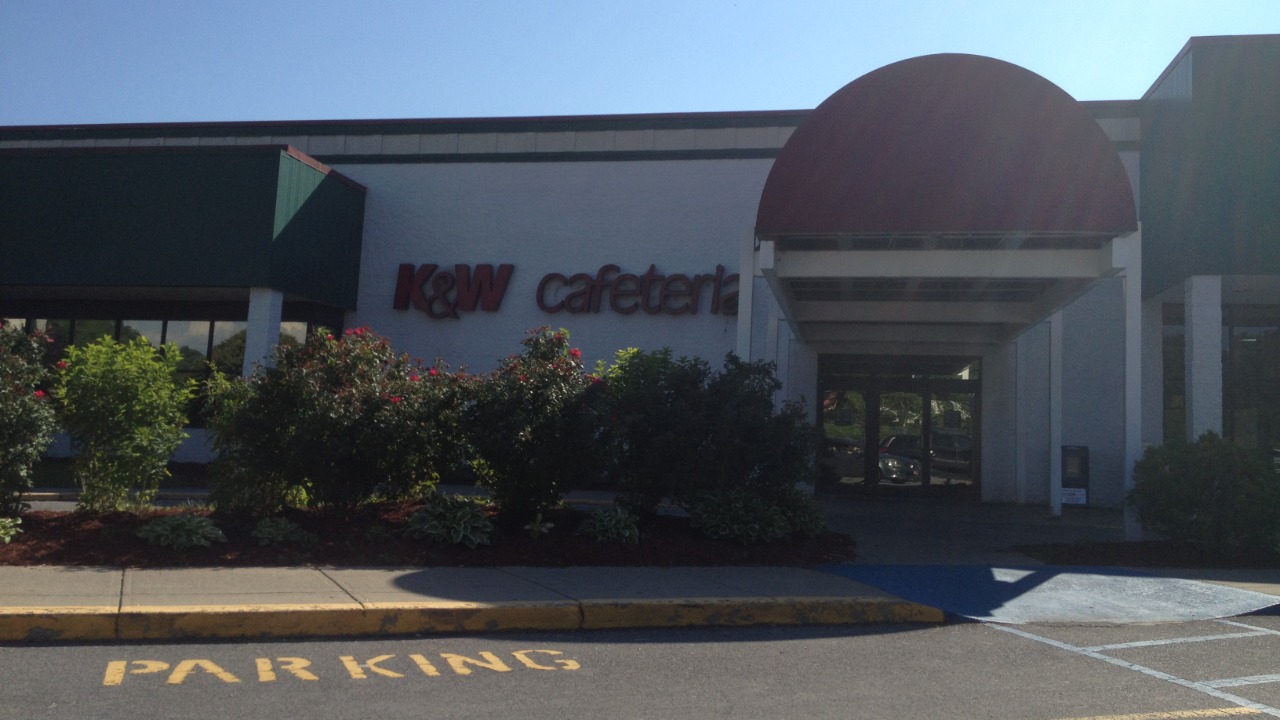
Reports describe the company closing all its Cafeteria locations at once, with no extended farewell tour or phased exit. K&W Cafeterias, identified as a beloved Southern brand, announced an “immediate” shutdown, a choice that left regulars learning the news from locked doors and printed notices instead of from a months-long farewell campaign. For a restaurant group that had become part of the weekly rhythm in cities across the region, the speed of the decision underscored how quickly even an 88-year-old institution can vanish once the economics no longer work.
How workers learned their jobs were gone
For employees, the end of K&W was not a slow fade but a cliff. Accounts describe staff members arriving for shifts only to discover that the chain had shut down, with hundreds of people suddenly out of work just as the holidays approached. One report on an 88-year-old Southern chain describes workers left jobless before the holidays, a particularly brutal moment to lose steady paychecks and health coverage.
Another account notes that on a Monday morning, employees arrived to find doors locked and signs explaining that the company had ceased operations. A separate report on the chain’s collapse describes how, on a Monday morning last week, over 300 K &W Cafeteria workers were swept up in a wave of layoffs, part of a broader pattern in which thousands of workers face holiday job losses.
Hundreds of layoffs, and the human cost behind the numbers
Behind every closure statistic is a roster of cooks, dishwashers, cashiers, and managers who built their lives around the predictability of cafeteria work. Reporting on the shutdown notes that hundreds of employees lost their jobs when the 88-year-old chain closed all locations, a blow that hits especially hard in smaller cities where K&W was a major employer. Many of those workers are older, with decades of service, and may find it difficult to match their previous hours or benefits in a fragmented restaurant market.
Another report frames the collapse as part of a larger wave in which an 88-year-old Southern chain collapses and thousands of workers face holiday layoffs, underscoring that K&W’s story is not an isolated misfortune. When a regional anchor like this disappears, the impact extends beyond the payroll to landlords, local suppliers, and nearby businesses that relied on cafeteria traffic to fill their own parking lots.
What made K&W Cafeterias a Southern staple
To understand the emotional reaction to the closures, it helps to remember what K&W Cafeterias represented. For many families, the chain was a weekly ritual, a place where grandparents could treat grandchildren to baked chicken and banana pudding without breaking the bank. One report describes how Locals remembered the brand for baked chicken, generous portions, and old-fashioned service, the kind of details that turn a restaurant into a community living room.
The chain’s identity was rooted in its cafeteria format, with trays, glass cases, and a line that moved at the pace of conversation. Another account notes that the line formed as usual outside K&W Cafeteria locations, a sign that regulars kept showing up even as the business model strained. In an era of app-based ordering and drive-thru lanes, K&W’s slower, more communal style was part of its charm, and also part of the challenge of keeping up with changing consumer habits.
The final days: lines, locked doors, and no reopening
The final days of K&W were marked by a painful contrast between routine and rupture. One report describes how, even as the chain’s finances deteriorated, the line still formed outside the Cafeteria on a typical day, with regulars expecting another plate of comfort food. That normalcy made the sudden announcement that there would be no reopening even more jarring, as customers who had been in line one week found locked doors the next.
Another account of the Restaurant chain’s final days notes that little explanation was offered for the sudden closure, leaving both diners and staff to piece together what had gone wrong. The company’s decision to end operations without a long public lead-up meant that the last meals many customers shared at K&W were ordinary, unremarkable visits, only later recast in memory as the end of an era.
Why a legacy cafeteria model struggled in 2025
Even before the shutdown, K&W was operating in a restaurant environment that had become far less forgiving to traditional cafeterias. Rising labor costs, higher food prices, and the lingering effects of the pandemic on in-person dining all squeezed margins for businesses that relied on high-volume, low-cost plates. The chain’s 88-year history, highlighted in multiple reports, could not shield it from the structural pressures reshaping the industry, from delivery apps to the dominance of fast-casual brands like Chipotle and Panera.
One report on the industry’s existential crisis in 2025 frames K&W’s collapse as part of a broader reckoning for sit-down and buffet-style concepts. Customers who once lingered over trays of vegetables now split their dining budgets between meal kits, grocery-store prepared foods, and quick-service chains that can invest heavily in mobile ordering. In that context, a cafeteria that depends on steady foot traffic from older diners faces a steep uphill climb.
The timing: holiday layoffs and fragile communities
The timing of K&W’s shutdown has amplified its impact. Reports emphasize that the 88-year-old Southern chain shut down leaving hundreds jobless before holidays, a period when restaurant workers often count on extra shifts and tips to cover travel, gifts, and year-end bills. Losing that income in November and Dec is far more disruptive than a layoff in a slower season.
Another report on the chain’s immediate shutdown notes that K&W Cafeterias announced the closure without a long runway, leaving communities with little time to organize job fairs or support funds. In smaller towns where the cafeteria sat near a Walmart or a strip mall, the restaurant’s closure means fewer customers for neighboring shops at precisely the moment when retailers depend on holiday traffic. The layoffs are not just a private hardship for workers, but a public stress test for local safety nets and workforce programs.
Customers mourn a familiar American dining ritual
For regulars, the loss of K&W is about more than losing a place to eat. It is the disappearance of a familiar American ritual, one that combined affordable comfort food with a sense of shared space. One report describes the chain as a beloved Southern restaurant chain that closes all locations after 88 years in business, noting how American diners saw it as part of a broader tradition of mom-and-pop style chains.
Customers interviewed in coverage of the shutdown recall specific dishes and routines, from the way staff knew regular orders to the comfort of seeing the same faces in the dining room week after week. That sense of continuity is hard to replicate in newer formats built around speed and individual customization. When a place like K&W disappears, it leaves a gap in the social fabric that is not easily filled by a drive-thru or a delivery app.
What K&W’s fall signals for regional chains
The end of K&W Cafeterias raises a larger question about the future of regional chains that lack the scale of national brands but carry deep local loyalty. The chain’s Dec closure, after an 88-year run, shows how quickly a brand can move from “too familiar to fail” to gone. Without the capital to overhaul menus, invest in technology, or absorb temporary downturns, even beloved institutions can find themselves out of options.
At the same time, the outpouring of nostalgia and frustration around K&W’s shutdown suggests there is still demand for places that feel rooted in a particular region and culture. The challenge for the next generation of operators will be to capture that sense of place while building business models resilient enough to survive shocks like inflation, labor shortages, and sudden shifts in dining habits. For now, the locked doors at K&W Cafeterias stand as a warning that sentimental value alone cannot keep a chain alive, and that the cost of failure is measured in both lost jobs and lost gathering places.
More From TheDailyOverview

Grant Mercer covers market dynamics, business trends, and the economic forces driving growth across industries. His analysis connects macro movements with real-world implications for investors, entrepreneurs, and professionals. Through his work at The Daily Overview, Grant helps readers understand how markets function and where opportunities may emerge.