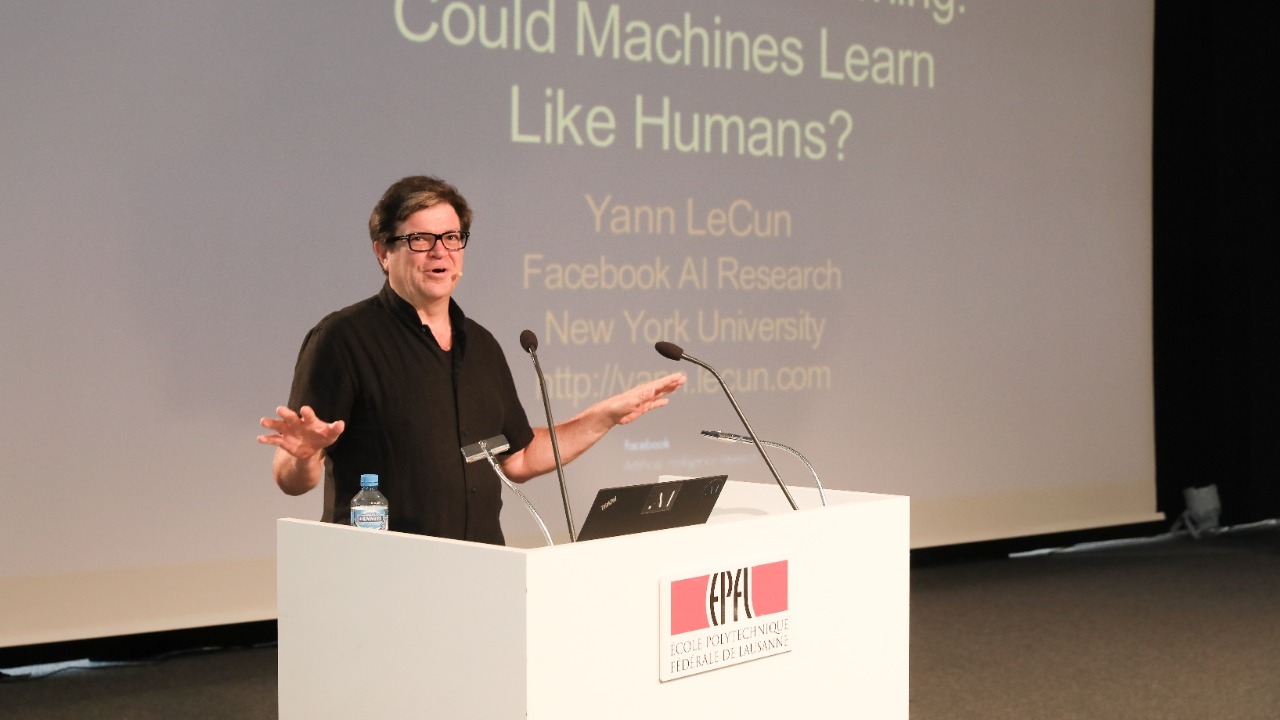
Meta’s decision to hand its most ambitious artificial intelligence push to a 29-year-old outsider has triggered an unusually public backlash from one of the field’s most influential figures. Yann LeCun, the company’s former chief AI scientist and a widely cited “AI godfather,” is warning that putting Alexandr Wang in charge of superintelligence efforts risks alienating the very researchers Meta needs to keep. His criticism lands at a delicate moment, as the company races rivals to build larger models while wrestling with deep internal disagreement over what kind of AI to pursue.
At stake is not only Meta’s technical roadmap but also its ability to retain elite scientists who have spent years shaping the company’s research culture. LeCun’s warnings about a potential staff exodus crystallize a broader anxiety inside big tech: whether aggressive bets on “superintelligence” led by young, high-profile executives can coexist with the slower, more experimental work that made today’s AI breakthroughs possible.
LeCun’s public rebuke of Meta’s new AI boss
Yann LeCun has rarely shied away from intellectual fights, but his latest salvo is unusually personal. In recent comments, he described Alexandr Wang as “young” and “inexperienced” in AI research, arguing that the 29-year-old lacks the depth needed to lead Meta’s most advanced labs. LeCun, who spent years as Meta’s chief AI scientist, framed Wang’s appointment as a risky bet on a leader whose background is rooted more in building a fast-growing company than in publishing foundational research, a critique that has been echoed in Key Points about his limited track record in core AI science.
LeCun’s choice to air these concerns so bluntly underscores how sharply he believes Meta has veered from the path he helped set. He has warned that the company’s AI shake-up is already “backfiring,” pointing to internal unease and suggesting that elevating Wang has undermined confidence among senior researchers who expected a more seasoned scientist in the role. In his telling, the issue is not Wang’s intelligence or drive but the perception that Meta’s leadership is prioritizing optics and speed over depth and continuity, a view reflected in reports that Meta’s AI shake-up has rattled parts of its research organization.
Why a 29-year-old founder is such a polarizing choice
Alexandr Wang is not an unknown quantity in Silicon Valley. As the founder of Scale AI, he became the world’s youngest self-made billionaire by selling data-labeling and infrastructure tools to companies racing to train large models. That entrepreneurial rise, celebrated in profiles that describe how Alexandr Wang turned Scale AI into a central supplier for AI efforts in Silicon Valley, is precisely what made him attractive to Meta executives eager to inject urgency and operational discipline into their own AI push. To leadership, a 29-year-old who has already built a multibillion-dollar company looks like proof that he can marshal resources and ship products at the pace markets now expect.
Inside a research-heavy organization, however, that same profile can be a liability. Many of Meta’s senior scientists built their reputations on decades of work in areas like computer vision and representation learning, and they tend to prize open-ended inquiry over rapid commercialization. For them, the fact that Wang is 29 and comes from a data services background rather than a long academic career reinforces LeCun’s charge that he is “inexperienced” in the kind of deep AI research Meta’s labs conduct. Earlier commentary noted that the move to put Wang in charge immediately raised questions about whether Wang, 29 had the background to build massive superintelligence systems, highlighting the cultural gap between startup-style execution and long-horizon research.
A deeper rift over superintelligence and LLM “dead ends”
Beneath the personality clash sits a more fundamental disagreement about what kind of AI Meta should be building. LeCun has argued for years that the current wave of large language models is not enough to reach true artificial general intelligence, describing the prevailing “AI superintelligence” narrative as a distraction from more promising directions. He has been explicit that the approach centered on ever-larger LLMs is a “dead end,” a phrase that appears in analyses of his Fundamental Disagreement with Meta’s current strategy.
Meta’s leadership, by contrast, has leaned into the race to build “superintelligence,” aligning itself with rivals that are pouring resources into scaling up models and compute. When asked about Meta’s hiring spree and its focus on superintelligence, LeCun reiterated that the future of AI will require systems that can learn from the physical world and structured data as well as language, not just bigger text models. His warning that AI superintelligence is a “dead end” for LLMs, captured in recent comments on superintelligence, is therefore not only a critique of Wang but of the entire strategic pivot that Meta is making under his watch.
From internal clashes to a looming talent problem
The tension has been building inside Meta for some time. Behind the scenes, there have been philosophical clashes over how fast to move and whether the company’s next flagship model should prioritize raw scale or more grounded capabilities. Accounts of internal dynamics describe how, Behind the scenes, Meta’s push to keep up with frontier labs has collided with concerns from elite research talent about safety, openness, and the scientific value of chasing benchmarks. Wang’s arrival has become a focal point for those anxieties, symbolizing a shift toward a more centralized, top-down model of AI development.
LeCun’s own departure from Meta illustrates how those clashes can translate into real attrition. Reports on his exit describe how Meta’s top AI scientist decided to leave and launch his own startup as Mark Zuckerberg pushed harder on “superintelligence,” with sources noting that Meta’s top AI scientist Yann LeCun had run the company’s AI efforts since 2013 before deciding he could no longer align with the new direction. When a figure of his stature warns that Wang’s leadership could trigger a broader staff exodus, it carries weight precisely because he has already voted with his feet.
What LeCun’s warning means for Meta’s AI future
LeCun’s critique is not only about one appointment, it is a test of whether Meta can balance aggressive timelines with the autonomy that top researchers expect. He has framed his exit as the result of a company that no longer wanted someone “like me” telling leadership what to do, a sentiment echoed in accounts that the move to elevate Wang immediately raised questions about whether Meta still valued dissenting scientific voices. Those reports note that the decision to put Wang in charge of superintelligence efforts prompted internal debate over whether the move raised questions about the company’s commitment to its long-time researchers.
For Meta, the risk is that LeCun’s public warning becomes a self-fulfilling prophecy. If senior scientists interpret Wang’s appointment as a signal that youth and founder status matter more than deep research experience, they may be more inclined to join the growing ecosystem of independent labs and startups. LeCun has already amplified that concern by sharing a clip in which an AI godfather says Meta’s new 29-year-old AI boss is “inexperienced” and warns of staff exodus, turning what might have been an internal debate into a public narrative about instability. Whether Meta can prove him wrong will depend on its ability to show that Wang can earn the trust of researchers who care less about his age and more about whether he will protect the kind of open, exploratory work that made the company a serious AI player in the first place.
More From The Daily Overview

Grant Mercer covers market dynamics, business trends, and the economic forces driving growth across industries. His analysis connects macro movements with real-world implications for investors, entrepreneurs, and professionals. Through his work at The Daily Overview, Grant helps readers understand how markets function and where opportunities may emerge.