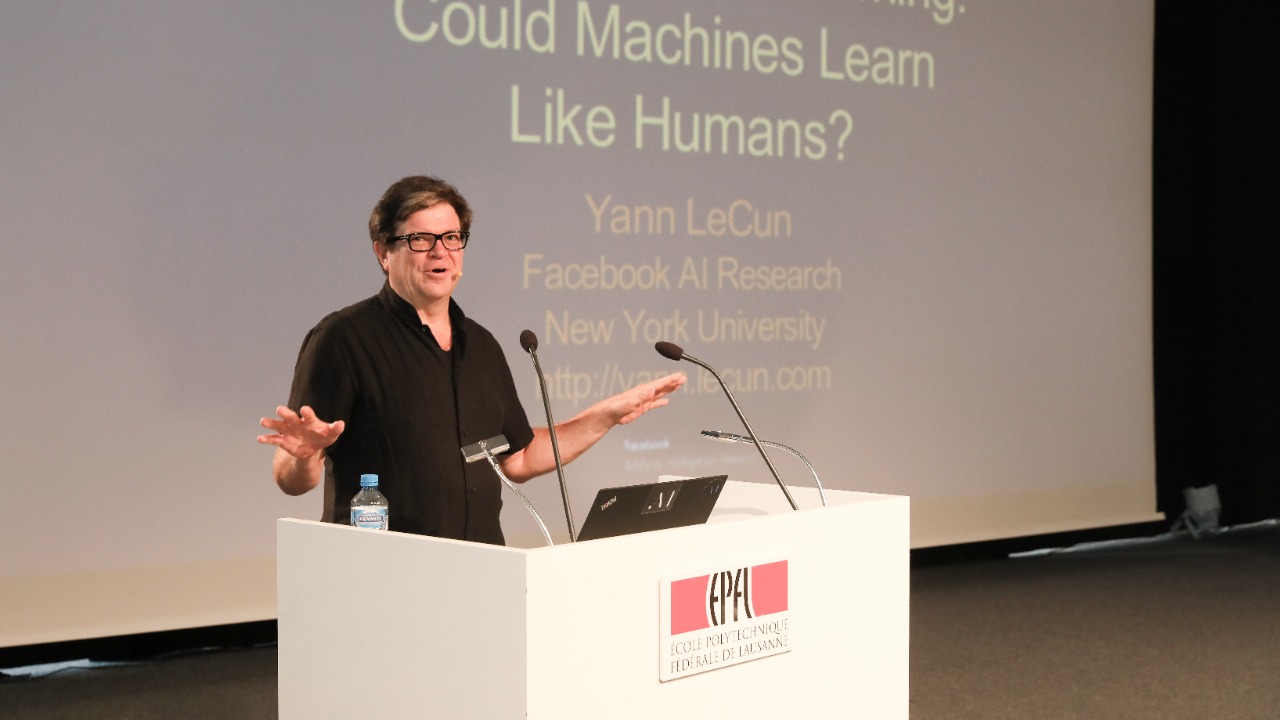
Yann LeCun is trying to bend the rules of startup gravity. Before his new artificial intelligence company has a product, a public launch, or even a fully visible team, he is already aiming for a multibillion dollar valuation that would put the venture in the same league as some established AI players. The move tests how much value markets are willing to assign to reputation, vision, and a radically different technical bet on how machines should understand the world.
At the center of this story is a veteran researcher who helped define modern AI and is now walking away from Big Tech to build something he argues the current wave of chatbots cannot deliver. By targeting a valuation around $3.5 billion on day one, LeCun is not just raising money, he is making a statement about where he believes the next frontier of artificial intelligence will be and how much it is worth.
LeCun’s audacious valuation play
Yann LeCun is already signaling that his new company should be treated like a late‑stage unicorn rather than a seed‑stage experiment. Reporting indicates that he is targeting a valuation of about $3.5 billion for the startup, a figure that would normally be associated with companies that have years of revenue, customers, and shipped products. By setting expectations at that level before launch, he is effectively asking investors to price in his track record and his technical thesis as if they were tangible assets.
Several accounts describe the fundraising goal in slightly different currencies and ranges, but they converge on the same idea: LeCun wants to raise roughly €500 m at a valuation around €3bn, which translates into a multibillion dollar price tag that aligns with the $3.5 billion figure cited in related coverage of $3.5 billion. That ambition sits at the high end of what even the most hyped AI startups have commanded at similar stages, underscoring how much of this valuation is tied to LeCun himself and to the promise of a new kind of AI model rather than to conventional business milestones.
From Meta insider to independent founder
The scale of the ask makes more sense when viewed against LeCun’s previous role inside Big Tech. As Meta’s chief AI scientist, he spent years shaping the company’s research agenda and public posture on artificial intelligence, giving him a front‑row seat to both the capabilities and the limitations of current systems. His decision to leave Meta and build a standalone venture signals a belief that the next phase of AI progress will be easier to pursue outside the constraints of a social media giant’s priorities and risk tolerance.
Reports describe him as Meta’s outgoing AI leader who announced that he would launch a new project focused on “world models,” and that he would not become CEO but instead take on an executive chair role while a separate chief executive runs the company day to day. One detailed account of the fundraising effort notes that the outgoing Meta exec is raising €500m at a €3bn valuation for the new AI startup, and that he has already indicated he will not personally become CEO of AMI Labs, the entity associated with the venture, preferring to remain in a more strategic position while a dedicated operator leads the business, according to Dec Meta.
Inside the €500 million funding target
The fundraising mechanics are as aggressive as the headline valuation. LeCun is seeking around €500 million in initial capital, a sum that would instantly place his company among the best funded AI startups in Europe. That figure, which has also been framed as €500 m and €500 million in coverage, is roughly equivalent to $586 m or $586 million at current exchange rates, underscoring the global scale of the bet he is asking investors to make on his approach to AI.
One report characterizes this €500 million target as one of the largest early‑stage raises for an AI company, especially for a venture that has not yet launched a product or opened its platform to customers. Another account describes the effort as a €500M AI Startup and calls LeCun’s move “The Bold Departure Reshaping Artificial Intelligence,” emphasizing that he is leaving his role as Meta’s chief AI scientist to pursue this funding round with the expectation that the company will be capitalized at a level more typical of a late‑stage growth startup, as detailed in coverage of Yann Startup The Bold Departure Reshaping Artificial Intelligence Meta.
What a “world model” startup actually means
LeCun’s pitch is not just about money, it is about a different way of building AI. Instead of focusing on ever larger language models that predict the next word in a sentence, he has argued for years that machines need internal “world models” that can reason about physical reality, cause and effect, and long‑term consequences. His new startup is explicitly framed around this idea, promising systems that can understand and act in the world rather than simply chat about it.
Reporting on the company’s formation notes that LeCun has confirmed his new “world model” startup and that it is reportedly seeking a valuation that could even stretch beyond the already ambitious multibillion dollar figures being discussed. One detailed account describes how he has been working with investors and partners to build a company that can translate his long‑standing research agenda into commercial products, and that the valuation ask, while high, is being entertained because of his reputation as one of the field’s leading scientists, according to Julie Bort PST Image Credits Kevin Dietsch Getty Images.
Why he is walking away from Silicon Valley
Another striking element of LeCun’s plan is where he wants to build. Rather than centering the company in Silicon Valley, he has been explicit about his frustrations with what he sees as the region’s current obsession with short‑term hype and incremental productization of existing models. He has suggested that the environment around generative AI in California is increasingly dominated by marketing cycles and valuation races, which he believes can distract from the deeper scientific work needed to reach more general intelligence.
Coverage of his departure highlights that One of AI’s “godfathers” is leaving Meta and that he has some strong words about Silicon Valley’s current obsession with AI, portraying him as a legendary artificial intelligence figure who is disillusioned with the prevailing culture. Another report frames his move as part of a broader story about Why LeCun is abandoning Silicon Valley, noting that his €500 m, or €500 million, funding target of about $586 m, or $586 million, would be one of the largest private raises for an AI startup outside the traditional Bay Area hubs, as described in analysis of Dec Why Silicon Valley and in social posts referencing Dec One of AI Meta Silicon Valley.
How AMI Labs fits into the picture
Much of the reporting around LeCun’s new venture centers on AMI Labs, the entity that appears to be the corporate vehicle for his world model ambitions. Accounts describe AMI Labs as the company where he will serve as executive chair, with a separate chief executive taking on the operational leadership. This structure allows him to remain deeply involved in the scientific direction while delegating the day‑to‑day running of the business to someone with more traditional startup management experience.
One detailed profile notes that Yann, who had been serving as Meta’s chief AI scientist, is already targeting a $3.5 billion valuation for AMI Labs even though the startup has not yet launched publicly, and that he will not take the chief executive role himself. The same reporting emphasizes that he is stepping away from his long‑time corporate home to focus on this new venture, framing the move as a high‑stakes bet that his world model approach can support a company valued in the billions from the outset, as described in coverage by Dec Dave Smith Editor News Yann.
Early partners and the Nabla connection
Even before AMI Labs has a product on the market, there are signs that potential customers are willing to line up. One of the most concrete examples is a partnership with Nabla, a health technology company that has been building AI tools for clinicians. Nabla has said it has signed an agreement to use AMI’s models as they are developed, effectively committing to integrate LeCun’s world model systems into its own products once they are ready.
The same reporting notes that Nabla has raised $120 million, a figure also described as $120 m and $120 in coverage, giving it the financial capacity to be an early anchor customer for AMI Labs’ technology. By securing a partner like Nabla at this stage, LeCun can point to real downstream demand for his models, which helps justify the large funding round and lofty valuation he is seeking, as detailed in accounts of Dec Nabla AMI.
How his valuation stacks up against other AI bets
LeCun’s valuation target does not exist in a vacuum. Over the past two years, investors have poured billions into generative AI startups, from model labs to application‑layer companies. Yet even in that context, a pre‑launch valuation in the $3 billion range stands out. Many peers reached similar numbers only after shipping products, signing major cloud deals, or demonstrating significant revenue traction.
One report on Meta’s AI leadership describes how the Meta AI Chief’s Startup Seeks $3 Billion Valuation Before Launch, underscoring that the company is aiming for a multibillion dollar price tag while still in its formative stages. Another account notes that he is raising €500m at a €3bn valuation, which aligns with the $3.5 billion figure cited elsewhere, and that this would place AMI Labs among the most richly valued AI startups at its stage, as highlighted in coverage of Dec Meta AI Chief Startup Seeks Billion Valuation Before Launch By PYMNTS December Meta.
The risks and rewards of pricing on reputation
For investors, backing LeCun at a $3.5 billion valuation before launch is a bet that his name, network, and technical thesis will translate into a defensible business. The upside is clear: if world models become the next dominant paradigm in AI, AMI Labs could own a critical piece of the stack, and early backers would have secured exposure at the ground floor of a potentially transformative platform. The downside is that even a legendary researcher cannot guarantee product‑market fit, and the company will still need to execute on hiring, infrastructure, and commercialization in a fiercely competitive landscape.
Some coverage hints that the valuation ask could even stretch higher, with one report noting that LeCun’s new world model startup is reportedly seeking a valuation that might exceed the already eye‑catching figures being widely discussed. Another emphasizes that he is targeting a $3.5 billion valuation for his new startup that has not even launched yet, framing the move as a test of how far markets are willing to go in pricing future potential over present reality, as described in related reporting on Dec Yann Fortune.
More From TheDailyOverview

Grant Mercer covers market dynamics, business trends, and the economic forces driving growth across industries. His analysis connects macro movements with real-world implications for investors, entrepreneurs, and professionals. Through his work at The Daily Overview, Grant helps readers understand how markets function and where opportunities may emerge.