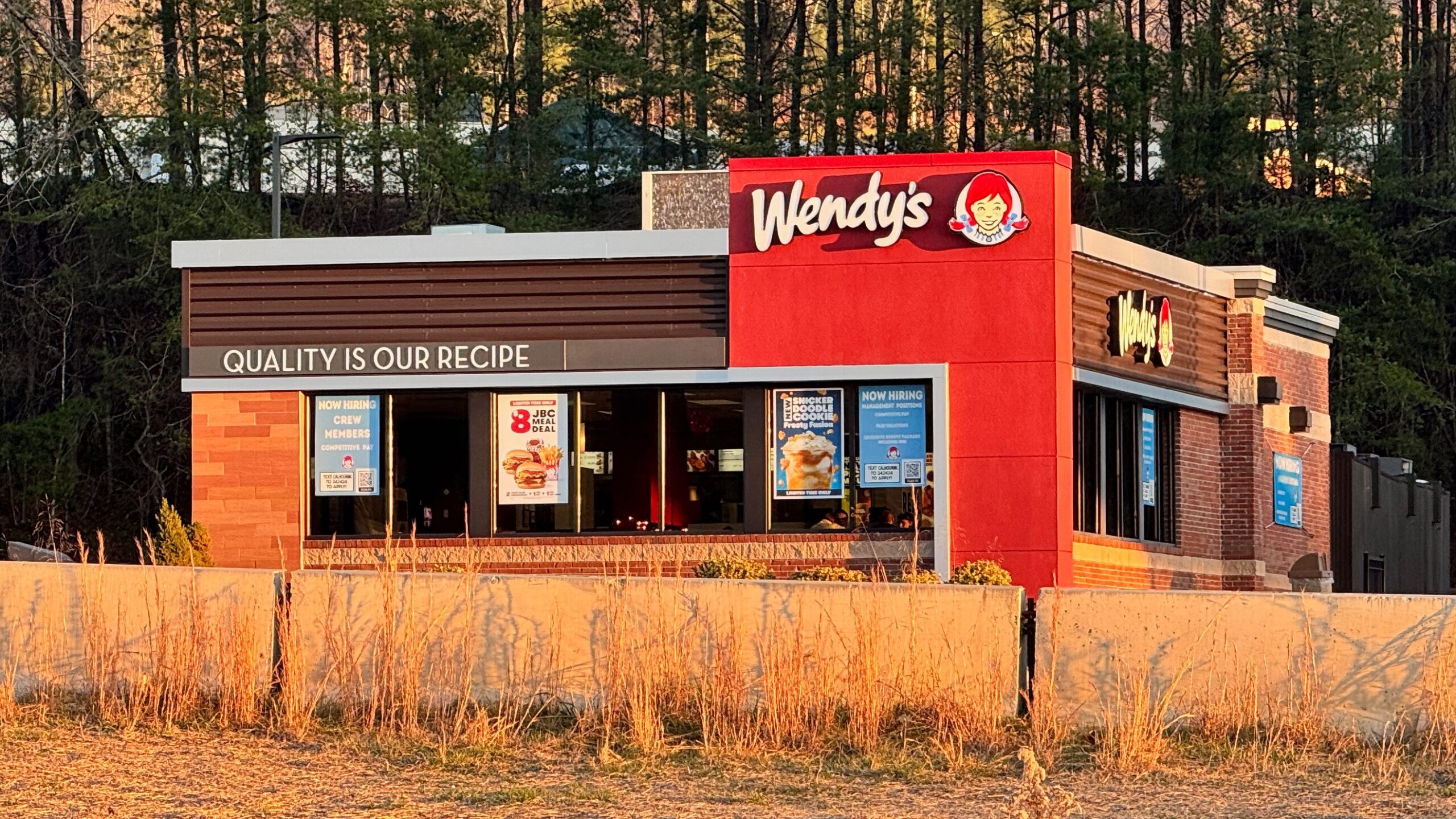
Wendy’s closed out 2025 with its steepest quarterly sales decline in recent memory, reporting a double-digit drop in U.S. same-restaurant sales during the fourth quarter. As the fast-food chain scrambles to reverse the slide with internal turnaround plans, PETA has jumped in with an unsolicited prescription: add vegan chicken to the menu. The collision of a real financial crisis with an animal-rights publicity campaign captures a broader tension over how legacy burger chains should respond when customers stop showing up.
Fourth-Quarter Numbers Expose the Depth of the Slide
The scale of Wendy’s downturn became clear when the company released its full-year and fourth-quarter 2025 results. According to the company’s own earnings release, global systemwide sales fell 8.3% in the fourth quarter to $3.4 billion, while full-year global systemwide sales dropped 3.5% to $14.0 billion. Full-year net income landed at $165.1 million, adjusted EBITDA at $522.4 million, and free cash flow at $205.4 million. The chain still added 157 net new restaurants during 2025, but unit growth did little to offset the revenue contraction at existing locations, underscoring that simply opening more stores cannot compensate for weakening demand across the base.
The U.S. market drove the worst of the damage. Same-restaurant sales in the domestic market fell 11.3% in Q4 2025, accompanied by a traffic decline that management attributed in part to changes in marketing spend and a pullback from certain promotions. On the earnings call, executives pointed to Project Fresh and a revamped value strategy as the primary tools for recovery. Those initiatives aim to rebuild foot traffic through menu updates, operations improvements, and sharper promotional pricing, but neither has yet produced measurable results in the reported numbers, leaving investors and franchisees to wait for evidence that the strategy can stabilize the business.
A Slump That Built Slowly Through 2025
The fourth-quarter plunge did not arrive without warning. Earlier in the year, Wendy’s revised its full-year outlook as U.S. sales faltered, citing intensifying competition, shifting consumer behavior, and declining traffic. That guidance cut signaled the company was already losing ground well before the holiday quarter and set the stage for the sharper deterioration that followed. The problems were structural rather than seasonal: consumers were trading down, stretching budgets, or eating out less frequently, while rival chains competed aggressively on price and value bundles that made it harder for Wendy’s to stand out.
Regulatory filings trace the financial pressure in real time. In its quarterly report for the period ended September 28, 2025, Wendy’s described a mix of commodity volatility, higher labor costs, and other operational headwinds weighing on margins and sales trends. The company’s earlier annual filing for fiscal 2024 had already outlined key risk factors, including intense competition and sensitivity to consumer spending patterns, that would become more acute as 2025 unfolded. Taken together, these documents show a chain that entered the year aware of mounting risks and then watched those risks materialize quarter by quarter as traffic softened and pricing power eroded.
PETA’s Vegan Chicken Pitch to Interim CEO Kenneth Cook
Into this financial turbulence stepped PETA with a public letter to Wendy’s interim CEO Kenneth Cook. The animal-rights organization issued a press release urging the chain to add a vegan chicken sandwich or wrap to its menu, framing the move as a business fix rather than purely an ethical appeal. PETA President Tracy Reiman explicitly tied the proposal to Wendy’s slumping sales, arguing that plant-based options could attract customers who have drifted away from traditional fast-food menus and help the company tap into what the group portrays as a growing market for animal-free proteins.
The timing was deliberate. By pegging the letter to the company’s worst quarterly performance in years, PETA positioned vegan chicken not as an abstract cause but as a commercial opportunity during a moment of genuine vulnerability. The organization’s pitch leans on the premise that a meaningful segment of diners now seeks plant-based alternatives and that Wendy’s is leaving money on the table by not offering one. PETA also highlighted competitors that have experimented with meatless offerings to suggest that Wendy’s risks appearing out of step with evolving tastes. Whether that premise holds up against Wendy’s own customer data is an open question, however, because no independent consumer research on vegan demand specific to Wendy’s locations has been made public in the company’s financial disclosures or commentary.
Why the Vegan Fix Faces Real Skepticism
PETA’s proposal sounds clean on paper, but the fast-food industry’s recent experience with plant-based menu items tells a more complicated story. Several major chains have tested and then scaled back or discontinued vegan burgers and chicken alternatives after initial curiosity faded and sales failed to justify the added supply-chain complexity and training requirements. Wendy’s own turnaround strategy, as outlined on its latest earnings call, centers on Project Fresh, operational execution, and value-driven promotions, none of which currently involves a major push into plant-based protein. Management’s emphasis on marketing efficiency, traffic rebuilding, and sharper value propositions suggests the company views its core problem as execution and pricing rather than a missing vegan category.
The deeper issue is whether Wendy’s 11.3% same-restaurant sales decline in the U.S. reflects customers who want different food or customers who want cheaper food. The language used when the company trimmed its guidance, highlighting competition and consumer behavior shifts, aligns more closely with price sensitivity than with widespread dietary conversion to veganism. If the average Wendy’s customer left because a rival’s deal was a few dollars cheaper or offered a more compelling bundle, a vegan chicken wrap likely priced at a premium is unlikely to bring them back in large numbers. For franchisees already grappling with margin pressure, adding a low-volume specialty item that requires new ingredients, preparation procedures, and marketing support may look more like a distraction than a solution.
What a Realistic Turnaround Might Require
None of this means Wendy’s should ignore plant-based eating entirely; it does mean that a single menu item is unlikely to reverse a broad-based decline that shows up across its financial statements. The company’s own filings and commentary point to a more comprehensive set of challenges: slowing traffic, rising costs, and a value proposition that has not resonated strongly enough with budget-conscious diners. Addressing those issues could involve refining price points, simplifying operations to improve speed and consistency, and investing in marketing that clearly communicates why Wendy’s offers better perceived value than its peers. Within that broader framework, testing a carefully designed plant-based option in select markets could make sense as one experiment among many rather than the centerpiece of a turnaround story.
For PETA, tying its vegan chicken campaign to Wendy’s slump is a way to keep animal-welfare arguments in the business headlines, using the company’s disappointing quarter as a hook. For Wendy’s leadership, the task is less about responding to advocacy group pressure and more about demonstrating, through future quarters, that Project Fresh and its value strategy can stabilize sales without eroding profitability. Investors, franchisees, and employees will be watching whether the next set of numbers shows that the company can win back price-sensitive customers, even if it ultimately decides that a vegan sandwich is just a side note rather than the main course in its recovery plan.
More From The Daily Overview
*This article was researched with the help of AI, with human editors creating the final content.

Grant Mercer covers market dynamics, business trends, and the economic forces driving growth across industries. His analysis connects macro movements with real-world implications for investors, entrepreneurs, and professionals. Through his work at The Daily Overview, Grant helps readers understand how markets function and where opportunities may emerge.

