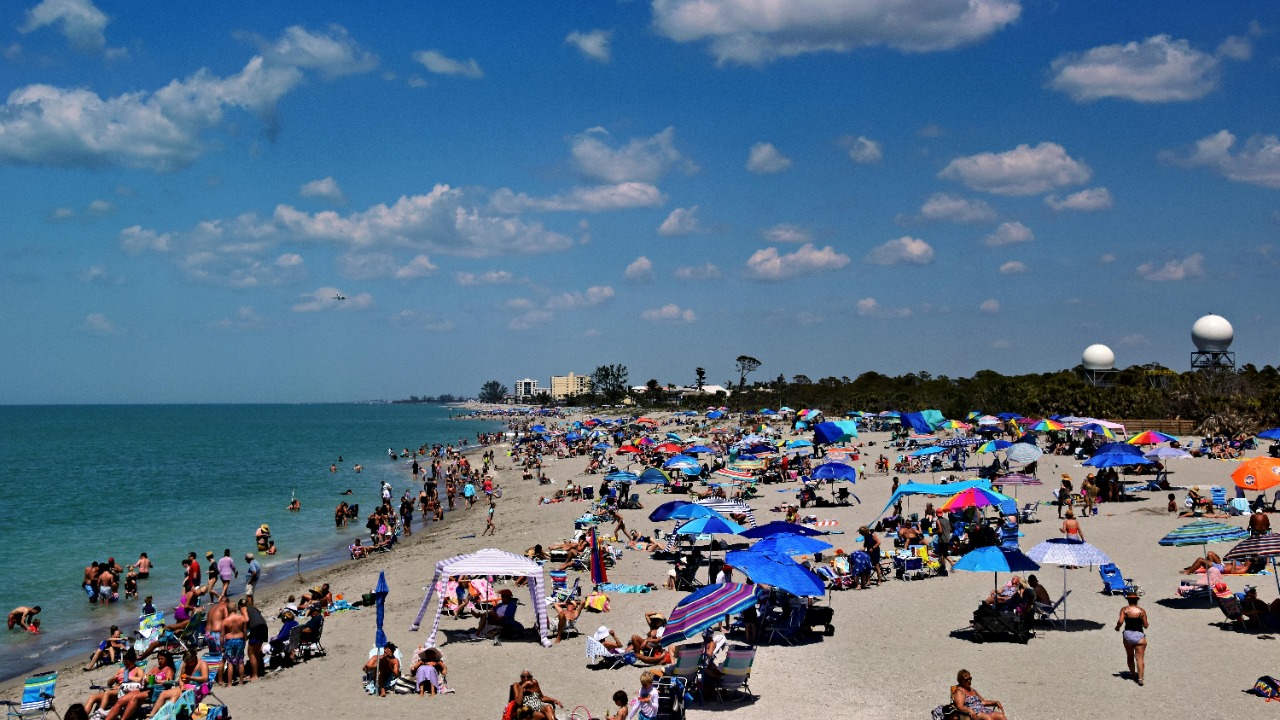
Florida’s long run as America’s default dream destination is colliding with a harsher reality of soaring costs, fragile infrastructure and climate risk. After a pandemic-era surge that brought more than half a million newcomers between 2020 and 2022, the state is now watching a growing share of residents quietly plan their exit. The emerging pattern is not just a lifestyle story, it is a structural shift that could reshape where wealth, workers and retirees land across the South.
The core dynamic is simple but brutal: incomes have not kept pace with housing, insurance and everyday expenses, turning what once felt like a bargain paradise into a high-stress gamble. Polls showing that roughly half of Floridians are at least thinking about leaving hint at a deeper turning point, where the Sunshine State’s promise of easy living is giving way to a calculation about risk, resilience and long term security.
From boomtown to breaking point
Florida’s pandemic boom was dramatic even by Sun Belt standards, with the number of people relocating to the state from 2020 to 2022 swelling by more than half a million according to one analysis of the Sunshine State. That wave helped push Florida’s population to about 23.4 m residents and underpinned projections that it could reach 25.7 m by 2034, an increase of 2.3 m people that state forecasters highlighted in a key Figure. The story at the time was straightforward: lower taxes, warm weather and relatively cheaper homes were pulling in retirees and remote workers from higher cost states.
That narrative is now fraying. Nationally, population growth has slowed, with federal data noting that between July 1, 2024 and July 1, 2025 the United States added only 1.8 m people, a 0.5% increase that brought the total to 341.8 m, according to the Census Bureau’s National Highlights. Like the rest of the country, Florida is feeling the effects of lower net international migration, a trend that has affected every state and the District of Columbia. On top of that, reporting on President Donald Trump’s immigration crackdown notes that Florida has seen year to year drops in both immigrants and domestic in movers, with inflows falling from 411,000 people to 178,000 people according to one Lower immigration analysis. The boom has not exactly gone bust, but the momentum is clearly cooling.
The cost of living shock
For many residents, the breaking point is not the weather or politics, it is the monthly bills. Surveys show that nearly Half of Floridians are now weighing whether to stay, with one Florida Atlantic University Poll finding that 50% of respondents have at least Contemplate Exodus as a Cost of Living Crisis Deepens. Another poll found that a Quarter of Florida residents “seriously” consider leaving because of affordability, a result that Quarter of Florida Researchers tied directly to housing and insurance pressures. Those numbers are not abstract, they show up in conversations at school pick up lines and condo board meetings where families quietly admit they are browsing listings in other states.
The housing shock is particularly stark. One survey cited in a national report found that Housing prices in Florida jumped more than 50% during the pandemic and, even after some cooling, remain well above pre 2020 levels, with one analysis pegging the increase at 50%. Local coverage from Southwest Florida captures residents who say they are being “priced out of paradise” and asking What, exactly, local and state officials plan to do about it, a sentiment reflected in Southwest Florida reporting on affordable housing. When you layer in inflation at the grocery store and rising utility costs, the math that once made Florida look like a slam dunk for middle class transplants no longer works.
Insurance, climate risk and the fragile dream
If housing is the first shock, insurance is the aftershock that turns anxiety into action. The state’s property insurance market has been battered by Extreme weather, with one industry analysis noting that hurricanes, flooding and wind damage have driven up claims and pushed some carriers to pull back or fail, creating what it bluntly calls an Extreme home insurance crisis. Another breakdown of Why Are People Leaving Florida lists Insurance Crisis as One of the top reasons, pointing to rising premiums and companies leaving the state entirely, a pattern detailed in One of the most widely cited moving reports. For homeowners on fixed incomes, the combination of a volatile insurer and a mortgage that depends on that coverage feels less like paradise and more like a bet at a casino.
The stakes show up in migration data. The Florida Chamber of Commerce has reported that 511,000 people moved out of the state in 2023, the most on record, a figure highlighted in an Nov analysis of disaster and insurance costs. Retirees who once imagined spending decades in Florida are now leaving after just a year and a half, with one report on The Migrati patterns of older Americans describing how some move to Florida to retire then leave after 18 months because the constant storm risk and premium spikes feel like “no way to spend your golden years,” a dynamic explored in The Migrati. The dream is not just fragile, it is increasingly conditional on being wealthy enough to absorb shocks.
Who can still afford paradise?
Florida’s demographic profile is shifting as costs climb. Reporting on Florida’s older population notes that Wealthy retirees are still arriving and reshaping communities, even as middle income seniors struggle, with one analysis bluntly stating that Florida‘s older population is transforming as the state’s costs of living balloon. Another survey of retirement destinations still finds that Florida remains a leading destination for retirees, with several metros ranking among America’s top 50 fastest growing retirement hubs, a trend highlighted in Explore America. The result is a kind of bifurcated paradise, where affluent newcomers can pay cash for homes and self insure against risk while long time residents and younger families are squeezed.
Local leaders are starting to voice concern about what that means for the next generation. One of the most pointed warnings came from a state lawmaker who said that One of her biggest worries “as a mom of two boys” is that young people are leaving Florida because they cannot see a future there, a comment captured in a One of widely shared survey stories. If that outflow accelerates, the state risks an intergenerational wealth drain, where older, richer households stay while younger, less affluent families build equity and careers elsewhere. That is not just a social concern, it is a long term economic one, because it shapes who will be around to staff hospitals, schools and small businesses when today’s retirees need them most.
Where the leavers are going
Migration is rarely a simple “out of” story, it is also an “into” story, and Florida’s leavers are helping to fuel growth in a ring of alternative Southern and Mountain states. Data on inbound moves shows that states like Georgia, North Carolina and Tennessee are attracting movers with a mix of lower housing costs, growing job markets and, in many areas, less acute climate risk. Neighboring South Carolina offers a similar coastal lifestyle with somewhat cheaper insurance in many inland counties, while Idaho has emerged as a surprise magnet for those willing to trade beaches for mountains. A separate look at inbound migration notes that Although the Midwest is having a moment, the biggest net gains are in a cluster of lower cost states, a pattern highlighted by Although the Midwest coverage of 2025 moving trends.
More From The Daily Overview
*This article was researched with the help of AI, with human editors creating the final content.

Elias Broderick specializes in residential and commercial real estate, with a focus on market cycles, property fundamentals, and investment strategy. His writing translates complex housing and development trends into clear insights for both new and experienced investors. At The Daily Overview, Elias explores how real estate fits into long-term wealth planning.