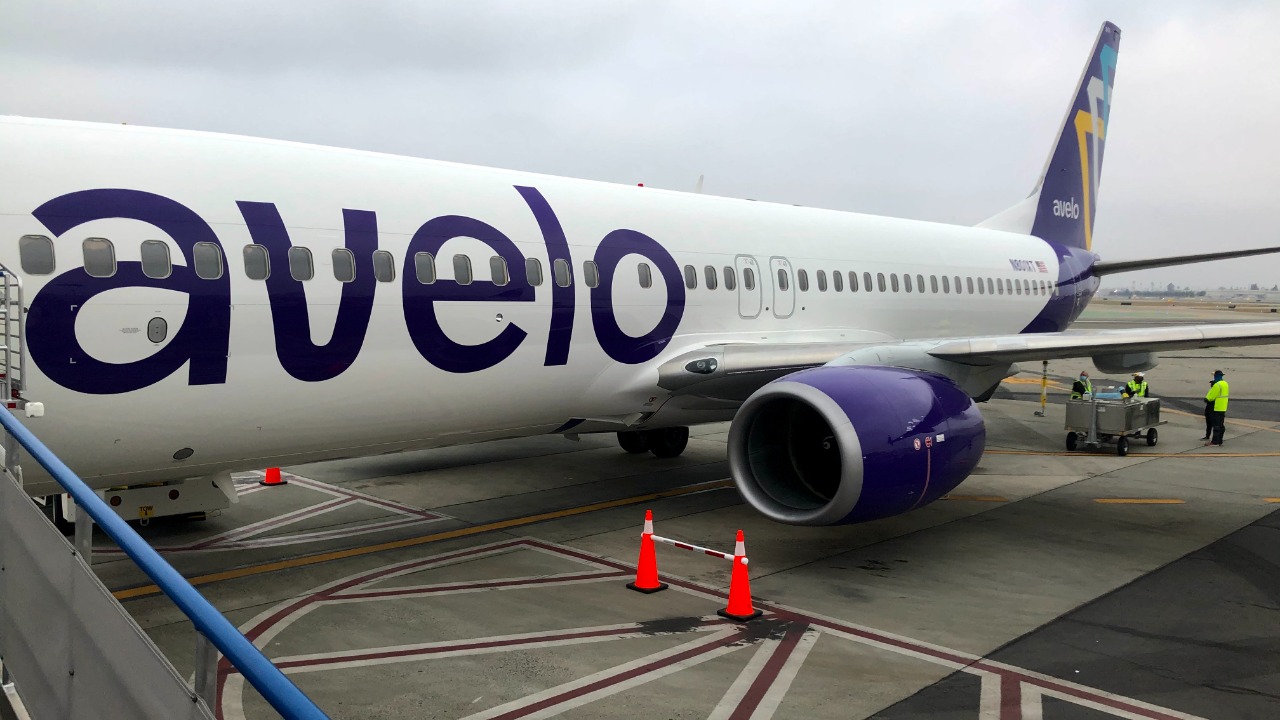
Avelo Airlines, the Houston-based budget carrier that launched with promises of low fares and underserved routes, says it is cutting roughly 29% of its flying as part of a sweeping network and fleet reduction tied to what the company calls a 2026 balance sheet transformation. The airline will pull out of several bases, shed aircraft, and end its controversial deportation charter work connected to U.S. Immigration and Customs Enforcement, on a compressed timeline. For travelers who booked cheap flights on Avelo routes this spring and summer, the fallout is already landing in their inboxes.
Bases Shuttered, Routes Gutted
Avelo’s restructuring hits four named locations hard, according to the company’s announcement. The airline confirmed it will simplify its network by pulling service from Nashville (BNA), New Haven, Conn. (HVN), Tampa, Fla. (TPA), and Baltimore/Washington International (BWI). Each of those cities had been part of Avelo’s pitch as an alternative to legacy carriers at secondary airports, and losing them strips the airline of a significant share of its scheduled departures. The company acknowledged that these changes “will impact many Customer itineraries,” a rare admission from an airline that typically frames cuts as strategic optimization.
The closures represent more than a route trim. New Haven’s Tweed Airport was one of Avelo’s original East Coast anchors when the carrier began operations in 2021, and Nashville had been positioned as a growth market. Pulling out of BWI also removes Avelo from the Washington, D.C., metro area entirely, a region where budget carriers have historically found strong demand from government workers and leisure travelers alike. The breadth of the pullback suggests the airline is not simply pruning underperformers but retreating to a much smaller operational footprint, at least in the near term.
Deportation Flights End After Public Pressure
Alongside the commercial route cuts, Avelo is ending its deportation flights for ICE, a move the Washington Post linked to public backlash over the practice. The airline had been operating removal flights through an intermediary arrangement with CSI Aviation, a structure that initially kept Avelo’s name out of public view. Once the connection became widely known, advocacy groups, travelers, and elected officials pushed back sharply, according to that reporting.
Avelo has framed its exit from DHS/ICE-related charter work as part of the same simplification effort driving its base closures and fleet reductions, rather than as a direct response to criticism. But the timing highlights how public pressure and business realities can intersect. The carrier leaned on deportation charters as a steady source of flying during periods of softer leisure demand, then moved to unwind that relationship just as campaigns targeting the flights intensified. Ending the charters may help Avelo repair its image with some travelers, even as it removes a revenue stream at a moment when every dollar of utilization matters.
Fleet Cuts and Financial Stress
The Wall Street Journal reported that Avelo is shedding aircraft and closing hubs as part of the same restructuring wave, tying the moves to operational challenges that extend beyond any single revenue line. The carrier had taken on a notable share of ICE Air flying in 2025, according to that reporting, which means the deportation exit does not just resolve a public-relations problem but also removes a block of relatively predictable charter income the airline was counting on to offset thin margins on its commercial routes.
That creates a difficult math problem for a carrier trying to shrink its operation while keeping costs in check. Budget airlines depend on high aircraft utilization to keep per-seat costs low, and every plane Avelo parks or returns to lessors raises the unit cost on its remaining flights. The “2026 balance sheet transformation” language in the company’s own statements signals that this is not a routine schedule tweak but a deeper financial reset, the kind of move airlines make when they are attempting a significant financial reset. Without public debt disclosures or audited financials, the exact depth of the hole is unclear, but the scale and speed of the cuts point to a carrier that expanded aggressively into post-pandemic leisure demand and is now scrambling to resize before cash runs out.
What Federal Data Can Reveal
Independent verification of the flight reduction’s full scope will depend on federal reporting. The Bureau of Transportation Statistics publishes detailed T-100 segment data, which tracks departures performed, seats offered, capacity, and aircraft hours by carrier and route. That dataset, cataloged via Data.gov records, is the standard tool for measuring how much flying a U.S. airline actually does versus what it schedules or announces in press releases. Once Avelo’s post-restructuring numbers flow into the T-100 filings, analysts and journalists will be able to confirm whether the reduction matches the roughly 29% figure or ends up even steeper.
The lag in federal reporting matters. BTS data typically trails real-time operations by several months, meaning the full picture of Avelo’s contraction will not be visible in official statistics until well into 2026. In the interim, airport departure boards, schedule-tracking services, and filings with local airport authorities will serve as imperfect proxies for the airline’s true scale. For travelers, though, the practical takeaway is simpler: if a route disappears from Avelo’s booking engine or an airport loses its Avelo-branded check-in counters, it is effectively gone, and the federal data will eventually confirm the pattern in retrospect rather than prevent disruptions as they unfold.
Budget Travelers Face Fewer Options
Most coverage of airline restructurings focuses on the carrier itself, but the real cost falls on the cities and passengers left behind. New Haven, Nashville, Tampa, and the Baltimore–Washington region all lose a competitor that had been undercutting legacy carriers on price and, in some cases, offering nonstop flights that no other airline provided. For a family in New Haven who had come to rely on direct low-cost flights to Florida, or a leisure traveler in Nashville looking for a cheap weekend getaway, the disappearance of Avelo means either paying more to fly a different airline or driving farther to an alternate airport.
The cuts also ripple through local economies. Airports that hosted Avelo bases or focus operations invested in gate space, marketing, and ground handling tailored to the carrier’s model, betting that low fares would stimulate demand and support jobs. With Avelo pulling back, those airports face lost passenger traffic and revenue at a time when many smaller facilities are still rebuilding from the pandemic downturn. Competing carriers may eventually step in to fill some of the gaps, but they are unlikely to replicate the same mix of ultra-low fares and niche point-to-point routes that defined Avelo’s initial strategy, leaving budget-conscious travelers with fewer true bargain options.
More From The Daily Overview
*This article was researched with the help of AI, with human editors creating the final content.

Grant Mercer covers market dynamics, business trends, and the economic forces driving growth across industries. His analysis connects macro movements with real-world implications for investors, entrepreneurs, and professionals. Through his work at The Daily Overview, Grant helps readers understand how markets function and where opportunities may emerge.

