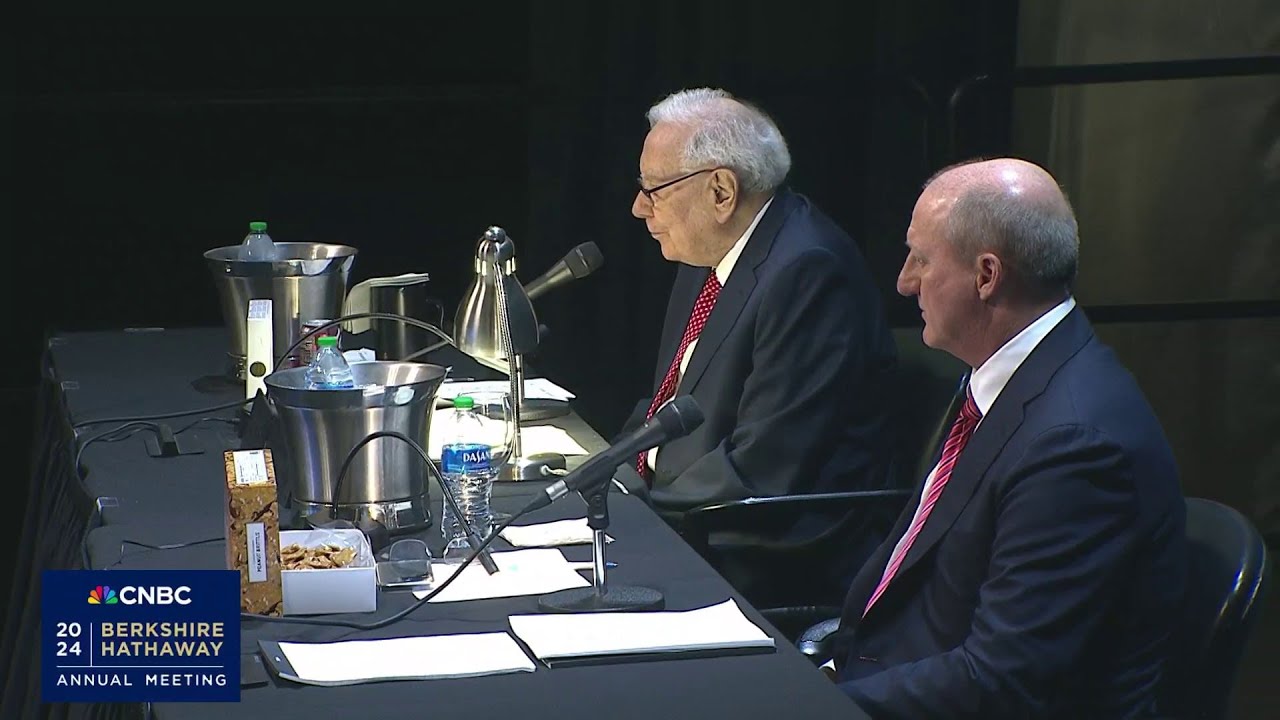
Warren Buffett has finally handed day-to-day control of Berkshire Hathaway to his chosen successor, Greg Abel, a leader who has spent decades avoiding the spotlight even as he rose through the company’s ranks. The transition from Warren Buffett to Greg Abel as CEO marks a generational shift at one of the world’s most closely watched conglomerates, but the man now in charge has revealed only glimpses of how he thinks and what he values. I want to unpack what those glimpses show about how Greg Abel is likely to run Berkshire, and why his low-key style may be central to the company’s next chapter.
From soda bottles to the Berkshire inner circle
Greg Abel’s story starts far from Wall Street, in a childhood defined less by pedigree than by hustle. As a kid, he collected empty soda bottles and sold them for 5 cents each, even planning his bike rides home from school to scoop up as many as possible, a small but telling sign of the efficiency mindset that would later define his business career. That early instinct to squeeze value from overlooked corners eventually carried him into the energy industry, where he helped build a power business that would become a key part of Berkshire Hathaway’s empire and set him on the path to the top job.
His rise inside the conglomerate accelerated when he took leadership roles at the utility operations that evolved into Berkshire Hathaway Energy, where he turned a regional platform into a major infrastructure player and secured large clients such as CalEnergy. The track record he built there, and later as vice chair overseeing non-insurance operations, convinced Warren Buffett that Greg Abel was the right person to succeed him as CEO of Berkshire Hathaway. By the time the board formalized the succession, Abel had already become the quiet force behind many of Berkshire’s industrial, energy, and service businesses, even if his name remained unfamiliar to most shareholders.
A low-profile personality with a clear philosophy
For a man now running a trillion‑dollar company, Greg Abel has shared remarkably little about his personal life or inner circle. He has offered only rare hints, including one comment last year that he wants to spend his time on work he would “want to do every day,” a simple line that reveals how he thinks about long-term commitment and fit. That reticence is not an accident. Abel has deliberately kept the focus on Berkshire’s operating companies rather than on himself, a stark contrast to Warren Buffett’s public persona and annual‑meeting showmanship, even as he steps into the CEO role that Warren Buffett held for decades.
That low-key style extends to how he talks about Berkshire’s culture. Abel has emphasized continuity, telling investors that he is by nature a long‑term manager and that he intends to run the company in a way that closely mirrors his predecessor’s approach. He has signaled that he will keep large amounts of cash on hand until genuine bargains appear, echoing the discipline that made Warren Buffett famous, and he has stressed that he sees himself as a steward of a system that already works. Those comments, captured in profiles of Abel, suggest that his quiet demeanor is not a lack of conviction but a deliberate choice to let Berkshire’s decentralized model and operating managers remain the stars.
Hands-on operator, not a copy of Buffett
Even as he promises continuity, Greg Abel is not a carbon copy of Warren Buffett, and the differences matter. Where Buffett often described himself as a capital allocator who left day‑to‑day operations to others, Abel has a reputation for being more hands‑on with the businesses he oversees. Reports from inside Berkshire describe Abel playing an active role managing companies and engaging directly with executives on performance and strategy, a style that has already led some to see him as a more involved operator than Buffet was in his later years.
That operational focus has shown up in early personnel moves. Abel has already made clear that he expects strong performance from Berkshire’s subsidiaries and is willing to adjust leadership when needed, including appointing NetJets CEO Adam Johnson as manager of a key aviation business to sharpen accountability. At the same time, he has reiterated that Berkshire’s hallmark autonomy for local managers will remain intact, a balance that analysts say will define his tenure. One report noted that Abel intends to preserve the independence of operating units while still being more present in their boardrooms, a subtle but important shift from Buffett’s famously hands‑off style.
How Abel says he will run Berkshire’s money
The core question for investors is how Greg Abel will handle Berkshire’s vast pool of capital, including the roughly $317 billion stock portfolio that Warren Buffett left behind. Early indications suggest that Abel will lean heavily on the framework he inherited, keeping Berkshire’s focus on a concentrated set of high‑conviction holdings and resisting the urge to trade frequently. Analysts have pointed out that 74% of that $317 billion portfolio is invested in just eight large positions, a level of concentration that reflects Buffett’s philosophy and that Abel has not signaled any desire to unwind, according to breakdowns of the Warren Buffett holdings he now oversees.
Abel has also been explicit that he does not plan major structural changes to Berkshire’s operations or investment approach. He has told the media that he has no intention of overhauling the conglomerate and that one of his priorities is to maintain the quasi‑independence of the companies Berkshire acquires, a principle Warren Buffett long championed. That stance is consistent with commentary that compares the two men and notes that Abel was chosen precisely because he understood and respected this model. For his part, Abel has vowed to run the company similarly to his predecessor, describing himself as a long‑term manager who is comfortable letting cash pile up in Berkshire’s coffers until compelling opportunities emerge, a message he has repeated in conversations with investors and that has been highlighted in profiles of Abel.
Pay, power, and what his stake says about him
Greg Abel’s compensation and personal stake in Berkshire offer another window into how he sees his role. Warren Buffett famously took a $100,000 salary for over 40 years as CEO, a symbolic figure that underscored his alignment with shareholders through his massive equity stake. Abel is starting from a different place. Regulatory filings show that Berkshire Hathaway has given its new CEO a significant salary increase as he assumed the position on January 1, with one analysis describing a 19% bump in his first year as chief executive. That increase, detailed in coverage of Amanda Cantrell’s review of the pay package, reflects both the scale of the job and the board’s desire to tie his compensation more closely to market norms than Buffett’s symbolic salary ever did.
At the same time, Abel’s personal wealth is not yet as tightly bound to Berkshire stock as Buffett’s was. Reports on his finances note that Abel is a billionaire, but that relatively little of his fortune is currently wrapped up in Berkshire shares, a contrast to his predecessor’s near‑total concentration. That is beginning to change as he acquires more stock and options, and as the company encourages him to build a larger ownership position. Profiles of Abel emphasize that his billionaire status stems from years of building and running energy and infrastructure assets, not from a lifetime of compounding Berkshire stock, which may give him a slightly different perspective on risk and diversification even as he steps into Buffett’s old office.
What changes, and what stays the same
Investors are naturally asking what kind of imprint Greg Abel will leave on Berkshire in the coming years. Analysts at CFRA Research, including Cathy Seifert, have argued that it would be natural for Abel to make some changes at the margin, particularly around capital allocation and the mix of businesses, even if the overall philosophy stays intact. They expect him to be more willing to prune underperforming units and to lean on his background in energy and infrastructure when evaluating new deals, a view that has been echoed in assessments of what Abel might change as he settles into the CEO role. At the same time, those same analysts stress that Berkshire’s decentralized structure and preference for giving managers autonomy to run their operations will remain central, a point Abel himself has reinforced.
What seems clear so far is that Abel’s low profile is not a sign of passivity but a strategic choice to keep Berkshire’s culture stable while he gradually puts his own stamp on the portfolio. Commentators who have examined his background describe him as much more low‑profile than Buffett, but also as a disciplined operator who owns a substantial personal stake in at least one major company and who has spent years making complex, capital‑intensive bets pay off. One analysis of Greg Abel notes that he has already accumulated hundreds of millions of dollars in a single stock position, underscoring his comfort with concentration when he believes the underlying business is sound. Combined with his early entrepreneurial streak selling soda bottles, his long tenure inside Berkshire’s energy arm, and his stated commitment to long‑term investing, those details sketch a portrait of a successor who is determined to honor Warren Buffett’s playbook while quietly adjusting it to fit his own instincts and the realities of a new era for Berkshire Hathaway.
That balance between continuity and evolution is why I see Abel’s understated style as a feature, not a bug, of Berkshire’s next phase. He has already shown that he can be an active manager of complex businesses, that he respects the autonomy of local leaders, and that he is comfortable making large, concentrated bets when the numbers justify it. As the new CEO of Berkshire, Greg Abel is unlikely to become a household name in the way Warren Buffett is, but the pieces of his story that have emerged so far suggest he is exactly the kind of quiet, disciplined operator the conglomerate was built to empower.
More From TheDailyOverview

Grant Mercer covers market dynamics, business trends, and the economic forces driving growth across industries. His analysis connects macro movements with real-world implications for investors, entrepreneurs, and professionals. Through his work at The Daily Overview, Grant helps readers understand how markets function and where opportunities may emerge.