Across the United States, smaller cities are quietly setting the pace for quality of life, economic opportunity and day-to-day livability. New rankings for 2025 highlight communities that combine strong job markets, safe streets and accessible amenities without the price tags and congestion of major metros. I am focusing on the places that consistently rise to the top of those lists, and on the specific factors that make them stand out for the year ahead.
Several independent scorecards now track how these communities perform on affordability, health, safety and overall satisfaction, and the overlap between them is striking. When I compare those rankings, a clear pattern emerges: a cluster of suburbs and regional hubs, from Indiana to North Carolina and Texas, are redefining what it means to live well in a small U.S. city in 2025.
How rankings define the “best” small cities for 2025
Before choosing a new hometown, it helps to understand how analysts are judging small cities. One influential review evaluated exactly 1,318 small U.S. cities, weighing affordability, health, safety and quality of life to identify the strongest all-around performers. Another national list of the Best Small Cities to Live in the U.S. in 2025-2026 looks closely at housing costs, job prospects and resident satisfaction, then ranks places like Johns Creek, Apex and Leander against those benchmarks.
Those methodologies matter because they explain why certain names keep repeating. A separate breakdown of the Best Small Cities to Live in America highlights how communities are distributed from the highest to the Lowest tiers, while a map of the Best Small Cities in America shows how top performers such as Carmel, Indiana and Lehi, UT cluster around strong regional economies. When I line up these sources, the cities that appear again and again are the ones I treat as the strongest bets for 2025.
Carmel and the Indiana corridor: small-city living with big-city access
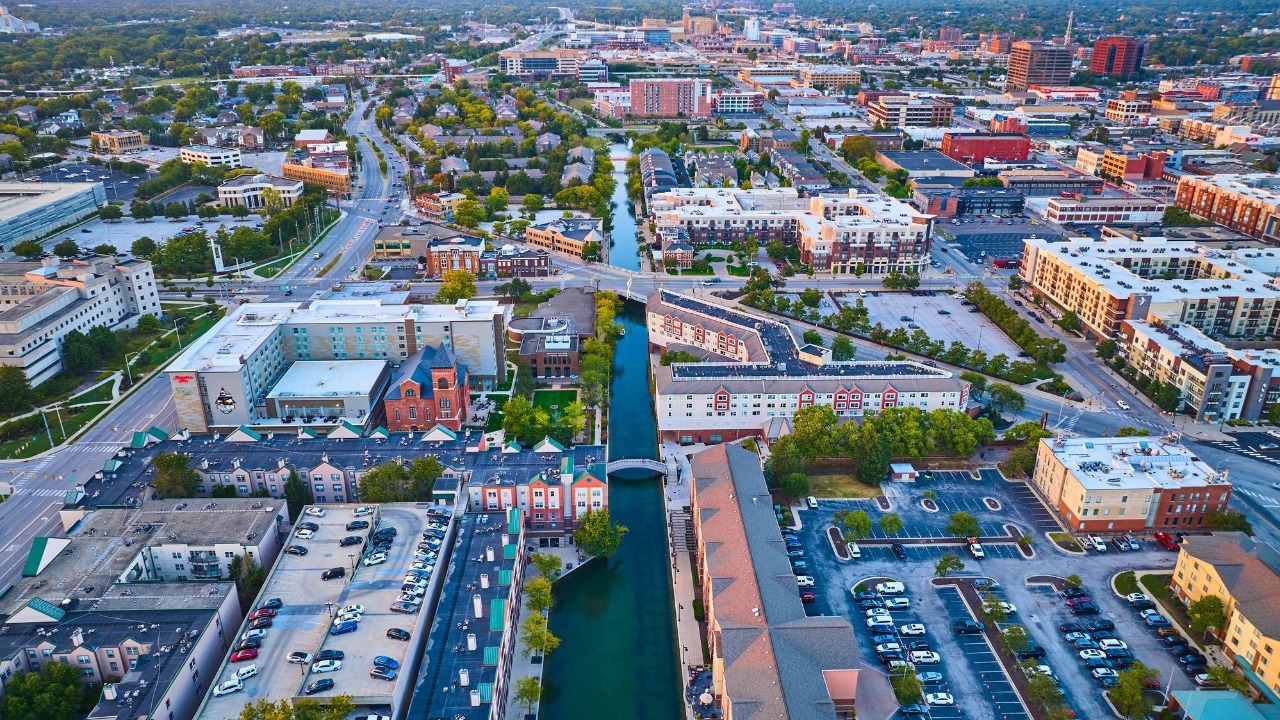
In the current rankings, Carmel, IN is not just another suburb of Indianapolis, it is the benchmark for small-city livability. Analysts point to Carmel’s economic strength and high quality of life as the reasons it tops the Best Small Cities lists, and its appearance at the top of the Carmel rankings underscores how thoroughly it checks the boxes on safety, amenities and income levels. When I look at the broader scoring of America’s small cities by percentile, Carmel consistently lands in the 99th percentile, which is why it anchors so many conversations about where to move next year.
Carmel is not alone in central Indiana. Nearby Fishers also shows up in the small-city rankings, benefiting from the same regional job market and access to Indianapolis while cultivating its own identity through parks, schools and a growing tech presence. When I compare the performance of Carmel, Indiana with other Indiana suburbs, it is clear that this corridor offers a blend of suburban comfort and urban access that is hard to match, especially for families who want strong schools and commuters who still need to reach a major employment center.
Johns Creek, Apex and the rise of Southern small cities
Some of the most compelling small-city stories for 2025 are unfolding in the South, where affluent suburbs are pairing job growth with relatively moderate costs. Johns Creek, Georgia sits near the top of the Johns Creek rankings of Best Small Cities to Live in the U.S. in 2025-2026, reflecting high household incomes, strong schools and proximity to the Atlanta job market. When I look at Johns Creek’s profile, what stands out is how it combines that economic strength with a suburban layout that still feels manageable, especially compared with Atlanta’s core.
Farther north, Apex, North Carolina has become a shorthand for the new Southern small city, anchored by the Research Triangle’s tech and life sciences economy. Apex ranks prominently among the Apex entries on the Best Small Cities list, and its repeated appearance in searches for Apex, NC reflects how often it comes up in relocation research. When I compare Apex with other Triangle communities, its balance of historic downtown, new subdivisions and access to Raleigh and Durham makes it especially attractive to remote workers who still want occasional office access.
Texas growth engines: Leander and its fast-growing peers
Texas continues to dominate conversations about population growth, and small cities on the edge of its major metros are central to that story. Leander, Texas is a prime example, ranking near the top of the Leander entries on the Best Small Cities list and standing out as one of the fastest-growing cities in its category. A closer look at the detailed write-up of Leander, Texas Leander, Texas shows how its status as another Austin suburb, with access to the overall Best Places to Live job market, is driving demand from both young professionals and families.
What makes Leander particularly interesting for 2025 is how it fits into a broader pattern of Texas small cities that are absorbing growth from nearby tech hubs. When I compare the search profile of Leander, TX with other Austin-area communities, it is clear that buyers are looking for more space and newer housing stock while still staying within commuting distance of major employers like Apple and Tesla. That same dynamic shows up in other fast-growing Texas suburbs highlighted in the broader overview of Cedar Park, Texas and Edmond, Oklaho, which reinforces the idea that small cities tied to strong regional economies are likely to remain attractive through 2025.
Mountain West and Pacific Northwest: small cities with outdoor access
For many people weighing a move in 2025, access to the outdoors is as important as access to jobs. In the Mountain West, Lehi, UT stands out in the Lehi rankings as a small city that combines a booming tech sector with quick access to the Wasatch Front’s trails and ski resorts. Nearby Kaysville, UT also appears in small-city comparisons, reflecting how the Salt Lake City region’s growth is spilling into surrounding communities that still feel distinctly suburban.
On the other side of the Rockies, Sammamish, WA offers a similar mix of outdoor access and high incomes, tied closely to the Seattle-area tech economy. When I look at Sammamish alongside other Pacific Northwest suburbs, its lakefront setting and trail networks stand out, but so does its appearance in national small-city rankings that emphasize safety and education. For remote workers in software or cloud computing, these Mountain West and Northwest communities offer a compelling alternative to denser urban cores, especially for families who want both strong schools and weekend access to hiking, skiing or paddleboarding.
Midwestern stability: Brookfield and Rochester Hills
While the coasts and Sun Belt attract much of the attention, the Midwest continues to deliver some of the most stable and affordable small cities in the country. Brookfield, Wisconsin is a good example, appearing in searches and rankings that highlight its strong schools, low crime and proximity to Milwaukee’s job market. When I compare Brookfield with other Wisconsin suburbs, its combination of established neighborhoods and commercial corridors makes it especially appealing to buyers who want predictability rather than rapid, disruptive growth.
In Michigan, Rochester Hills appears alongside Johns Creek, Apex and Leander in the Best Small Cities to Live rankings, underscoring how Midwestern communities can compete directly with faster-growing Sun Belt peers. Rochester Hills benefits from its connection to the Detroit metro economy while maintaining a distinct small-city feel, with parks, schools and local employers that keep residents rooted. For people who prioritize stability, shorter commutes and established infrastructure, these Midwestern small cities offer a compelling counterweight to the flashier growth stories elsewhere.
How to use these rankings if you are planning a move
Rankings are a useful starting point, but they are not a substitute for on-the-ground research. When I look at the national breakdown of In the best small cities by percentile, I see it as a way to narrow the field rather than dictate a final choice. A city like Apex, North Carolina or Johns Creek might look perfect on paper, but the right fit still depends on your tolerance for growth, your need for transit options and your expectations for culture and nightlife.
My advice is to treat the 2025 lists of Read on the best small cities as a curated short list, then dig deeper into each community’s specific neighborhoods, school boundaries and commute patterns. Compare how places like Apex, NC, Kaysville or New Lenox align with your priorities, whether that is a walkable downtown, a particular school program or quick access to an airport. The data can point you toward cities that are already performing well on key metrics, but the final decision still comes down to how you want to live day to day in 2025 and beyond.
More From TheDailyOverview

Elias Broderick specializes in residential and commercial real estate, with a focus on market cycles, property fundamentals, and investment strategy. His writing translates complex housing and development trends into clear insights for both new and experienced investors. At The Daily Overview, Elias explores how real estate fits into long-term wealth planning.