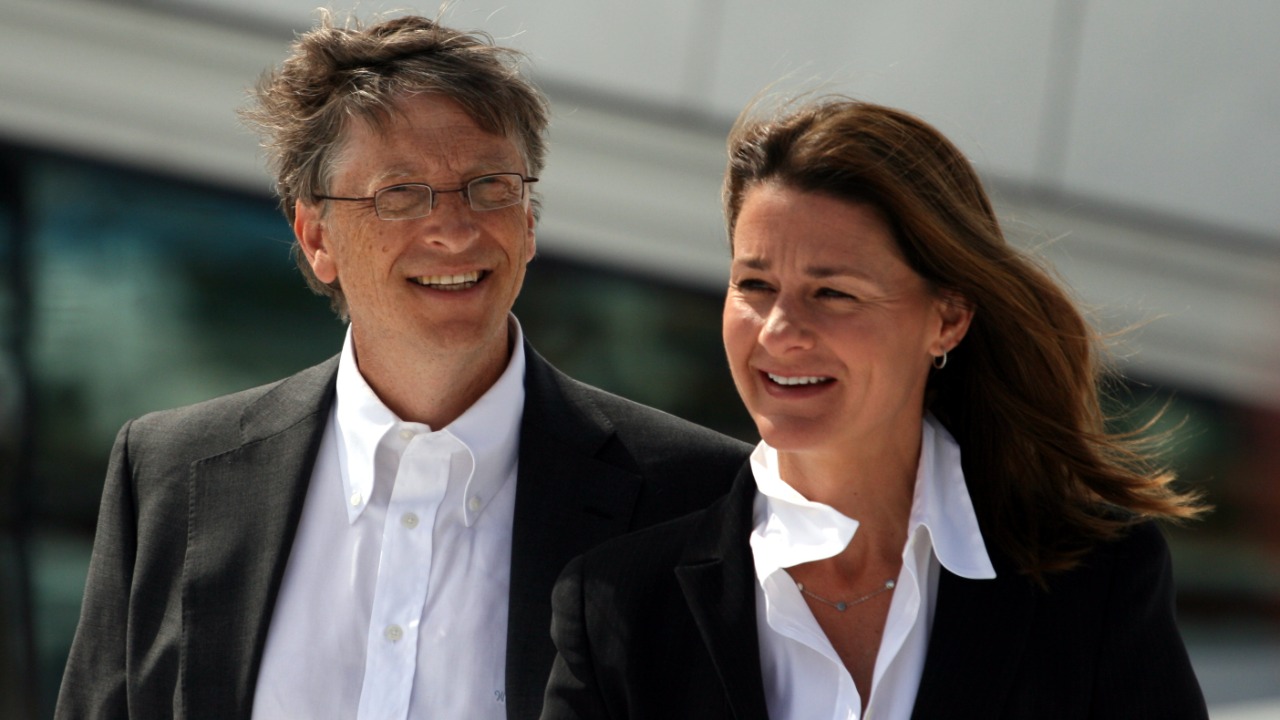
For years, Bill Gates has been shorthand for billionaire land buying, his farmland portfolio turned into a proxy for fears about who controls the American heartland. Yet the person who now dominates the country’s private acreage is not a tech founder but a low‑profile sports magnate known as “Silent Stan.” Stan Kroenke has quietly assembled a land empire that dwarfs Gates’s holdings and reshapes the map of private ownership in the United States.
His rise to the top of the land ladder is not just a curiosity about one wealthy family’s balance sheet. It is a window into how power, food, and real estate intersect, and how a handful of ultra‑rich owners are carving up vast stretches of America in ways most voters and consumers rarely see.
The quiet ascent of Stan Kroenke
Stan Kroenke has long been famous in sports circles, but his most consequential asset is not a stadium or a championship roster. It is land. As of late 2025, he emerged as America’s biggest private landowner, a title that reflects years of methodical acquisitions rather than a single splashy deal. His portfolio spans ranches and agricultural properties that stretch across the West and Plains, stitched together into a footprint that now sets the benchmark for private control of U.S. acreage.
The scale is staggering even by billionaire standards. Kroenke controls 2.7 m acres, a land mass larger than Yellowstone National Park and roughly equivalent to about 2 million football fields. That figure places him ahead of timber barons like the Emmerson family, whose Emmerson holdings are rooted in Lumber, and ahead of cable pioneers such as John Malone, who once symbolized the fusion of media wealth and rural acreage. In the latest ranking of Top 100 Landowners in America, his name now sits alone at the summit.
From sports empire to land barony
Kroenke did not start as a rancher. He built his fortune in real estate and sports, assembling what has been described as the world’s most valuable portfolio of clubs, including the Los Angeles Rams and Lon, and other franchises that make him a central figure in global athletics. That sports empire, anchored by The Rams, generates the cash flow and leverage that help fuel his land strategy. The nickname “Silent Stan” reflects his preference for avoiding the spotlight even as his decisions shape entire leagues and, increasingly, entire regions.
His land push accelerated with a series of ranch acquisitions that culminated in a transformative deal. The purchase of Singleton Ranches vaulted Kroenke Ranches from No. 4 in 2025 to No. 1 in 2026, adding a vast network of properties with locations in the Central Valley and across the Southwest. According to According to The Land Report, one of his headline moves was the purchase of 937,000 acres of ranchland in New Me, a single transaction that would be career‑defining for most investors but is just one piece of his broader mosaic.
Inside the 2.7 million acre footprint
What does 2.7 m acres actually look like on the ground? It is a patchwork of working ranches, grazing land, and agricultural operations that span multiple states, often in remote counties where a single owner can dominate local land markets. Earlier this year, coverage of his holdings noted that his acreage now exceeds Yellowstone National Park, a comparison that helps translate abstract numbers into physical reality for anyone who has driven across the park’s vast plateaus. The same reporting highlighted how his properties sit alongside those of other industrial‑scale owners such as the Emmerson family in Lumber and long‑time land titan John Malone, underscoring how concentrated the top tier has become.
The latest edition of the America rankings confirms that Kroenke sits ahead of a familiar cast of characters. The list of 100 Largest Landowners for 2026 places him above No. 2 Red Emmerson, No. 3 John Malone, and No. 4 Ted Turner, all of whom have spent decades assembling their own empires. A separate release on the Largest Landowners for 2026, issued from DES MOINES, Iowa, reiterates that Stan Kroenke is now America’s largest landowner and notes that Ted Turner still holds a prominent No. 4 position. The message is clear: the upper echelon of land ownership is a small, stable club, and Kroenke has just claimed its top chair.
Why Bill Gates suddenly looks small
Bill Gates has been the public face of billionaire farmland buying, in part because his name is synonymous with tech wealth and in part because his holdings are concentrated in cropland that feeds directly into the food system. When media coverage first identified him as the No. 1 private owner of farmland in America, it sparked a wave of anxiety about whether one man could control the world and its food supply. Gates has tried to tamp down those fears, telling readers During an Ask Me Anything on Reddit that he owns less than 1 percent of U.S. farmland and that his goal is to make agriculture more productive and create more jobs, a message relayed in coverage of how Gates manages his 275,000 acres.
Against Kroenke’s footprint, those numbers look modest. Recent analysis notes that the Billionaire Rams owner now controls roughly ten times as much land as Bill Gates, a gap that reframes the public debate about who really dominates the countryside. One report on Billionaire Rams owner Stan Kroenke emphasizes that his holdings are not just larger but also more geographically sprawling, while Gates’s acreage is heavily weighted toward farmland used for crops like potatoes that end up in fast‑food supply chains. Another piece, framed around the idea that Bill Gates is not even close to America’s largest private landowner, stresses that it is Silent Stan Kroenke, Walmart husband and LA Rams owner, who now sits atop the rankings, thanks in part to his marriage to Walmart heiress Ann Walton Kroenke.
The new politics of private land
Kroenke’s ascent is not happening in isolation. A small circle of ultra‑wealthy buyers is racing to lock up ranches, forests, and farmland, turning land into a preferred store of value in an era of volatile stocks and rising geopolitical risk. Coverage of his latest mega‑deal notes that the Rams owner’s expansion highlights how an elite group of billionaires is amassing control over rural America, with peers like John Malone and Ted Turner still near the top of the charts. One analysis of sports tycoon Stan Kroenke’s surge to No. 1 frames this as part of a broader shift in alternative assets, where owning millions of acres is both an investment and a hedge.
That trend is now central to the business conversation, not a niche curiosity. The Signature Studies that track the Top 100 Landowners show how concentrated ownership has become, while mainstream business coverage, from deep dives on the Economy and Deficits to profiles of billionaire land barons, increasingly treats acreage as a core asset class. A widely shared piece explaining that Bill Gates is not even close to America’s largest private landowner underscores that Stan Kroenke, the billionaire owner of the Los Angeles Rams and Lon, now owns the most private land in the United States, with John “cowboy” Malone still ranking high on the list. Another report, focused on how billionaire entrepreneurs from Bill Gates to Philip Anschutz are buying up swaths of land for farming, ranching and fast‑food supply chains, situates Kroenke within a broader wave of Billionaire land grabs that now shape everything from conservation policy to the price of a McDonald’s french fry.
Supporting sources: 2.7 million acres,.
More From The Daily Overview

Elias Broderick specializes in residential and commercial real estate, with a focus on market cycles, property fundamentals, and investment strategy. His writing translates complex housing and development trends into clear insights for both new and experienced investors. At The Daily Overview, Elias explores how real estate fits into long-term wealth planning.

