Bill Gates has become one of the loudest establishment voices urging investors to tap the brakes on artificial intelligence, even as he champions the technology’s potential. He has compared the current rush into AI to past bubbles, warning that a large share of today’s sky-high valuations will not survive contact with reality. At the same time, he insists that the underlying breakthroughs are real, and that the winners will reshape the economy as profoundly as the early internet did.
That tension, between transformative promise and speculative excess, is at the heart of his message to markets. Gates is not arguing for an AI winter, but for a more disciplined approach that separates durable innovation from hype, and that gives regulators and societies time to catch up with the speed of change.
AI as the biggest technical shift, and why that invites a bubble
Gates has been clear that artificial intelligence is not just another tech cycle, but a foundational shift. He has said that as co-founder of Microsoft, AI is the “biggest technical thing ever” in his lifetime, a statement he made in an interview where he described how systems that can understand and generate language will permeate everything from office software to health care diagnostics, and he delivered that assessment in a conversation with CNBC on a Tuesday in Oct. In his view, the ability to automate cognitive tasks at scale will rival the impact of the microprocessor and the graphical web browser, and that scale of change is precisely what draws in speculative capital.
When a technology promises to rewrite the rules of multiple industries at once, investors tend to extrapolate the best case for every company that touches it. Gates has warned that the AI market is becoming “hyper competitive,” with a flood of startups and incumbents all racing to claim a slice of the future, and he has cautioned that not all of the companies with soaring valuations “will be winners,” a point he underscored in a Dec interview about how intense the contest for AI leadership has become, where he described the landscape as hyper competitive. That combination of genuine breakthrough and crowded competition is a classic setup for a bubble, where the technology is real but the pricing of individual bets becomes detached from fundamentals.
From Davos to retail traders, a warning about stretched valuations
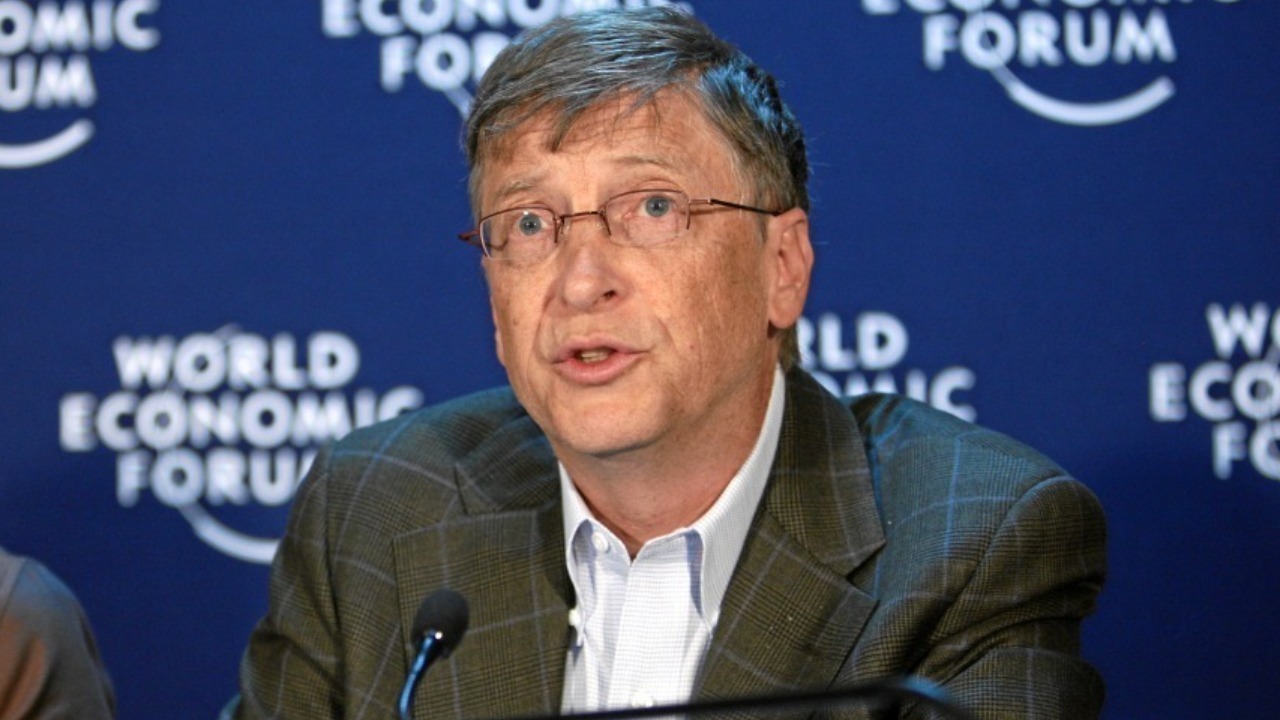
Gates has taken that message directly to the global elite. At the World Economic Forum in Davos Jan, he warned that AI stock valuations look stretched, telling interviewers that investors are assuming too many companies will grow into their current prices. In that setting, he stressed that while some AI leaders will justify their premiums, others will disappoint, and he urged market participants to be more selective, a stance captured in coverage that showed Bill Gates in Davos Jan raising concerns about stretched valuations. His point was not that AI is overvalued in aggregate, but that the distribution of outcomes will be wide, and that buying any company with “AI” in its pitch deck is a recipe for disappointment.
Images from Davos, including photographs by Fabrice Coffrini for Getty Images, have reinforced the symbolism of a billionaire philanthropist telling a room full of asset managers and executives to slow down. In that same context, Gates has linked AI exuberance to broader concerns about inequality, arguing that if the gains from automation accrue only to a narrow set of shareholders and founders, the social backlash will be severe, a theme highlighted in reporting that showed Fabrice Coffrini’s images of Bill Gates at the World Economic Forum. I read his Davos comments as an attempt to nudge institutional investors toward a longer time horizon, where they focus on durable cash flows and social license rather than chasing the hottest ticker.
“We are in an AI bubble” is not the same as “it is all hype”
Gates has been unusually blunt in saying that we are in an AI bubble, and he has explicitly compared the current moment to the dot-com era. In Oct he reflected on the late 1990s and early 2000s, noting that “Some companies succeeded, but a lot of the companies were kind of me-too,” and he drew a direct line from that pattern to the wave of AI startups and public listings today, a comparison detailed in coverage that quoted him saying “Some companies succeeded” while looking back at the dot-com crash and assessing the surge in AI investments. His argument is that, just as the internet ultimately justified its hype even after the crash, AI will remain transformative even if a large share of today’s players vanish.
He has also pushed back on the idea that this is a “tulip mania,” the classic shorthand for a purely irrational bubble with no underlying value. In Nov he said we are in an AI bubble but emphasized that it is not comparable to seventeenth century tulip speculation, because the core technology is already delivering real productivity gains and new products, a distinction that has been highlighted in analysis of his comments that described how he framed the current surge as no “Tulip Mania” while acknowledging the blistering growth of artificial intelligence investment. I see that nuance as central to his message: investors should expect volatility and failures, but they should not mistake the inevitable shakeout for proof that AI was a mirage.
Dead ends, “me-too” bets, and the coming shakeout
Gates has been particularly stark about the fate of many current AI projects. He has warned that “tons of investments will be dead ends,” stressing that a large number of companies now raising capital on AI buzz will never build sustainable businesses or defensible technology. In one interview he said that Microsoft founder Bill Gates expects a wave of AI ventures to fail outright, with “tons of investments” turning into dead ends once the easy money dries up and competition intensifies, a warning captured in reporting that quoted him saying Tons of investments will be dead ends. That language is unusually vivid for a figure who is often measured in public, and it underscores how strongly he believes the market is overfunding copycat ideas.
His dot-com analogy is doing similar work. Gates has said that, looking back, many internet companies were “me-too” plays that added little beyond a buzzword and a domain name, and he sees the same pattern in AI, where thin wrappers around existing models are attracting capital as if they were deep research labs. In Oct he contrasted the current AI boom with “blind hype,” arguing that the present moment is more like the dot-com boom than a baseless craze, because there are already clear use cases and revenue streams, a point he made while reflecting on how “Looking back at the dot-com crash” helps frame the surge in AI in recent. For investors, his message is that the shakeout will be brutal for undifferentiated players, even as a handful of platforms consolidate power.
How investors can slow down without missing the upside
Gates’s call to “slow down” is not a plea to abandon AI, but to invest with more discipline. He has argued that the most resilient opportunities will be in companies that pair cutting edge models with clear applications and sustainable business models, rather than those that simply bolt AI onto existing products to justify a higher multiple. Analysts who have examined the current market have echoed that view, describing how The AI bubble is “undeniably real” but also rooted in genuine technological progress, and they have urged investors to focus on firms that can demonstrate real-world applications and sustainable business models instead of chasing every new The AI narrative. In practical terms, that means scrutinizing unit economics, customer retention, and the defensibility of data and infrastructure, rather than relying on vague promises of “AI-powered” disruption.
More From The Daily Overview
*This article was researched with the help of AI, with human editors creating the final content.

Grant Mercer covers market dynamics, business trends, and the economic forces driving growth across industries. His analysis connects macro movements with real-world implications for investors, entrepreneurs, and professionals. Through his work at The Daily Overview, Grant helps readers understand how markets function and where opportunities may emerge.

