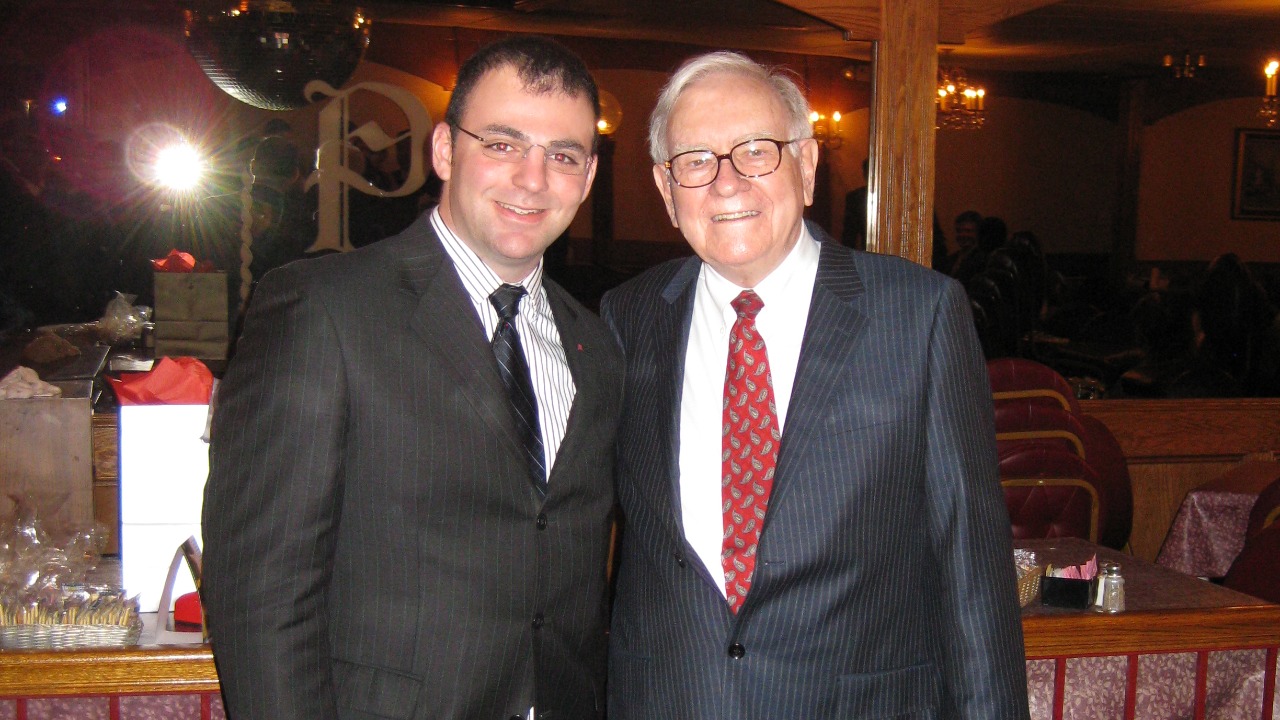
Warren Buffett spotted a core weakness in Donald Trump’s business style long before Trump entered the White House, and the gap between their approaches has only grown more revealing as Trump’s finances have been dragged into court. At its heart, Buffett’s critique was not about politics or personality, but about how Trump used debt, risk and image in ways that left his empire exposed. I want to unpack that contrast, and show how anyone running a business or managing their own money can avoid the same trap.
Buffett’s early warning about Trump’s “never went right” problem
Nearly 35 years ago, Warren Buffett used Donald Trump as a cautionary tale in a talk that has resurfaced with fresh relevance. Buffett’s point was simple but brutal: Trump was very good at borrowing and promoting, but his projects depended on everything breaking his way, which is not how resilient wealth is built. Buffett later recalled that the key issue with Trump’s deals was that he “never went right,” a phrase he used to capture how Trump structured ventures so that they only worked if conditions stayed perfect rather than leaving room for setbacks.
That early critique has been highlighted in reporting that traces how Buffett contrasted his own preference for conservative structures with Trump’s appetite for leverage and headline-grabbing projects. In one account, Buffett is quoted describing how Trump’s approach required favorable resale conditions and aggressive assumptions just to break even, which he saw as the opposite of a margin of safety. The same reporting notes that Buffett’s comments about Trump’s pattern, including the line that he “never went right,” were later echoed in a broader discussion of how fragile business models can unravel when they depend on a single optimistic scenario, a theme revisited in coverage of Buffett’s remarks on Trump’s business failures.
How a $355 million fraud ruling exposed Trump’s structural weakness
The long running tension between image and underlying economics in Trump’s business life was laid bare when a New York judge ordered him to pay $355 m in a civil fraud case. The ruling found that President Donald Trump had fraudulently inflated asset values, a judgment that cut directly against the self reported narrative of effortless dealmaking success. The size of the $355 million penalty underscored how aggressively Trump had pushed valuations, and how far the legal system was willing to go in saying those numbers did not match reality.
In the aftermath of that decision, coverage pointed out that Buffett had effectively anticipated this kind of reckoning by warning that Trump was terrific at borrowing money but not at structuring deals that could withstand scrutiny or downturns. Analysts noted that the fraud findings did not just question specific appraisals, they challenged the broader pattern of using leverage and optimistic marks to project a level of wealth and stability that the underlying cash flows did not support. One detailed breakdown of the case framed the judgment as a vivid example of the dangers Buffett had flagged, linking the court’s conclusions about inflated statements to the way Trump’s empire had long relied on aggressive borrowing and self promotion, especially in the context of the $355 million fraud ruling.
Buffett’s philosophy: build in safety, not spectacle
Buffett’s critique of Trump only makes sense when you understand the philosophy he applies to his own investments. He has long argued that the cornerstone of sound investing is buying into businesses at prices that allow for a “mediocre sale” to still produce good results, rather than counting on a perfect exit. In a widely cited recollection from the early 1990s, Buffett explained that he preferred deals where the economics worked even if the future was only average, which is the opposite of betting on a spectacular turnaround or a euphoric market to bail you out.
That mindset shows up in how he talks about family wealth as well, including whether you Should You Leave Assets to Your Children in a Trust or as a Gift, and how to structure those decisions so they do not depend on rosy assumptions. In one discussion, Buffett’s comments were used to illustrate how conservative deal design can protect both investors and heirs, with his Trump example serving as a foil for what happens when you rely on a favorable resale or constant appreciation. The same piece emphasized that Buffett’s approach is to minimize the need for luck, a theme that ran through his remarks about using Trump as an example of what happens when you depend on a favorable resale and aggressive leverage, as recounted in coverage of his cornerstone philosophy.
Trump’s love of leverage versus Buffett’s “no accelerator and brake” rule
Trump’s business history is full of examples where heavy borrowing was central to the strategy, from casinos to high profile real estate projects that were marketed as proof of his dealmaking prowess. At one point, Despite these problems, Trump was still claiming that he was worth $3.7 billion, a figure that depended heavily on his own valuations and the assumption that his leveraged properties would continue to rise in value. That posture reflected a belief that debt could amplify his brand and returns, even if it also magnified the risk of a downturn or legal challenge.
Buffett has repeatedly warned against that kind of posture, especially for people who are already wealthy or running sizable enterprises. In a talk that has been widely circulated, he compared excessive leverage to driving a car with your foot on the accelerator and the brake at the same time, arguing that if you are a billionaire, there is no rational reason to risk what you have for something you do not need. That analogy was invoked directly in an analysis of Trump’s finances, which contrasted Buffett’s caution with Trump’s willingness to pile on obligations while still touting a net worth of $3.7 billion, a tension explored in detail in a piece on Buffett’s view of Trump and leverage.
“Never went right”: what Buffett meant about Trump’s deal design
When Buffett said Trump “never went right,” he was not talking about politics or personality, he was talking about how the deals were engineered. In Buffett’s telling, Trump tended to structure projects so that they only worked if everything lined up perfectly, from interest rates to resale values to ongoing demand. That is the opposite of how Buffett thinks about risk, which is to assume that some things will go wrong and to make sure the numbers still work under less flattering scenarios.
Reporting that revisited those remarks explains that Buffett used Trump as an example in a broader discussion of why investors should avoid situations that depend on a favorable resale or constant appreciation just to break even. Nearly 35 years ago, Warren Buffett was already pointing to Trump’s pattern of stretching for upside without leaving room for error, and he summed it up by saying the problem was he never went right. That line has been quoted in coverage that connects Buffett’s early warning to later events in Trump’s business life, including a detailed look at how Buffett framed Trump’s failures as a structural issue rather than a string of bad breaks.
Buffett on “Debt and Donald Trump”: why the money moves “never went right”
Buffett later sharpened his critique in comments that have been summarized under the banner of Warren Buffett on Debt and Donald Trump, Money Moves, where he argued that Trump’s financial decisions “Never Went Right” in the sense that they did not follow the basic rules of risk management. He told students that Trump’s pattern showed how easy it is to look rich on paper while actually being boxed in by obligations and contingent liabilities. The phrase “Never Went Right” became a shorthand for a style of money management that chases status and leverage instead of durable cash flow.
Those remarks have been revisited in recent coverage that connects them to the legal and financial pressures now facing Trump’s businesses. Analysts have noted that Buffett’s warning about how Trump’s money moves Never Went Right anticipated the way aggressive borrowing, personal guarantees and optimistic valuations could collide with reality in court. One detailed piece on Warren Buffett, Debt and Donald Trump, Money Moves, Trump, Never Went Right, explains how Buffett contrasted his own preference for low debt and transparent accounting with Trump’s reliance on complex structures and self reported wealth, a contrast that has become more vivid as Trump’s finances are dissected in public, as outlined in the analysis of Buffett on Trump’s money moves.
Trump’s supporters, Buffett’s critics, and the debate over results
Trump’s backers have long argued that whatever his methods, the results speak for themselves, pointing to marquee properties, television fame and his rise to the presidency. They note that he has survived multiple bankruptcies and legal battles, and still commands significant political and media attention. From that perspective, the use of leverage and aggressive valuations can be framed as a high risk, high reward strategy that kept him in the spotlight and, at times, delivered big paydays.
Buffett’s framework invites a different question: not whether someone can survive a volatile strategy, but whether they needed to take those risks in the first place. In the reporting that revisits his Trump comments, Buffett is portrayed as someone who sees little sense in risking long term solvency for short term image, especially once a person has already achieved substantial wealth. One analysis that quotes his “never went right” line also notes that Trump’s supporters highlight his resilience, while Buffett’s camp points to the avoidable damage caused by deals that depended on perfect outcomes, a tension captured in the same coverage that discussed how he used Trump as an example of what happens when you depend on a favorable resale and heavy borrowing, as seen in the broader treatment of Buffett’s Trump critique.
Practical lessons for entrepreneurs and investors
For founders, executives and individual investors, the contrast between Buffett and Trump is not an abstract debate, it is a practical checklist. The first lesson is to avoid building a business model that only works if everything goes right, whether that means assuming constant double digit growth, permanent access to cheap credit or a guaranteed exit at a premium valuation. Buffett’s insistence on a margin of safety, and his criticism that Trump “never went right,” both point to the same rule: design your finances so that you can absorb bad news without losing the enterprise.
The second lesson is to treat leverage as a tool, not an identity. Trump’s willingness to borrow heavily to amplify his brand, even while claiming a net worth of $3.7 billion, shows how easy it is to confuse borrowed scale with durable wealth. Buffett’s analogy about not driving with your foot on the accelerator and the brake at the same time is a reminder that once you have something to lose, the bar for taking on more risk should rise, not fall. For anyone running a startup, buying rental properties or trading stocks on margin, the stories and figures that surface in analyses of Trump’s debt, valuations and legal exposure are a vivid prompt to ask whether their own structures would still hold up if markets turned or regulators took a closer look, a question that sits at the heart of the reporting on Buffett’s warnings about Trump’s borrowing.
How to “go right”: applying Buffett’s discipline to your own money
Turning Buffett’s critique into action starts with simplifying your own balance sheet. That means favoring clear, understandable assets over opaque structures, and resisting the temptation to stretch for a bigger house, a flashier car or a riskier investment just because a bank or broker will let you. In practical terms, it can look like choosing a fixed rate mortgage you can afford on one income, keeping margin use modest in a brokerage account, or building a business that can cover its debts from recurring revenue rather than constant refinancing.
It also means being honest about the difference between paper wealth and resilient wealth. Trump’s history of touting large self reported figures, including the $3.7 billion claim, while relying on heavy leverage and optimistic valuations, is a reminder that big numbers do not guarantee stability. Buffett’s emphasis on cash flow, conservative assumptions and the ability to sleep at night offers a different benchmark: you are in good shape when your finances can withstand surprises without forcing desperate moves. Learning from the flaw he identified in Trump’s approach, the goal is not to avoid all risk, but to avoid structures that only work in the best of times, a principle that runs through the analyses of Buffett’s guidance on debt and his long running comparison with Donald Trump.
More From TheDailyOverview

Grant Mercer covers market dynamics, business trends, and the economic forces driving growth across industries. His analysis connects macro movements with real-world implications for investors, entrepreneurs, and professionals. Through his work at The Daily Overview, Grant helps readers understand how markets function and where opportunities may emerge.

