The sudden U.S. move against Venezuela’s leadership has not only redrawn the map of global oil, it has also spotlighted a familiar figure in Republican politics whose fortune is now tightly bound to the outcome. At the center of that story is a billionaire Trump donor whose long bet on Venezuelan assets, and deep ties to the current administration, position him to reap enormous gains from a crisis that has left ordinary Venezuelans in economic free fall. I want to trace how that convergence of money, ideology, and state power came together, and what it reveals about who really benefits when Washington talks about “freedom” and “stability” abroad.
The raid that turned a geopolitical gamble into a payday
When U.S. forces seized control in Caracas and removed Venezuelan President Nicolás Maduro from power, the official justification focused on human rights and regional security. Legal experts quickly countered that the extraordinary attack violated both U.S. and international law, and that its most immediate effect was to transfer leverage over Venezuela’s oil industry into American hands. Reporting on the operation notes that the intervention has set up a potential windfall from the country’s crown jewel, Citgo, which had been the most valuable foreign asset tied to the Venezuelan state.
That windfall matters because Citgo’s ownership has been entangled for years in a fight between the Venezuelan government and a group of creditors led by a hedge fund that specializes in distressed debt. Analysts cited in coverage of the raid say the new U.S. control over Venezuelan assets could sharply increase the value of those claims, turning what had been a risky legal campaign into a highly profitable position. The same reporting underscores that the attack, far from being an isolated military decision, fits into a broader pattern in which oil profits and donor interests emerge as the quiet winners when Washington seizes control in Venezuel.
Who Paul Singer is, and why his Venezuela bet matters
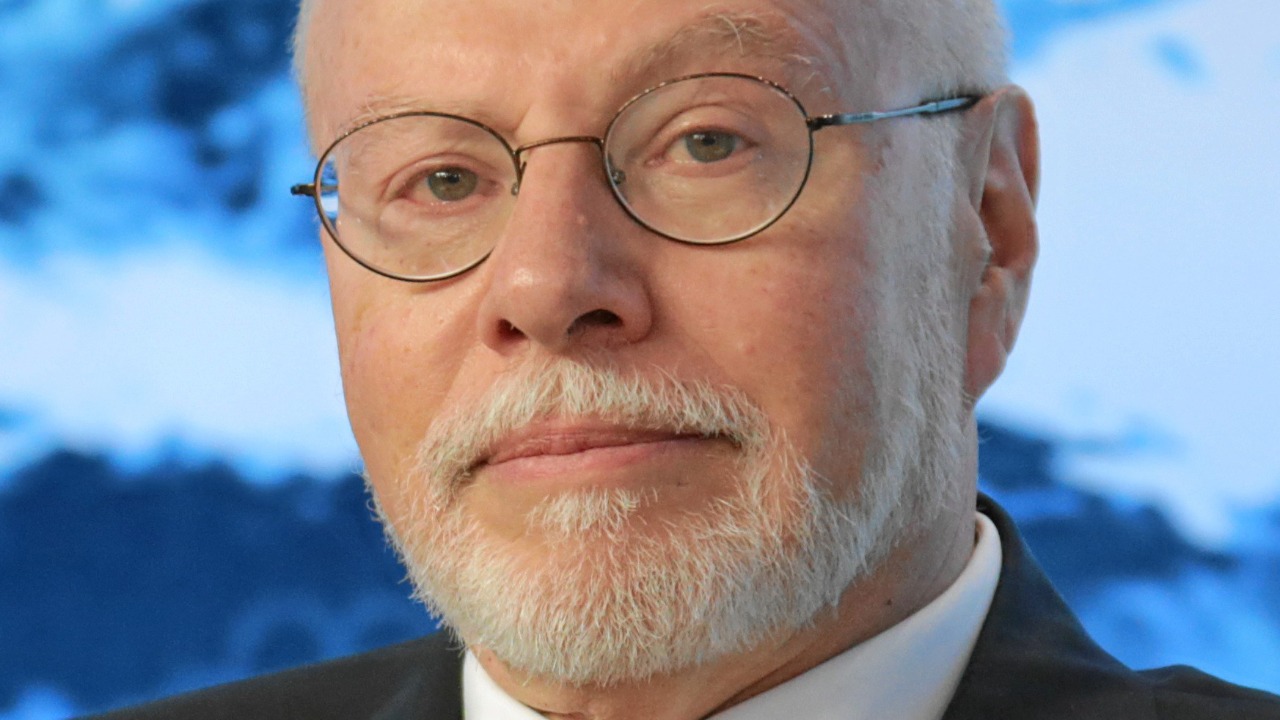
The billionaire at the center of this story is Paul Singer, the founder and CEO of the hedge fund Elliott Management, a firm famous for buying distressed assets and then using aggressive legal tactics to extract maximum value. Singer has long been a major player in Republican politics, and he emerged as a key Trump ally despite earlier tensions, becoming one of the most prominent financial backers of the president’s agenda. His role as CEO of Elliott Management is not incidental here, because the fund’s strategy has repeatedly involved targeting sovereign debt and state-linked companies in crisis.
In the Venezuelan case, Singer’s fund acquired defaulted bonds tied to the country’s oil sector and then maneuvered to gain a claim on Citgo, the U.S. based refiner that had been controlled by Venezuela’s state oil company. Detailed accounts of his activities describe how Elliott Management positioned itself so that any U.S. backed regime change or asset seizure could dramatically increase the value of those claims. One profile of Paul Singer notes that his fund’s pursuit of Citgo fits a long pattern in which he has used legal and political leverage to turn distressed government obligations into lucrative paydays.
A megadonor with deep ideological and foreign policy networks
Paul Singer is not just a financier, he is also a prolific political and ideological donor whose money has helped shape the Republican Party’s foreign policy priorities. One detailed report describes him as a major pro Israel donor, noting that his foundation has given more than $3.3 m to groups like the B, and that Singer is also a major pro Israel donor, with his foundation having donated more than $3.3 million to organizations aligned with hawkish regional policies. Those same networks have often pushed for hard line stances toward governments seen as hostile to U.S. and Israeli interests, including leftist regimes in Latin America.
His influence extends into Washington’s think tank ecosystem, where white papers and policy briefs can set the terms of debate long before any public decision is announced. Singer is also a major donor to the Foundation for Defense of Democracies, commonly referred to as FDD, and reporting notes that in November that group produced a report urging tougher measures and regime change in Venezuela. That recommendation aligned closely with the eventual military action, and it came from an institution that receives significant funding from Singer, alongside other conservative mainstays like AEI and the Heritage Foundation.
How Elliott Investment Management cornered the Citgo play
To understand the scale of the potential profit, it helps to look at how Elliott Investment Management, the hedge fund associated with Singer, structured its Venezuela exposure. The firm specializes in buying distressed assets, and in this case it accumulated Venezuelan bonds and related claims at steep discounts as the country’s economy collapsed under Maduro’s authoritarian rule. Those instruments were risky on paper, but they came with a crucial hook, the possibility of seizing Citgo shares if Venezuela defaulted and lost protection in U.S. courts.
Analysts who follow the energy and credit markets have pointed out that the U.S. intervention effectively removed the main political obstacle to enforcing those claims. One assessment notes that then there is Elliott Investment Management, a hedge fund that had already lined up legal arguments to assert control over Citgo once the U.S. government cleared the way. In that telling, the Trump administration’s Venezuela strategy looks less like a standalone foreign policy move and more like a private equity style play in which state power is used to unlock value for a well connected creditor such as Elliott Investment Management.
Trump’s advance warning to oil executives
The timing of the raid has raised additional questions about who knew what, and when. According to accounts based on internal industry conversations, President Trump tipped off oil executives roughly a month before the U.S. kidnapped Venezuelan President Nicol Maduro, giving them a chance to position themselves ahead of the shock. That kind of advance notice is highly unusual in sensitive military operations, and it suggests that commercial considerations were deeply intertwined with the planning.
Separate reporting on the same episode notes that the Wall Street Journal story about Trump Tipped Off Oil Executives a Month Before U.S. Attack on Venezuela also highlighted how the administration and its allies were already talking about Citgo’s value at $18 billion once the dust settled. In that context, the early warning looks less like a courtesy and more like a signal to a tight circle of energy and finance insiders that a major asset would soon be in play. The fact that one of the most prominent beneficiaries of that shift is Paul Singer, a billionaire who has been a key Trump donor, only sharpens the perception that the raid was structured in a way that favored politically connected investors in Venezuela.
The Florida magnate and the oil for migrants backchannel
While Singer’s hedge fund was working the legal angles, another wealthy Republican ally was helping to shape the diplomatic backdrop. A Florida magnate with close ties to the Republican Party played a key role in arranging a recent meeting between the Venezuelan strongman and U.S. officials, according to detailed accounts of the talks. That meeting centered on an oil for migrants proposal that would have traded access to Venezuelan crude for cooperation on stemming the flow of people fleeing the country’s economic collapse.
The involvement of this Florida tycoon underscores how informal channels and private business interests have become embedded in U.S. policy toward Caracas. Rather than relying solely on career diplomats, the administration leaned on a politically connected businessman to broker contact with the Venezuelan side, even as it prepared for a military option. Reporting on the episode describes how this Florida magnate, operating alongside party operatives, helped set up the encounter with the Venezuelan leader at a moment when the country’s economy was in free fall and its oil sector was on the verge of collapse under Maduro’s authoritarian rule, a role that has been documented in detail in coverage of the Florida tycoon.
From megadonor to policy winner
Paul Singer’s political giving has been central to his ability to shape the environment in which his investments operate. One account describes him as a Billionaire Trump Megadonor Set to Make a Killing on Venezuela Oil, emphasizing that he has poured significant resources into groups that backed Trump’s rise and then his consolidation of power. Those donations have included support for efforts to fund Trump’s second transition, as well as contributions to candidates and committees that align with his hard line foreign policy.
At the same time, Singer has funded a broader ecosystem that pushes for regime change in Venezuela and similar interventions elsewhere. Detailed reporting notes that Singer funds push for regime change in Venezuela and that he currently serves as chairman emeritus of a major conservative think tank that has advocated for more confrontational policies. In that light, the fact that Trump’s military action in Venezuela may have been a surprise to many voters but not to the small circle of donors and strategists around him is telling. It suggests a feedback loop in which Singer’s money helps set the agenda, and then the resulting policies deliver financial gains to his hedge fund’s positions in Venezuela.
Wall Street’s wider opportunity in the Venezuela shock
Although Singer’s role is unusually prominent, he is not the only financial player poised to benefit from the upheaval. Investors who specialize in emerging market debt and distressed assets see the U.S. move as a chance to reprice Venezuelan bonds, equity stakes, and oil linked contracts that had been written off as uncollectible. One portfolio manager, Eric Fine, who invests in bonds as emerging markets portfolio manager at VanE, put it bluntly, saying we are in a different ballpark now when it comes to the potential returns from Venezuelan instruments that had been frozen by sanctions and political risk.
Those comments reflect a broader view on Wall Street that Trump’s Venezuela actions could unlock not just oil profits but a cascade of secondary opportunities in banking, infrastructure, and logistics. Analysts point out that once the U.S. Treasury Department adjusts its sanctions regime, a wide range of American and allied firms could move in to refinance debt, restructure state companies, and take equity stakes in newly privatized assets. In that scenario, hedge funds like Elliott, bond specialists like Eric Fine, and major oil companies would all stand to gain from a crisis that has devastated ordinary Venezuelans, a dynamic captured in detailed coverage of how Wall Street might benefit from Trump’s Venezuela actions.
The Donroe Doctrine and the pattern behind Venezuela
To make sense of why the same names keep appearing in these crises, it helps to look at the broader framework some critics have labeled the Donroe Doctrine. That term is used to describe a pattern in which Trump’s foreign policy blends nationalist rhetoric with deals that enrich a small circle of billionaire allies. In the case of Venezuela, these are the investors and executives who have positioned themselves to take over the country’s state run oil company and its most valuable foreign assets once U.S. power clears away the existing leadership.
One detailed analysis of the Donroe Doctrine argues that when Trump talks about liberating countries like Venezuela, the practical outcome is often that the same people as usual, Trump’s billionaire buddies, stand to gain. In the Venezuelan context, that means hedge funds and oil companies that have lined up claims on the state’s resources, waiting for a moment when Washington can help them enforce those rights. The pattern is not limited to Caracas, but the Venezuelan case is especially stark because it involves a direct military intervention followed by a scramble for control of Venezuela’s state run oil company.
What the Venezuela play reveals about Trump era power
When I put these pieces together, the picture that emerges is not just about one billionaire donor, but about how Trump era power operates at the intersection of politics, finance, and foreign policy. One of President Donald Trump’s billionaire pals is about to score huge profits thanks to the ousting of Venezuela’s Nicolás Maduro, with some estimates suggesting that Citgo’s value in this new environment could reach as much as $18 billion. That figure is not just a number on a balance sheet, it represents the transfer of a strategic national asset from a crisis ridden state to a creditor class that helped bankroll the president’s rise.
At the same time, Singer’s broader profile as a major pro Israel donor, with his foundation having donated more than $3.3 million to groups like the B, and his role in funding think tanks that advocated for regime change, show how ideological and financial motives can reinforce each other. Detailed reporting on his Venezuela strategy notes that Singer is also a major pro Israel donor, with his foundation having donated more than $3.3 m to organizations that share his worldview, and that his hedge fund’s pursuit of Citgo was shaped by the expectation that U.S. power could eventually be brought to bear. When combined with accounts that Paul Singer, a billionaire who has been a key Trump donor, was among those positioned to benefit once President Trump tipped off oil executives and then ordered the attack, the result is a case study in how modern American interventions can double as opportunities for well connected investors to Make a killing on Venezuela Oil.
More From TheDailyOverview

Grant Mercer covers market dynamics, business trends, and the economic forces driving growth across industries. His analysis connects macro movements with real-world implications for investors, entrepreneurs, and professionals. Through his work at The Daily Overview, Grant helps readers understand how markets function and where opportunities may emerge.

