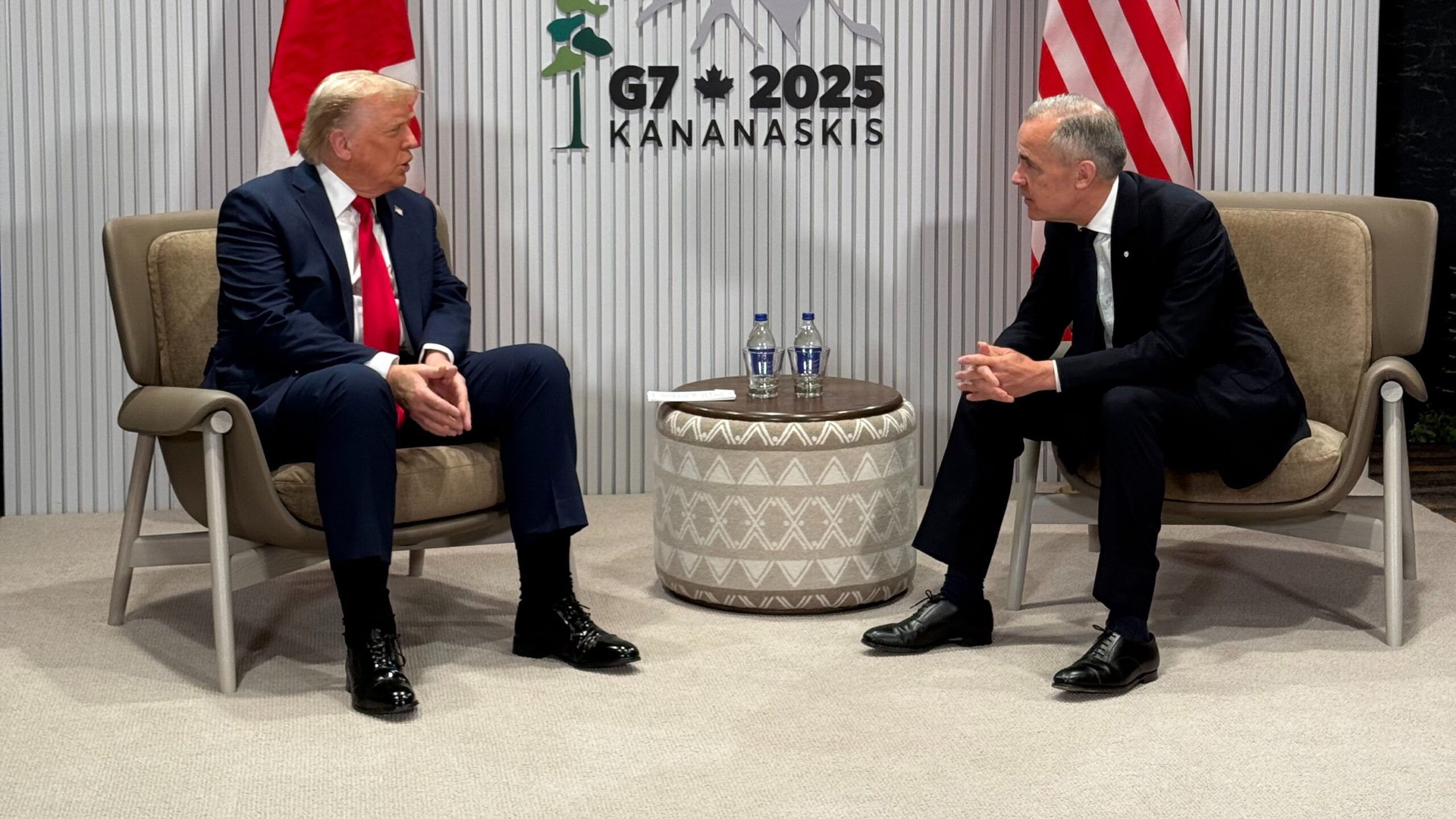
Canada’s auto heartland is being squeezed between President Donald Trump’s escalating tariffs and a once-in-a-generation shift toward electric vehicles. Ottawa is racing to keep assembly lines running, jobs anchored at home, and investment from fleeing to friendlier jurisdictions. The scramble is forcing a strategic reset that reaches far beyond cars, into trade alliances, industrial policy, and the country’s long-term economic identity.
As Trump raises the cost of exporting vehicles into the United States, Canada is testing new trade routes, new partners, and new subsidies to blunt the shock. The result is a high-stakes experiment in whether a mid-sized economy can defend a legacy industry while pivoting into the clean-tech future at the same time.
Trump’s tariffs and the unraveling of North American certainty
Trump has made clear that the old rules of North American trade no longer constrain his approach. During a visit to Detroit, he dismissed the trade agreement with Mexico and Canada as “irrelevant” to the United States, even as car makers urged an extension of the USMCA to preserve integrated supply chains. That rhetoric has been matched by action, with new tariffs on Canadian-built vehicles and parts raising the cost of shipping into the American market that still buys the majority of Canadian-made cars and trucks. For an industry that has spent decades optimizing around frictionless cross-border flows, the message from Washington is that nothing can be taken for granted.
The pressure is not theoretical. Earlier in the trade confrontation, Trump’s broader campaign of protectionist measures helped push Carmaker Stellantis to shift thousands of jobs and investment out of the Canadian auto sector and into plants in states such as Ohio, Michigan, and Indiana, a move described as a major victory for the president’s trade war over the Canadian auto industry. That relocation underlined how quickly investment can follow political signals, and it set a precedent that current tariff threats could trigger a new wave of plant closures or downsizing north of the border.
Carney’s emergency playbook to keep factories alive
Prime Minister Mark Carney is now deploying emergency tools to prevent Trump’s auto tariffs from gutting the sector. According to reporting on Ottawa’s response, Canada’s Prime Minister is pulling the trigger on a package that mixes targeted relief for manufacturers with new incentives tied to electric vehicles. The goal is to offset the cost of U.S. tariffs long enough for companies to retool, while nudging them toward the battery-powered models that are expected to dominate future demand. In practice, that means more public money on the table for plants that commit to EV production, and a willingness to intervene directly where jobs are at immediate risk.
Carney’s strategy reflects the reality that Canada’s auto sector is deeply embedded in the broader national economy. The country’s manufacturing base, particularly in Ontario, has long depended on the integrated North American market, and the federal government now faces pressure from workers, provincial leaders, and suppliers to show it can still protect that model. Ottawa’s response is unfolding against a backdrop of heightened scrutiny of Canada’s overall competitiveness, from energy costs to regulatory timelines, as companies weigh whether to keep building the next generation of vehicles in Windsor and Oshawa or shift more production to the American Midwest and the southern United States.
Betting on China and the electric future
To reduce its dependence on the U.S. market and accelerate the shift to cleaner technology, Canada has turned to China as a new partner in the electric vehicle transition. Under a preliminary agreement, Canada intends to provide an initial country-specific quota of 49,000 electric vehicles per year from Chinese producers at a most-favoured-nation tariff rate, a sharp reduction from the punitive duties that had previously applied. Some experts have argued that the electric vehicle provisions in this trade deal will help China make inroads into the Canadian automobile market, giving consumers cheaper EV options while putting new pressure on domestic and North American brands to compete on price and technology.
The move has already triggered a sharp reaction from Washington. U.S. officials warned that Canada will regret the decision to allow Chinese EVs into its market, criticizing the deal by Canada PM Carney to admit exactly 49,000 vehicles at a 15 percent tariff, down from 100 percent, in an effort to make vehicles more affordable. For Trump’s administration, the arrangement looks like a back door for Chinese manufacturers into the North American market, undermining its broader campaign to contain Beijing’s industrial rise. For Ottawa, it is a calculated risk that cheaper EVs will speed up adoption, help meet climate targets, and give Canadian suppliers a foothold in global battery and component chains, even if it strains relations with the United States.
A strategic pivot away from U.S. dependence
Canada’s outreach to Beijing is part of a wider strategic shift that signals it is serious about diversifying away from the United States. Analysts have noted that the broader trade agreement with China, which includes the EV quota, is designed to open new export channels for Canadian goods and reduce the vulnerability that comes from relying so heavily on a single market. Some observers argue that the electric vehicle provisions will deepen Chinese influence in the Canadian auto ecosystem, while also giving Ottawa leverage in negotiations with Washington by showing it has alternatives if U.S. tariffs remain in place.
Supporters of the new direction frame it as a decisive trade move that could reshape Canada’s economic map. Commentators close to the talks describe how Canada has struck a major agreement with China, signaling a shift away from the United States and promising a major boost for Canadian farmers and other exporters alongside the auto provisions. That broader package is meant to cushion the blow if Trump’s tariffs persist or intensify, by giving Canadian producers new markets and supply options. It also reflects a recognition in Ottawa that the global EV race is being shaped as much by Chinese industrial policy as by U.S. politics, and that staying on the sidelines would leave Canadian firms permanently behind.
Backup plans, new industries, and the risk of permanent damage
Even as Ottawa fights to preserve existing auto jobs, a growing chorus is warning that Canada needs a serious backup plan if the sector faces a much diminished future. Policy voices have begun asking whether there are alternative industries the country can pursue if Trump’s administration keeps tightening the screws on cross-border trade, and whether the current mix of subsidies and trade deals is enough to keep high-value manufacturing at home. Commentators argue that The Trump administration’s approach has exposed how vulnerable Canada is when a single foreign government can, in effect, decide the fate of tens of thousands of its industrial workers.
At the same time, Trump’s broader protectionist trade policies are reshaping the global landscape in ways that could either hurt or help Canada, depending on how quickly it adapts. Analysts such as PAUL WISEMAN have noted that tariffs on key materials like steel and aluminum remain in place, and that America’s top trading partners are responding by deepening ties with rivals such as China. For Canada, that dynamic creates both risk and opportunity: risk that more production will migrate to U.S. states that enjoy tariff protection, and opportunity to position itself as a bridge between Western markets and Asian supply chains in sectors like batteries, critical minerals, and clean-tech manufacturing.
The stakes are high because the auto industry has long been a pillar of Canada’s middle class, from assembly workers in Windsor to parts suppliers in smaller Ontario towns. If Trump’s tariffs succeed in pulling more production south, the damage could be permanent, hollowing out communities and eroding the tax base that funds public services. That is why Ottawa’s current scramble is about more than shielding one sector from a single round of tariffs. It is an attempt to rewrite the country’s economic playbook so that, whether the future belongs to internal combustion engines or electric SUVs, China, the United States, or some new configuration of markets, Canada is not left watching from the sidelines.
More From TheDailyOverview

Grant Mercer covers market dynamics, business trends, and the economic forces driving growth across industries. His analysis connects macro movements with real-world implications for investors, entrepreneurs, and professionals. Through his work at The Daily Overview, Grant helps readers understand how markets function and where opportunities may emerge.

