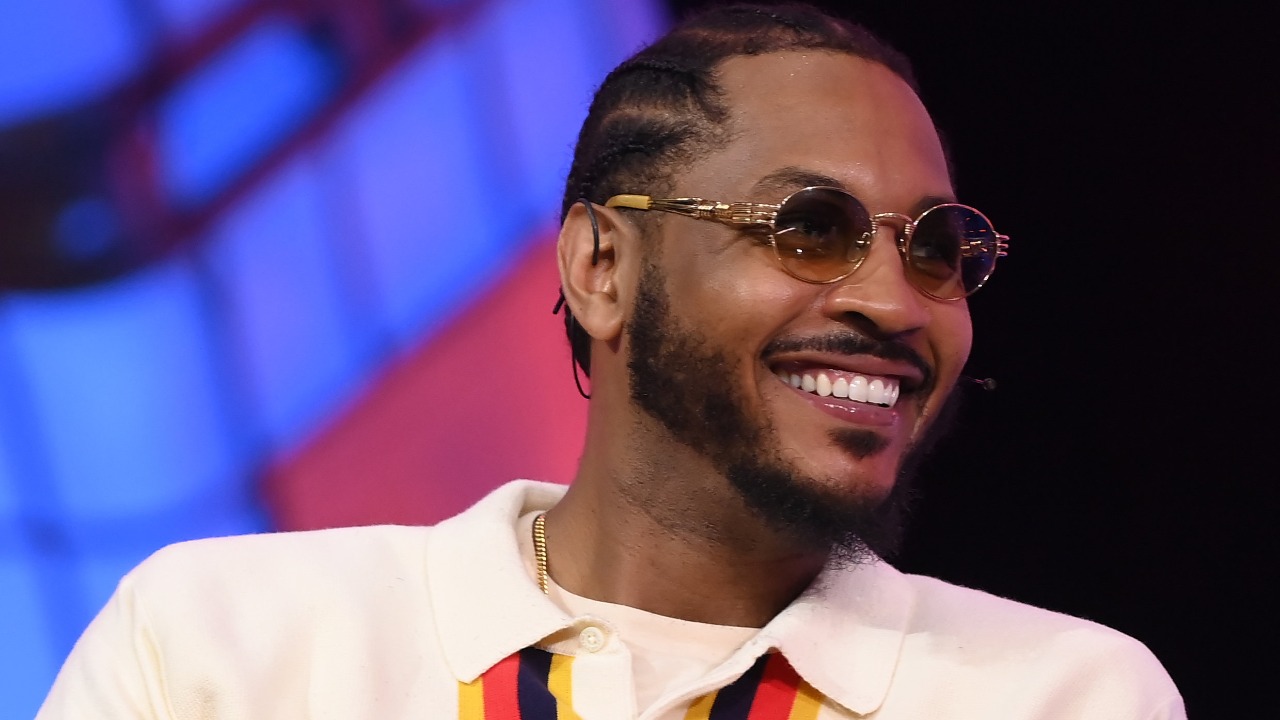
The number looks simple on a contract graphic, but the reality behind a nine-figure sports deal is far more complicated. When fans see an athlete sign for $100 million, they picture generational wealth locked in for life, not a paycheck that can be sliced up by taxes, fees, short career windows, and the pressure to live like a superstar. Carmelo Anthony has been trying to explain that gap, and his defense of Odell Beckham Jr. has turned a viral controversy into a rare, detailed look at how fast that money can shrink.
By walking through the math, the lifestyle, and even his own mistakes, Carmelo Anthony is arguing that $100 million is not the endless fortune people imagine, especially in leagues where contracts are not fully guaranteed and careers can end in a single play. I see his comments as less of a complaint and more of a warning about how fragile athlete wealth can be once the cameras move on.
How Odell Beckham Jr. lit the fuse on the $100 million debate
The latest round of scrutiny started when Odell Beckham Jr. said on The Pivot that it is hard to make a $100 million NFL contract last, a remark that instantly collided with public assumptions about athlete privilege. His point was that by the time a player in the NFL actually sees the money from a headline figure like $100 m or $100 million, the combination of taxes, agent commissions, and short earning windows makes that number feel far less secure than it looks on paper, especially in a collision sport where every snap carries risk to both body and future income. The backlash was swift, with critics accusing him of being out of touch even as his comments sparked a massive debate about how NFL contracts really work.
Into that storm stepped Carmelo Anthony, who has lived through his own cycle of max deals, endorsements, and the pressure to support a wide circle of people. He publicly backed Odell Beckham Jr., saying he understood why a player would look at a $100 million contract and still worry about how far it would stretch once the realities of pro sports economics kicked in. In interviews, Carmelo Anthony has agreed that a figure like $100 m on a five-year deal is not the same as having $100 million in the bank, and he has framed Beckham’s comments as an attempt to explain that nuance rather than a complaint about being underpaid. That context is crucial, because it shifts the conversation from envy to education about how elite athletes actually get paid.
Carmelo Anthony’s breakdown: where the money really goes
Carmelo Anthony has been most persuasive when he moves past generalities and walks through the line items that eat into a star’s contract. On a recent episode of his 7PM in Brooklyn podcast, he sat with JR Smith and unpacked how a headline number like $100 million can be carved up long before it ever hits a checking account. During that conversation, he emphasized that players in big markets like New York are hit by some of the highest tax burdens in the country, and that is before they pay agents, managers, and other professionals who take their percentage off the top. When he hears fans say, “That is $100 million,” he counters that the real figure is far lower once the government and the business side of sports take their share, a point he underscored while he defended Beckham’s comments.
On that same 7PM in Brooklyn episode, Carmelo Anthony, JR Smith, Method Man, and Kazeem Famuyide drilled even deeper into the mechanics of athlete pay. They talked about how a five-year deal is not just divided by five, because within that five now you got other taxes that you gotta pay, including so-called “jock taxes” in every state where you play. The group described how a player might think he is set for life, only to realize that after federal and state taxes, agent fees, union dues, and mandatory expenses, the net income is a fraction of the headline number. When Carmelo Anthony and JR Smith explained that you have to Pay taxes in every state you play in and punctuated it with a resigned “Right,” they were not exaggerating, they were reflecting a system that quietly drains millions from even the biggest contracts, a reality they laid out in detail on their podcast segment.
“Forever money” versus real life: taxes, fees, and short careers
Once the basic math is clear, Carmelo Anthony’s larger argument comes into focus: $100 million is not “forever money” for most athletes, especially those at the top tax bracket. He has echoed Odell Beckham Jr. in pointing out that top-bracket earners can see enormous portions of their income consumed by taxes and fees before they even start thinking about housing, family support, or business investments. Analysts who have looked at the numbers say that after federal and state taxes, plus the standard cuts for agents and other representatives, the take-home pay from a $100 million deal can be closer to half, and that is before lifestyle costs or unexpected setbacks. That is why Carmelo Anthony has backed the idea that even a massive contract leaves a player far from billionaire money, a point underscored in reporting that notes how the core financial issue remains taxes and fees for Top earners.
There is also the brutal reality that pro sports careers are short and fragile, which makes the idea of “forever money” even more misleading. In the NFL, a player like Odell Beckham Jr. can see his earning power swing wildly with each injury or team change, and guaranteed money is often a fraction of the total contract value. Carmelo Anthony has acknowledged that in the NBA, where more of the money is guaranteed, the pressures are different but the stakes are similar, because a player still has to stretch his peak earning years across an entire lifetime. When he agrees with Odell Beckham Jr. that $100 m or $100 million is not automatically enough, he is really talking about the need to treat those years as a compressed window to build something sustainable, a perspective he has shared while explaining why he agrees with Beckham’s viral claim.
From backlash to teachable moment: Carmelo Anthony’s response
When Odell Beckham Jr. first made his comments, the online reaction was predictably harsh, with critics focusing on the raw number rather than the context behind it. Carmelo Anthony saw that backlash and chose to step in, not to inflame the argument but to reframe it. He has said that he understands why fans see $100 million and think there is no room for complaint, yet he insists that players have a responsibility to explain the realities behind those figures. In doing so, he has turned what started as a viral soundbite into a broader conversation about financial literacy, risk, and the difference between gross and net income, a shift that was captured when fans dissected his reaction across basketball circles.
I see Carmelo Anthony’s stance as a bridge between two worlds: the fan base that only ever sees the headline number and the athletes who live with the fine print. By publicly siding with Odell Beckham Jr., he has risked the same accusations of being out of touch, yet he keeps returning to the idea that transparency can help younger players avoid the mistakes his generation made. His willingness to talk about taxes, fees, and the psychological pressure to spend like a star turns the backlash into a teachable moment, one that challenges both athletes and fans to think more critically about what those big numbers really mean once the cameras are off.
Lessons from Carmelo Anthony’s own financial evolution
Carmelo Anthony’s credibility on this topic does not come only from his contracts, it also comes from the way he has talked about his own learning curve with money. He has admitted that early in his career he was not knowledgeable about budgeting and had to learn the hard way how quickly a big paycheck can disappear. That experience is part of why he now gives detailed financial advice to his son, Kiyan, who already has significant earning potential of his own. In November 2024, it was estimated his NIL valuation was $1.1 m or $1.1 million, according to reporting that highlighted how the new college landscape is pushing teenagers into big-money decisions long before they reach a pro locker room, a dynamic Carmelo Anthony has addressed while offering guidance on budgeting and NIL.
That personal evolution is central to why his defense of Odell Beckham Jr. resonates. Carmelo Anthony is not arguing that $100 million is a small amount of money, he is arguing that without discipline, education, and a realistic understanding of taxes and career length, even that kind of windfall can prove fragile. When he talks about teaching Kiyan to budget, to invest carefully, and to resist the urge to match the flashiest lifestyles around him, he is implicitly acknowledging the missteps he saw in his own era. For fans, that context helps explain why he is so adamant that a $100 million contract is not the same as permanent security, and why he believes athletes have to treat those deals as the beginning of a financial plan, not the finish line.
More From TheDailyOverview

Cole Whitaker focuses on the fundamentals of money management, helping readers make smarter decisions around income, spending, saving, and long-term financial stability. His writing emphasizes clarity, discipline, and practical systems that work in real life. At The Daily Overview, Cole breaks down personal finance topics into straightforward guidance readers can apply immediately.

