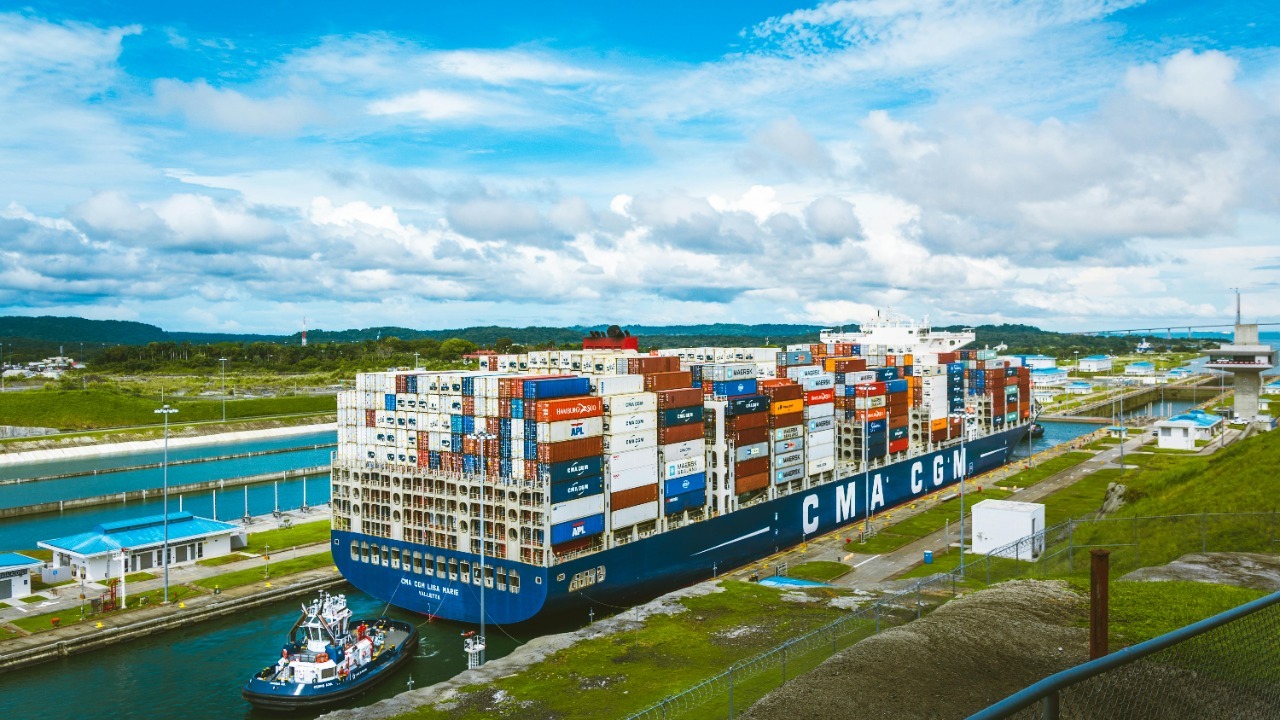
The fight over who controls the ports at each end of the Panama Canal has erupted into a full‑blown geopolitical clash, with China warning that Panama will pay a “heavy price” after a court decision that President Donald Trump is touting as a strategic win. At stake is far more than a single concession: the ruling has become a test of how much pressure Washington and Beijing can exert on a small country that happens to sit astride one of the world’s most critical trade arteries.
Panama’s Supreme Court move to void a long‑standing contract with Hong Kong‑based CK Hutchison has triggered threats from Beijing, legal counterattacks from the company, and open celebration in Washington. The confrontation now pits China’s economic leverage against Panama’s insistence on judicial independence, while Trump signals he is prepared to use the canal’s history and security role to push back on Chinese influence.
The court ruling that reset the canal power balance
The current crisis began when Panama’s Supreme Court struck down a concession that allowed a subsidiary of CK Hutchison to operate container terminals at the canal’s Pacific and Atlantic entrances. The judges ruled that the deal with the Hong Kong group violated constitutional norms, effectively cancelling a contract that had given Hutchison a long foothold in ports that handle a large share of global traffic moving through the Panama Canal. Reporting on the decision underscores that the outcome from Panama’s top court is widely seen as a boost for United States efforts to limit Chinese commercial reach at the waterway.
Analysts in Beijing’s Hands May be Tied as US Scores a Win in the Panama Canal Ports Ruling describe the verdict as a strategic victory for Washington, which has long worried about alleged Chinese control at the canal. The same reporting notes that the US $19 billion to $20 billion in annual trade that moves through the waterway gives every decision about port operations outsized geopolitical weight, and that the Supreme Court’s move directly affects Hutchison and the interests of Chinese companies at the canal’s entrances.
China’s furious response and the “heavy price” warning
Beijing reacted with unusually sharp language, framing the ruling as an attack on Chinese commercial rights and warning that Panama would face serious consequences. The Chinese government, through its foreign ministry and its office overseeing Hong Kong affairs, has branded the court’s decision against the Hong Kong firm CK Hutchison on Panama Canal ports “absurd,” “shameful” and “pathetic,” language that underscores how politically charged the case has become. In a separate statement, Chinese officials warned of “heavy prices” and signaled that political and economic retaliation was on the table after China warned Panama on Tuesday about “heavy prices” following the Supreme Court’s annulment of Hutchison’s contract.
On its WeChat account, China’s embassy in Panama amplified that message, accusing the country of undermining Chinese investors and hinting that Beijing would “carefully evaluate” the ruling and adopt corresponding decisions, according to accounts of the WeChat post. The Chinese foreign ministry’s spokesperson, cited By Reuters, called the court’s move “shameful and pathetic” and pointedly referenced the strategic location of the Panama Ports Company, or PPC, which runs terminals at both ends of the canal. Chinese commentary highlighted that a container ship docked at Panama Ports Company after the ruling illustrated how deeply integrated Chinese operators have become in canal logistics, and official statements stressed that The Chinese government viewed the decision as an affront to its companies’ rights and independence as a sovereign state.
Trump’s “canal victory” and US pressure campaign
For President Donald Trump, the court ruling has been framed as proof that his hard line on Chinese influence in the Western Hemisphere is paying off. Earlier coverage of his approach to the canal shows that Trump has repeatedly raised the specter of reclaiming the US‑built waterway or even reintroducing a military presence if Panama’s comptroller and political leaders did not address what he described as a security risk from Chinese firms. In the run‑up to the Supreme Court decision, US President Donald Trump piled pressure on Panama to cancel Hutchison’s contract by threatening to reclaim the US‑built waterway, a tactic described in detail in accounts that note how China reacted angrily once the ruling came down.
US officials and sympathetic commentators have cast the annulment as a major victory that “handed Trump a major victory” in his broader contest with Beijing over critical infrastructure. Coverage of the case notes that China has threatened political and economic consequences against Panama after the court voided CK Hutchison’s contract to operate the ports, and that Washington sees the outcome as part of a broader effort to protect one of its top priorities. A separate summary of Key Points on the dispute underscores that the ruling is seen in Washington as a direct check on Hutchison and a signal to other governments weighing Chinese port investments.
Panama pushes back, between two powers
Panama’s leaders have responded to Beijing’s threats by insisting that the Supreme Court acted independently and that the country will not be bullied over a domestic legal decision. President Jose Raul Mulino, speaking on Wednesday, rejected China’s warning that the Central American country would pay a heavy price, and emphasized that Panama would defend both its judicial process and its sovereignty, according to accounts that quote With Reuters. The same reporting stresses that Panama’s government is trying to reassure partners across the Global South that it remains open to investment, even as it resists direct political pressure from China.
At the same time, Panama has had to answer to Washington. Earlier coverage of Trump’s rhetoric shows that Panama also denies Trump’s accusations about the neutrality of the canal, which is enshrined in its constitution, but has nonetheless moved in ways that align with US security concerns. Local analysis framed as Beijing’s Hands May be Tied as US Scores a Win suggests that Panama’s Supreme Court decision reflects both domestic legal concerns and a desire to ease US pressure over alleged Chinese control of the canal. That leaves Panama walking a tightrope between two major powers, each of which sees the canal as a strategic asset rather than just a commercial route.
Hutchison’s arbitration move and the legal front
CK Hutchison has not accepted the loss of its concession quietly, and its legal counteroffensive adds another layer of uncertainty. On Wednesday, Hutchison announced the start of arbitration proceedings against Panama, a step that further escalated tensions and could expose the government to significant financial claims if international tribunals side with the company, according to accounts that describe how China threatens Panama with a “heavy price” after Trump’s canal victory. Maritime industry coverage notes that Hutchison has launched arbitration as Hong Kong authorities and Chinese agencies rally behind the company, with Authorities in Hong Kong publishing a scathing response to the decision.
Legal filings and public statements indicate that the Hong Kong firm is arguing the ruling violates protections for foreign investors and that it will seek compensation for the loss of its long‑term rights at the canal. Coverage of the case notes that Panama’s court decision last week added further uncertainties for shipping lines and investors, and that on Tuesday Beijing’s office overseeing Hong Kong affairs criticized the ruling at a daily news conference in Beijing. Separate maritime reporting underlines that China Warns Panama Of Consequences After Court Cancels CK Hutchison Canal Port Deal, with the phrase “China Warns Panama Of Consequences After Cour” used to capture how the dispute has become a test case for investor protections in an era of intensifying rivalry over global trade routes.
More From The Daily Overview
*This article was researched with the help of AI, with human editors creating the final content.

Grant Mercer covers market dynamics, business trends, and the economic forces driving growth across industries. His analysis connects macro movements with real-world implications for investors, entrepreneurs, and professionals. Through his work at The Daily Overview, Grant helps readers understand how markets function and where opportunities may emerge.

