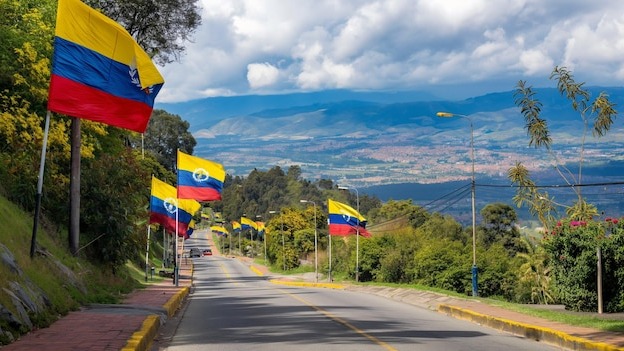
Colombia is weighing an aggressive new corporate wealth tax as torrential floods rip through its northern departments, testing how far a government can lean on big business to finance climate disasters. The proposal would target the largest balance sheets in the country, using their accumulated assets to patch washed‑out roads, rebuild homes and stabilize a strained budget. The stakes are not only fiscal, they are political and strategic, as President Gustavo Petro tries to turn an emergency into a long‑term reset of who pays for Colombia’s climate risk.
The plan sits at the intersection of three pressures: a deepening fiscal gap, an economic state of emergency and a tax system already in flux heading into 2026. I see it less as a one‑off levy and more as a stress test of Colombia’s broader development model, with potential to accelerate shifts in investment, especially in energy, even if that is not the stated goal.
The anatomy of a corporate “wealth tax”
The government’s proposal centers on a one‑time or time‑limited charge on corporate assets above a high threshold, rather than on annual profits. According to the draft, the tax would apply to companies whose assets exceed 212 318 2000 million pesos, effectively singling out the largest conglomerates, banks and capital‑intensive firms. The idea is to tap balance‑sheet strength that has accumulated over years, not just the latest income statement, and to do it in a way that is framed as solidarity with flood‑hit communities rather than routine fiscal extraction.
Officials have floated a progressive schedule that would rise with asset size, with some reports indicating a top marginal rate of 40 for the biggest holdings, though the precise brackets remain under negotiation. The design echoes the broader Colombia Wealth Tax set out in Decree 1474, which already raised concerns among global investors about cumulative tax pressure. By tying this new charge explicitly to flood reconstruction, the administration is betting that the political optics of asking the largest asset holders to contribute more will outweigh fears of overreach.
Floods, emergency powers and a contested mandate
The trigger for the proposal is a brutal rainy season in the north, where heavy downpours have inundated towns at a time of year when such rains are usually rare. President Petro has personally toured affected areas, with video showing President Petro overseeing evacuations and promising rapid repairs as rivers overflow and landslides cut off key roads. The human toll, from displaced families to damaged crops, has created intense pressure for visible state action, not only in emergency relief but in rebuilding infrastructure that was fragile even before the storms.
To unlock money quickly, Colombia’s government has declared an economic state of emergency that allows temporary tax measures by decree, a step that President Gustavo Petro has defended as necessary given simultaneous security threats and budget strains. Yet the Constitutional Court has already pushed back, with January Colombia rulings suspending parts of an earlier decree on the grounds that the justification was too broad. That legal tug‑of‑war means any corporate wealth tax linked to emergency powers will likely face intense scrutiny, and could be narrowed or reshaped before it ever reaches companies’ ledgers.
How the new levy fits into Petro’s wider tax playbook
The corporate wealth tax proposal does not arrive in a vacuum. Earlier, the Executive Branch sent a 2026 tax reform package to Congress that reworks income, dividend and sector‑specific levies, with Colombia Executive Branch documents detailing higher rates on dividends paid to nonresidents and adjustments to corporate brackets. On top of that, the government has already adopted temporary measures under the economic emergency, including a Corporate income tax surcharge for financial institutions and related entities, and new taxes on gambling revenue. The wealth tax would sit alongside these moves, reinforcing a pattern of targeting sectors seen as more profitable or resilient.
There is also a consumer‑facing layer. Emergency regulations have raised Value added tax on liquors, wines and other non‑essential goods, with a progressive rate structure that officials argue protects basic consumption while capturing more from luxury spending. Combined with the corporate surcharges, this architecture reflects a clear philosophy: those with greater capacity, whether wealthy consumers or large firms, should shoulder a disproportionate share of the adjustment. The proposed wealth tax on assets is simply the most visible expression of that logic, and it raises the question of how much cumulative pressure the system can bear before investment decisions start to shift.
Business backlash, fiscal crisis and the oil question
Corporate leaders have warned that repeated tax hikes risk turning Colombia into a less attractive destination for capital, especially when neighboring countries are courting the same investors. Reporting on the draft levy notes that Oscar Medina describes the government as planning a wealth tax on corporate assets to pay for flood damage, with the threshold set at 212 318 2000 million pesos according to the proposal. A parallel account of Levy Corporate plans underscores that this is not yet law but a significant marker of intent. For multinationals weighing where to expand, the signal that asset‑heavy operations could face extraordinary charges may be as important as the immediate cost.
These tensions sit atop a worsening fiscal backdrop. Analysts note that Petro Decree 1474 already increased taxes on the economically crucial oil industry in response to a deepening fiscal crisis, reinforcing perceptions that the administration sees hydrocarbons as a cash cow even as it talks about energy transition. If the corporate wealth tax is implemented in a way that heavily hits fossil‑fuel producers and related infrastructure firms, I expect it to accelerate their search for friendlier jurisdictions. At the same time, that pressure could nudge capital toward lower‑carbon sectors inside Colombia, especially if the government pairs the levy with targeted incentives for renewables, though such incentives are not yet detailed in the available sources.
Emergency politics and the risk of overreach
Politically, the wealth tax debate is as much about process as substance. In BOGOTA, Colombian President Gustavo has urged the country’s highest court to allow him to raise taxes by decree again, arguing that flood damage, health system debts and security threats justify bypassing normal legislative timelines. Critics counter that repeated reliance on emergency powers erodes democratic checks and makes tax policy unpredictable, which in turn chills long‑term investment. The court’s earlier suspension of parts of Decree 1474 shows that judges are willing to draw lines, and any wealth tax that leans too heavily on emergency justifications could be pared back or delayed.
I see a gap between the dominant narrative, which frames the wealth tax as a short‑term fix for flood damage, and the structural reality that Colombia’s budget problems predate the storms. The government has already used emergency tools to adjust VAT, corporate surcharges and sectoral levies, as reflected in Colombia Bloomberg coverage of the broader package. That pattern suggests the floods are acting as a catalyst for a deeper rebalancing of who funds the state, not just a one‑off response to a natural disaster. The risk is that by stretching the emergency frame too far, the administration invites legal setbacks that slow down both reconstruction and longer‑term reforms.
More From The Daily Overview
*This article was researched with the help of AI, with human editors creating the final content.

Grant Mercer covers market dynamics, business trends, and the economic forces driving growth across industries. His analysis connects macro movements with real-world implications for investors, entrepreneurs, and professionals. Through his work at The Daily Overview, Grant helps readers understand how markets function and where opportunities may emerge.

