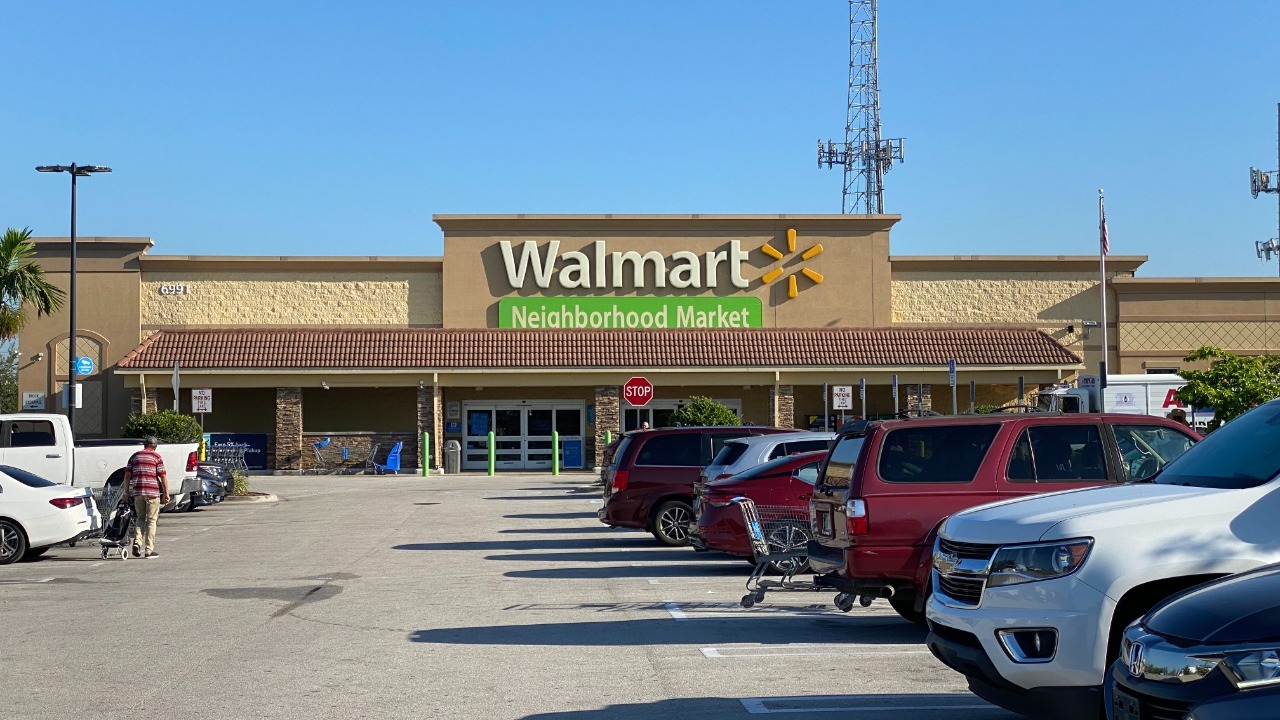
Grocery shoppers have been told for months that inflation is cooling, yet the checkout total still has a way of jolting the stomach. A year-long test of 114 everyday items at one Walmart suggests that the story on the shelf is more complicated than the headline numbers. The data points to a quieter, more persistent squeeze, where modest price hikes, smaller packages and shifting promotions combine to keep budgets under pressure even as official inflation slows.
The core finding is deceptively simple: the basket in this test got about 5 percent more expensive over the past year, even as the retailer continued to market itself as the low-price anchor of American groceries. That rise is tied to forces far beyond any single store, from climate-driven crop shocks to new tariffs on imported goods. Yet how those pressures are translated into everyday prices, and who feels them most, is very much a matter of corporate strategy and algorithmic decision making.
The 5 percent problem: what NPR’s basket really shows
The year-long experiment followed 114 items that most households would recognize, including staples like coffee, beef, chocolate and ground pork. By the end of the test, Prices in that basket had risen 5 percent on average, a meaningful jump for families who do not have much slack in their monthly budget. Almost half of the items on the list became more expensive over the course of 2025, including repeat offenders like coffee, beef and chocolate, while only a minority saw any real relief. For a household that spends a few hundred dollars a month on groceries, that 5 percent translates into the equivalent of an extra week or two of food costs over a year.
What makes this test powerful is not that it captures every nuance of the grocery market, but that it tracks the same items in the same store over time. That strips away some of the noise created when shoppers switch brands or chase promotions. It also exposes how much of the “good news” about cooling inflation rests on comparisons to the worst spikes of the pandemic era. When prices stop rising at double-digit rates but still climb 5 percent in a year, the pressure on wallets does not disappear, it just becomes less visible. The test basket turns that slow grind into a concrete number that is hard to wave away.
Climate chaos, tariffs and the new cost of dinner
Behind that 5 percent rise sits a tangle of global forces that are increasingly colliding in the grocery aisle. Earlier this year, reporting on the same test made clear that Climate chaos roiled many industries, disrupting harvests and livestock production in ways that hit coffee, beef, chocolate and ground pork especially hard. Droughts, floods and heat waves do not show up on a receipt, but they do show up in the wholesale prices that retailers pay, and eventually in the sticker price on a pound of meat or a bag of beans. When the same categories keep posting some of the worst hikes, it is a sign that weather volatility is no longer a one-off shock but a structural driver of food costs.
Layered on top of that are new import tariffs that have raised the cost of bringing certain foods and ingredients into the United States. A video explainer on the test notes that a 5 percent rise in Walmart prices has been linked directly to tariffs and global weather patterns, a combination that leaves retailers with higher baseline costs before they even start thinking about promotions. When both climate and trade policy are pushing in the same direction, the room for genuine price cuts shrinks. The result is a grocery economy where “rollback” tags can coexist with a steadily rising total, because the underlying floor keeps moving up.
Shrinkflation and the illusion of a stable shelf price
Even when the number on the shelf does not change, the value in the package often does. The same reporting that documented the 5 percent rise also highlighted how shrinkflation has become a quiet companion to overt price hikes, with manufacturers trimming ounces from cereal boxes, snack bags and household staples while keeping the sticker price flat. For shoppers who do not calculate unit prices on the fly, it can feel as if a favorite item has been spared from inflation, only for it to run out faster at home. The effect is similar to a stealth tax on convenience and inattention.
This tactic is especially potent in categories where brand loyalty is strong and packaging changes are subtle. A slightly narrower bottle of detergent or a shorter stack of paper towels rarely triggers the same outrage as a sudden 50 cent jump in price, yet over a year the impact on a family’s budget can be comparable. In the context of the Walmart test, shrinkflation means that the 5 percent average increase likely understates the true loss of purchasing power. The basket measures what it costs to buy one unit of each product, not how long that unit lasts, so the lived experience of shoppers may be closer to a 6 or 7 percent squeeze once smaller sizes are factored in.
What the test misses: geography, competitors and algorithms
For all its value, the year-long experiment is still just one store in one place, and that matters. Prices at a suburban supercenter in a growing region can look very different from those at a small-format store in a rural county or a high-rent urban neighborhood. The test does not capture how Walmart calibrates its pricing across regions where it faces different competitors, labor costs and customer profiles. Nor does it show how rival chains like Target or Kroger adjusted their own baskets over the same period, which would be necessary to say whether a 5 percent rise is relatively good or bad in the broader market. Without that comparison, the test is best read as a microscope on one retailer’s reality, not a full map of the grocery landscape.
Another blind spot is the role of dynamic pricing algorithms that increasingly govern how and when discounts appear. Large retailers now use real-time data on demand, inventory and local competition to tweak prices, sometimes multiple times a week. That can mean deeper markdowns on slow-moving items in affluent areas, where shoppers are more responsive to digital coupons and app alerts, and fewer breaks in low-income neighborhoods where demand is less elastic and smartphone access is patchier. If those patterns hold, the same external shocks that drove the 5 percent increase could be amplified for poorer shoppers, who see fewer targeted deals and have less flexibility to stock up when prices briefly dip. The single-store test cannot prove that effect, but it points toward a critical question: are algorithms quietly widening the affordability gap even as headline inflation cools?
How shoppers are adapting, and what comes next
Faced with a basket that costs 5 percent more and packages that quietly shrink, many households are changing how they shop. Some are trading down from national brands to private labels, others are cutting back on meat or premium snacks, and a growing share are splitting their list across multiple stores to chase the best deals. The Walmart test suggests that even a retailer built on low prices cannot fully shield customers from global shocks, which in turn nudges more people toward strategies that used to be associated mainly with extreme couponers. For families already juggling rent, gas and childcare, the mental load of constantly re-optimizing the grocery list is becoming part of the cost of eating.
More From The Daily Overview
*This article was researched with the help of AI, with human editors creating the final content.

Cole Whitaker focuses on the fundamentals of money management, helping readers make smarter decisions around income, spending, saving, and long-term financial stability. His writing emphasizes clarity, discipline, and practical systems that work in real life. At The Daily Overview, Cole breaks down personal finance topics into straightforward guidance readers can apply immediately.
