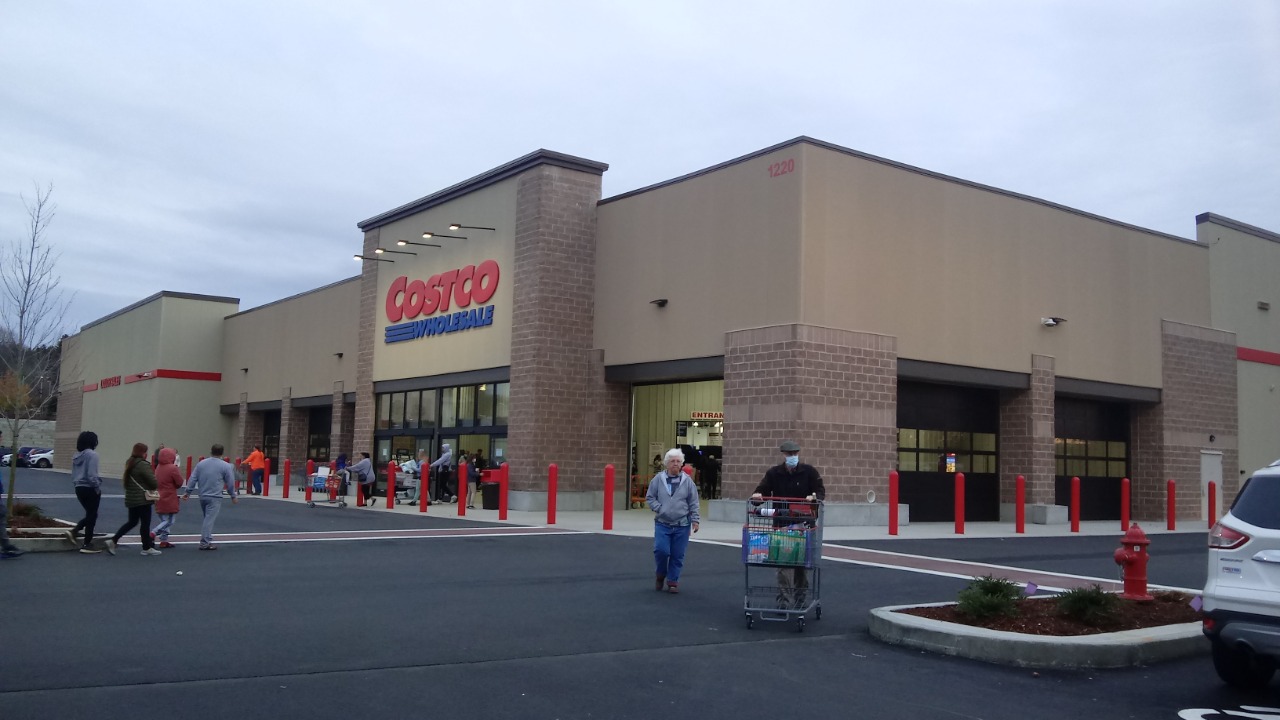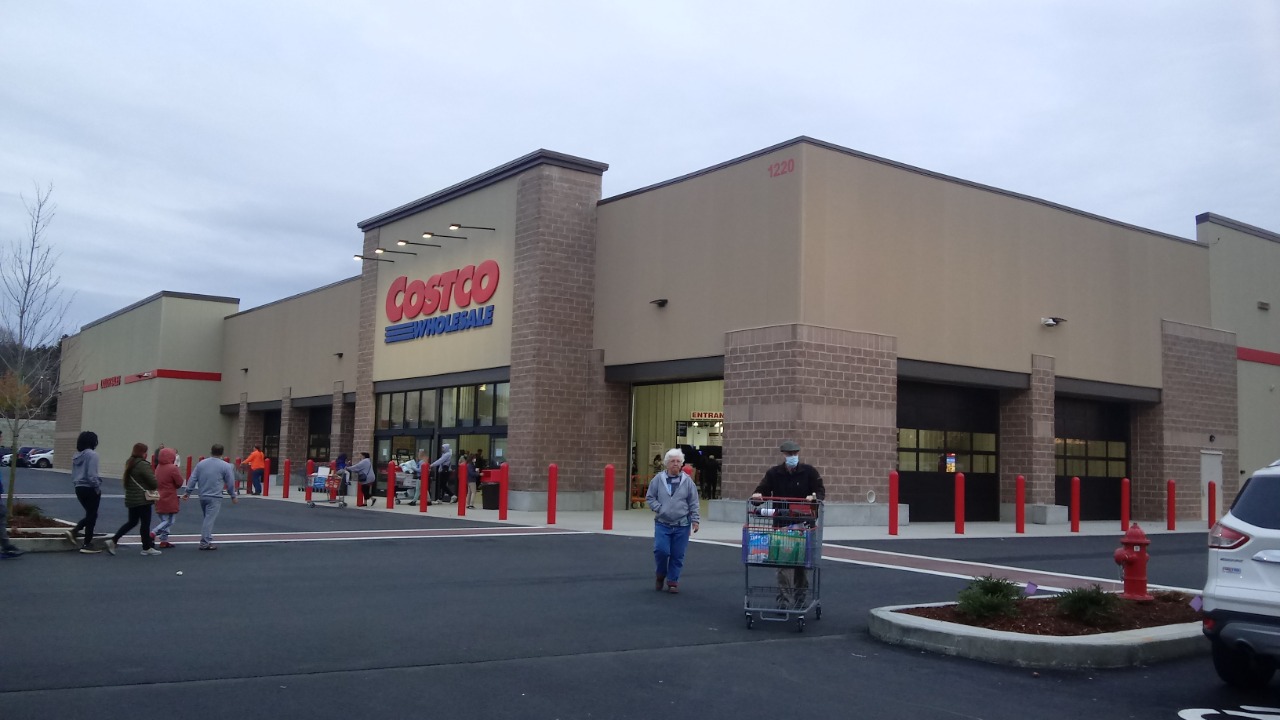
The warehouse chain that built its brand on egalitarian bulk bargains is now leaning into a more stratified future. Costco is pouring billions into a premium tier that promises richer perks for those who can pay more, even as the country’s broad middle struggles to keep up. I see that tension, between a $4 billion “first class” membership push and an eroding middle class, as a revealing snapshot of where American consumer capitalism is heading.
Costco’s velvet rope moment
Costco has always had a hierarchy, but the gap between its basic and premium customers is widening into something closer to a class divide. The company’s new initiative, described as a $4 billion Velvet Rope Strategy, is explicitly designed to elevate Executive Members as a distinct, more privileged group inside the warehouse. At a Seattle Costco, the rollout was framed as the creation of a “first-ever class barrier,” with Executive Members now accounting for a growing share of the chain’s most profitable shoppers and positioned as a crucial driver of future earnings.
The financial logic is straightforward. Executive Members pay higher annual fees in exchange for richer rewards, and they tend to spend more per visit, which makes them disproportionately valuable to the bottom line. Costco’s own reporting underscores how central this cohort has become, with the company highlighting membership economics in its investor communications and treating the premium tier as a lever to reach that multibillion-dollar target. The language around the Velvet Rope Strategy makes clear that the $4 billion ambition is not about opening more doors, but about deepening the value extracted from those already on the preferred side of the rope.
Membership money and the $4B ambition
To understand why Costco is comfortable formalizing a class boundary inside its stores, I look first at the numbers. Membership fees are not a side business, they are the engine. In fiscal 2025, these recurring charges generated $5.3 billion in high margin revenue, a stream that drops to the bottom line with far less volatility than selling rotisserie chickens or televisions. Earlier this fiscal year, Costco Wholesale Corporation Reports First Quarter Fiscal Year 2026 Operating Results showed that membership trends remained central to performance, with the company’s overview of Operating Results from ISSAQUAH emphasizing fee income as a stabilizing force.
That stability is growing. Excluding the latest membership fee increase and foreign exchange effects, membership income rose 7.3% year over year, a pace that would make many subscription businesses envious. The same analysis pointed to Sustained renewal rates that hovered near 89.7% worldwide, proof that once shoppers buy into the Costco ecosystem, they rarely leave. When I connect those figures to the Velvet Rope Strategy, the $4 billion target for a more exclusive tier looks less like a gamble and more like an attempt to intensify a proven model, using Executive Members as the high octane fuel for Costco’s next phase of growth.
Policy shifts that feel like class lines
Costco’s new policies are where the abstract idea of a class barrier becomes tangible for ordinary shoppers. Over the summer, the company implemented a Policy change that gives Executive Members exclusive early access to the warehouse, letting them enter at 8 a.m. while other members wait until 10 a.m. The Policy shift, which applies across Costco locations, effectively turns time itself into a premium perk, with quieter aisles, shorter lines, and first pick of limited stock reserved for those who can afford the higher fee.
From a business standpoint, I can see the appeal. Early hours for Executive Members spread traffic across the day, potentially easing congestion and boosting satisfaction among the highest spending customers. But for standard members, the message is blunt: your money is welcome, your presence is delayed. When I pair that with the Velvet Rope Strategy’s framing as Creating First and Ever Class Barrier, the optics are hard to ignore. The warehouse that once felt like a level playing field of bulk buying now has a front cabin and a coach section, and the dividing curtain is not just symbolic, it is baked into store hours and access.
The shrinking middle that Costco depends on
All of this is unfolding against a backdrop of a middle class that is losing ground. Research on The State of the American Middle Class shows that the share of Americans in that income band has fallen steadily since the early 1970s, and that the group’s claim on national income has eroded as well. One detailed analysis notes that The share of total U.S. household income held by the middle tier has declined while upper income households have captured a larger slice. The same body of work stresses that 61% of Americans were in the middle class in 1971, a figure that has since dropped, underscoring how the broad base of consumers that once anchored retailers like Costco is thinning out.
A complementary report titled The State of the American Middle Class reinforces that the share of Americans in the middle class has fallen since 1971, with charts showing how income distribution has shifted toward both the lower and upper ends. For a retailer that built its empire on selling 30 roll packs of paper towels and family sized bags of frozen chicken, that trend is a warning. Costco’s core proposition assumes households have enough disposable income, storage space, and car capacity to make bulk buying worthwhile. As more Americans slip out of the middle, the company’s pivot toward a more affluent Executive Member base looks less like a side strategy and more like a hedge against a shrinking mass market.
Investors, data, and the new Costco customer
Investors have already started to price in this shift toward a more premium Costco. Analysts tracking the stock through platforms that rely on Google Finance data see a company whose valuation is increasingly tied to membership economics rather than simple retail margins. Commentary on Costco’s 2025 performance highlights that if there was one constant in its fiscal year, which ended in Aug, it was the strength of its membership base. One review noted that Costco cardholders reached around 145 million, a figure that underscores just how large the captive audience is for any new perk or price change layered onto the membership model, as detailed in Costco’s 2025 investor focused analysis.
Another breakdown of the same period, also framed around Dec and the fiscal year that ended in Aug, stressed that Costco’s membership engine is what gives the stock its long term appeal. The discussion of Costco heading into 2026 pointed to Executive Members as a particularly lucrative slice of that base, with their higher fees and spending patterns making them central to future growth scenarios. When I connect those investor narratives to the Velvet Rope Strategy and the $4 billion target, the picture that emerges is of a retailer consciously reorienting itself around a more affluent, more loyal, and more segmented customer, even if that means leaving parts of the traditional middle class further behind the rope.
More From TheDailyOverview

Grant Mercer covers market dynamics, business trends, and the economic forces driving growth across industries. His analysis connects macro movements with real-world implications for investors, entrepreneurs, and professionals. Through his work at The Daily Overview, Grant helps readers understand how markets function and where opportunities may emerge.