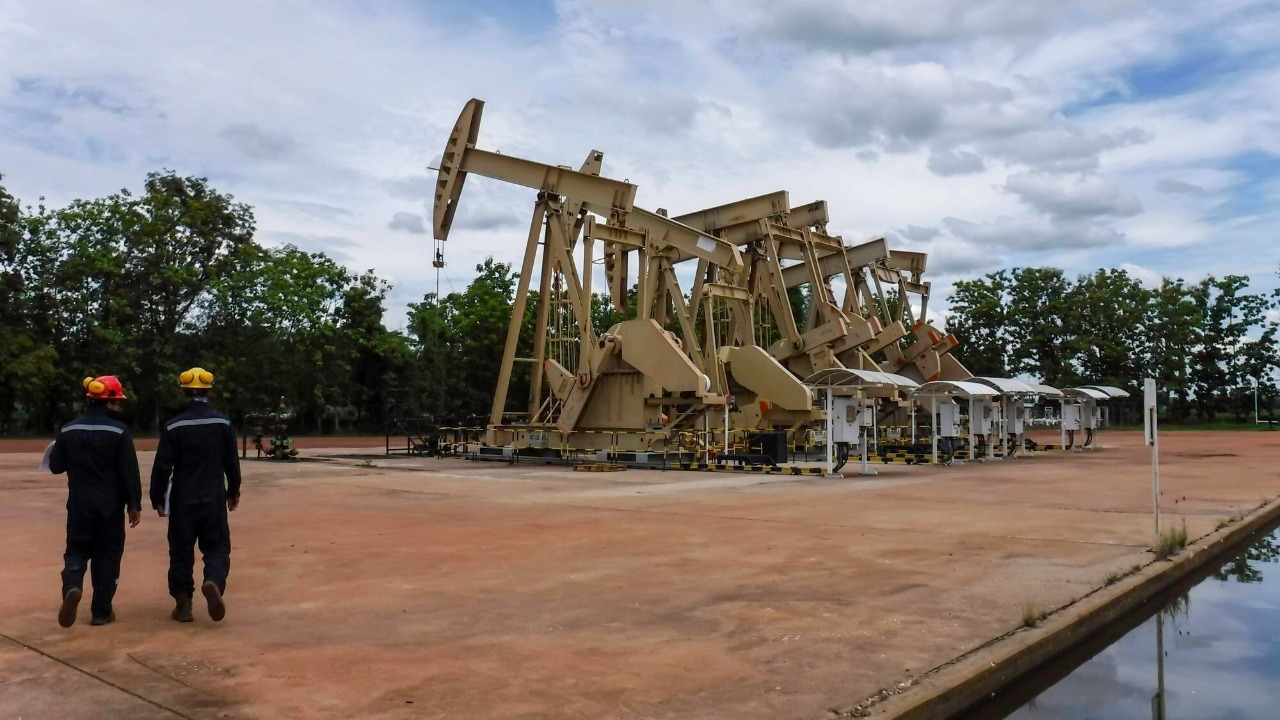
Crude prices are slipping even as political turmoil in Venezuela rattles global headlines, a sign that traders are more focused on abundant supply than on the latest geopolitical shock. The upheaval has injected fresh uncertainty into the outlook for one of the world’s largest oil reserve holders, yet benchmark futures have eased as investors bet that other producers and existing stockpiles can cover any near term disruption.
I see a market that is treating the Venezuela crisis as a medium term story about future barrels rather than an immediate squeeze, with OPEC+ discipline, U.S. policy and consumer demand all shaping how far prices can really fall. The result is a tug of war between fears of escalation and a growing conviction that the world is, for now, comfortably supplied.
Venezuela shock meets a well supplied market
The starting point is the scale of the political and security rupture inside Venezuela, which has moved from chronic instability to outright confrontation involving the United States. The country still sits on a massive endowment of crude, with an estimated 303 billion barrels of reserves, roughly a fifth of global totals, so any question mark over its leadership or export capacity inevitably reverberates through energy markets. Yet the immediate price reaction has been muted, because traders know that actual Venezuelan output has been a fraction of that potential for years and that the current shock does not instantly erase barrels that were already constrained.
Instead of a classic supply scare, I see investors treating the crisis as another chapter in a long running story of underperformance. While Venezuela was once an oil producing powerhouse, its output has declined precipitously over the past two decades, a slide that has left global balances far less dependent on its day to day flows than its reserves might suggest. That structural decline, documented in detail by analyses of how While Venezuela lost ground in the export race, helps explain why crude can dip even as the political situation deteriorates.
OPEC+, acting leadership and the limits of disruption
Another reason prices are softening is that OPEC and its allies have chosen stability over drama. The producer group has put increases in production on pause for the first quarter after raising output targets by around 180,000 barrels per day late last year, a decision that effectively keeps a lid on fresh supply while avoiding any panic cuts. That stance, described in detail in assessments of how the group is managing flows from Russia, Iran and Venezuela, signals to traders that OPEC+ is not rushing to weaponize the crisis but is instead trying to smooth through it.
Inside the country, Venezuela’s acting president has publicly offered to collaborate with the United States on stabilizing oil exports, an extraordinary gesture that underscores how central continued shipments are to both sides. Reporting on how Venezuela’s acting president is trying to reassure markets notes that the pledge has had little immediate impact on prices, precisely because traders already assume that other OPEC+ members can offset any shortfall. In that context, the turmoil looks less like a systemic shock and more like a localized risk that can be managed within the cartel’s broader production strategy.
Trump’s intervention and geopolitical risk pricing
The U.S. role has added a combustible political layer without yet changing the physical balance of barrels. President Donald Trump said on Saturday that the U.S. would control the country until it could make an orderly transition, a sweeping assertion of authority that goes far beyond traditional sanctions or diplomatic pressure. That statement, detailed in accounts of how Trump said on Saturday Washington would oversee the transition, has forced traders to factor in the risk of prolonged U.S. stewardship over a fragile energy system.
Critics argue that the intervention could backfire economically. Instead of trying to “run the country” and attempting a risky, large scale military intervention in Venezuela that could destabilize the region, some analysts warn that Washington is inviting higher costs at home. Their concern, laid out in commentary that begins with the phrase Instead of endorsing direct control, is that any escalation could ripple through shipping, insurance and regional supply chains even if headline crude prices remain contained.
Why crude can fall while gas and trucking stay exposed
For consumers, the paradox is that crude benchmarks can drift lower while specific sectors still feel pain. One of the sectors that could be disproportionately hurt by these military actions in Venezuela is trucking, which is highly sensitive to diesel price spikes and supply bottlenecks. Analysts tracking how One of the most fuel intensive industries could be squeezed warn that even modest moves in wholesale markets can translate into higher freight costs across the U.S. and around the world, especially during peak shipping seasons.
At the pump, however, the picture is surprisingly benign. Forecasters say 2026 will be the cheapest year for gasoline since the early stages of the pandemic, with national averages expected to undercut even the relief drivers felt during the inflation crunch in 2025. Analyses of Why pump prices are falling point to robust refinery runs, easing demand growth and preliminary estimates from the EIA that suggest inventories will stay comfortable. That combination helps explain why a family filling up a 2022 Toyota RAV4 in Dallas might see cheaper Gas even as headlines about airstrikes and raids dominate cable news.
Long term supply, price forecasts and what I am watching
The deeper story is about what happens to Venezuelan supply over the next several years, not the next several weeks. JPMorgan analysts led by Natasha Kaneva have argued that with a political transition, Venezuela could raise oil production significantly, potentially adding hundreds of thousands of barrels per day to global supply. Their note on how Natasha Kaneva expects output to climb from a current base near 900,000 barrels per day frames the crisis not just as a risk but as a potential source of future downward pressure on prices if investment and governance improve.
That view dovetails with broader forecasts that see plenty of oil supply on the horizon. There is plenty of oil supply, according to global reports, meaning any further disruption to Venezuelan exports would likely be absorbed through shifts among the many producers. Analysts debating whether the Venezuela crisis will push crude to 61 to 64 dollars per barrel or fade on a supply glut emphasize that There is enough flexibility in U.S. shale, Middle Eastern capacity and strategic reserves to cap rallies unless the conflict spirals far beyond current expectations. Against that backdrop, I am watching not just troop movements and sanctions, but also the quieter negotiations over investment terms, debt restructuring and governance that will determine whether Venezuelan barrels flood back into the market or remain stranded.
From Caracas to the global dashboard
All of this plays out against the backdrop of a country that remains central to the oil story even in decline. A quick look at the data on Venezuela shows a nation whose hydrocarbon wealth has long outstripped its ability to monetize it, a mismatch that has now drawn in foreign militaries and global institutions. The current upheaval is as much about who will control that endowment and how it will be managed as it is about any single leader or faction in Caracas.
For now, crude’s dip tells me that traders believe the rest of the world can live without a fully functioning Venezuelan oil sector for a while longer. The real test will come if the conflict drags on, investment stalls and promised transitions fail to materialize, forcing OPEC, the U.S. and other producers to revisit their assumptions about spare capacity and demand. Until then, the market is signaling that political drama alone is not enough to sustain a rally, especially when global supply looks ample and consumers are finally catching a break at the pump.
More From TheDailyOverview

Grant Mercer covers market dynamics, business trends, and the economic forces driving growth across industries. His analysis connects macro movements with real-world implications for investors, entrepreneurs, and professionals. Through his work at The Daily Overview, Grant helps readers understand how markets function and where opportunities may emerge.

