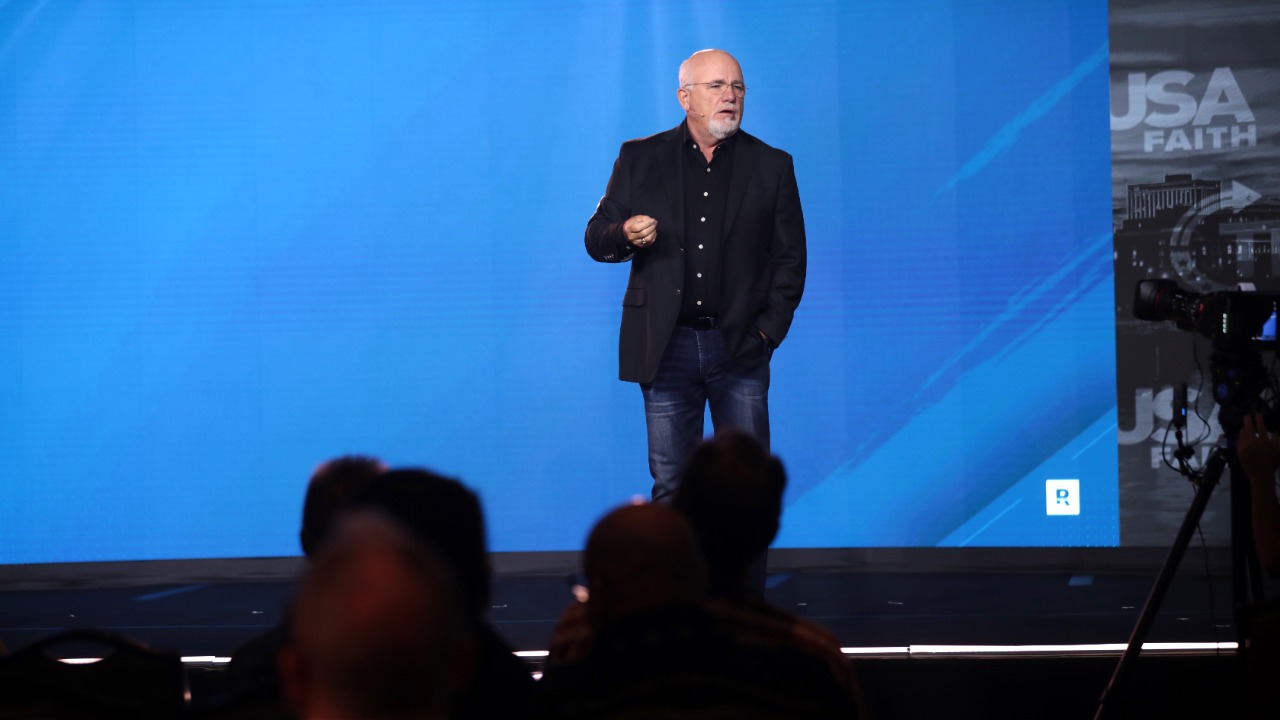
Dave Ramsey has been turning up the volume on a simple but unsettling message: too many Americans are drifting toward retirement without a reliable plan. His latest warnings focus on three pressure points that could upend the traditional glide path into older age, shaky expectations about Social Security, risky behavior inside 401(k) plans, and a widespread failure to save enough, early enough, to fill the gap.
I see his alarm as less about fear and more about forcing a reckoning with the math. When a prominent personal finance voice argues that Social Security, workplace plans and personal habits are all under strain at the same time, it is a signal that the old “it will work itself out” mindset is colliding with demographic and financial reality.
Social Security is not a retirement plan, it is a warning light
Ramsey has been blunt that Social Security was never designed to be a full retirement paycheck, and he has sharpened that point by stressing how fragile the system looks over the long haul. Earlier this year, he highlighted that the Social Security trust fund could run out by 2035, a projection that underscores his argument that anyone counting on a government check to carry them through their seventies and eighties is building on sand. His overarching warning is that the benefit you eventually receive from The Social Security system may be less than you assume, even if the program itself survives.
That skepticism runs through his broader critique of the program’s structure. In a separate set of comments from Jan 16, 2025, he framed Social Security’s Long Term Stability Is Uncertain At Best, arguing that relying on it as a primary income source will only get harder as more retirees draw benefits and fewer workers pay in. He has warned that the political and financial strain on Social Security will increase over time, which is why he urges people to treat any future benefit as a supplement, not a foundation.
Ramsey’s Social Security message for 2025: act like the CEO of your retirement
Ramsey’s Social Security commentary in 2025 has coalesced around a single theme, personal responsibility. In an interview dated Oct 3, 2025, he pushed listeners to “be the CEO of your nest egg,” a phrase that captures his insistence that no politician or agency will rescue a household that refuses to save. He has framed his Social Security stance as a call to build a parallel income stream through investing, so that any government benefit is a bonus rather than a lifeline, a point he reinforced while discussing The Social Security Warning Dave Ramsey Is Adamant About in 2025.
That message is not just philosophical, it is tactical. Ramsey has repeatedly told callers that they should calculate retirement needs as if Social Security did not exist, then treat any eventual benefit as a margin of safety. He argues that this mindset forces people to confront their real savings gap instead of assuming that a future check will cover the shortfall, a stance that aligns with his broader view that What is going to happen with Social Security is inherently uncertain and should not be the linchpin of anyone’s long term plan.
The 401(k) alarm: fees, behavior and the risk of pausing contributions
Ramsey’s starkest recent language has been reserved for workplace retirement plans, particularly 401(k) accounts that he believes are being misused or neglected. In early Nov, he sounded a blunt alarm about 401(k) plans, warning that too many savers underestimate the drag of high fees and poor investment choices on their long term returns. He has argued that if your plan is riddled with expensive funds, the compounding effect of those costs can quietly erode more wealth than you ever withdraw, a concern he raised while warning Americans about Personal 401(k) risks.
At the same time, his advice has not been a simple “always contribute more.” On Nov 14, 2025, he drew attention by urging some Americans To Pause 401(k) Contributions, arguing that in specific situations, such as when someone is buried in high interest consumer debt, temporarily redirecting savings can be the lesser evil. He stressed that this should not be taken as a blanket prescription, but as a targeted strategy for households that need to stabilize their finances before resuming retirement investing, a nuance he underscored while discussing Dave Ramsey Urges Americans To Pause Contributions, Should You as a Radio personality and best selling author.
The biggest retirement mistake: quitting work before the math works
Ramsey has also zeroed in on timing as a critical, and often underestimated, retirement risk. He has called early retirement the dream of millions of Americans, but he argues that Retiring too soon can be the single biggest mistake a worker makes, because it shortens the saving window and lengthens the period when investments must support withdrawals. In an analysis dated Oct 20, 2025, he pointed out that leaving the workforce early means fewer years of contributions and more years of spending, a double squeeze that can break even a seemingly solid plan for many Retiring Americans.
He has framed this as a behavioral problem as much as a financial one. In his view, the cultural obsession with quitting at 55 or 60 encourages people to ignore the compounding value of just a few extra working years, both in terms of added savings and delayed withdrawals. He has urged listeners to run the numbers on scenarios where they work part time, shift careers or phase out gradually, rather than treating retirement as a cliff, arguing that this flexibility can dramatically reduce the pressure on their portfolios and on any future Social Security benefit.
Nearly 50% are off track, and Ramsey wants a concrete plan
Ramsey’s rhetoric about a “retirement crisis” is backed by data he has cited from his own research. In his Today’s Retirement Crisis study, he warned that Nearly 50% of Americans are making a critical mistake by failing to save adequately for old age, a figure he has used to argue that the problem is not confined to a small, unlucky minority. He has described this 50% as a wake up call that half the country is on course for a financially fragile old age unless habits change, a point he emphasized while discussing how Nearly 50% are not saving enough for a secure retirement.
In response, he has laid out a structured approach to planning that starts with clarity about the destination. His team’s guidance from Sep 7, 2025, under the banner of Key Takeaways on Retirement planning, urges savers to calculate how much income they want in retirement, then work backward to determine monthly investing targets. The framework breaks the process into steps, from setting a retirement age to choosing investment vehicles, and it encourages people to automate contributions so that saving becomes a default rather than a decision, an approach detailed in the way Key Takeaways Retirement planning is presented.
What Ramsey’s warning means for anyone still working
When I put Ramsey’s various alarms side by side, the throughline is clear: the traditional three legged stool of retirement, Social Security, employer plans and personal savings, is wobbling, and the only leg an individual can fully control is their own behavior. His skepticism about Social Security’s Long Term Stability Is Uncertain At Best, his criticism of how people use 401(k) accounts, and his concern that Nearly half of workers are under saving all point to the same conclusion, that waiting for external fixes is a losing strategy. The official information from Social Security itself lays out the program’s rules and projections, but Ramsey’s point is that those documents should be treated as reference material, not as a promise that everything will work out.
For anyone still in the workforce, his message translates into a few concrete moves. First, build a written plan that assumes no Social Security, then treat any eventual benefit as a cushion. Second, scrutinize your 401(k) or similar plan for fees and investment choices, and be cautious about pausing contributions unless high interest debt or a genuine emergency justifies it. Third, question the allure of early retirement and run the numbers on working longer, even part time, to give your savings more time to grow. In Ramsey’s telling, the stark retirement warning is not meant to paralyze people with fear, but to push them to act like the CEO of their own future while there is still time to change the outcome.
More From TheDailyOverview
- Dave Ramsey warns to stop 401(k) contributions
- 11 night jobs you can do from home (not exciting but steady)
- Small U.S. cities ready to boom next
- 19 things boomers should never sell no matter what

Nathaniel Cross focuses on retirement planning, employer benefits, and long-term income security. His writing covers pensions, social programs, investment vehicles, and strategies designed to protect financial independence later in life. At The Daily Overview, Nathaniel provides practical insight to help readers plan with confidence and foresight.