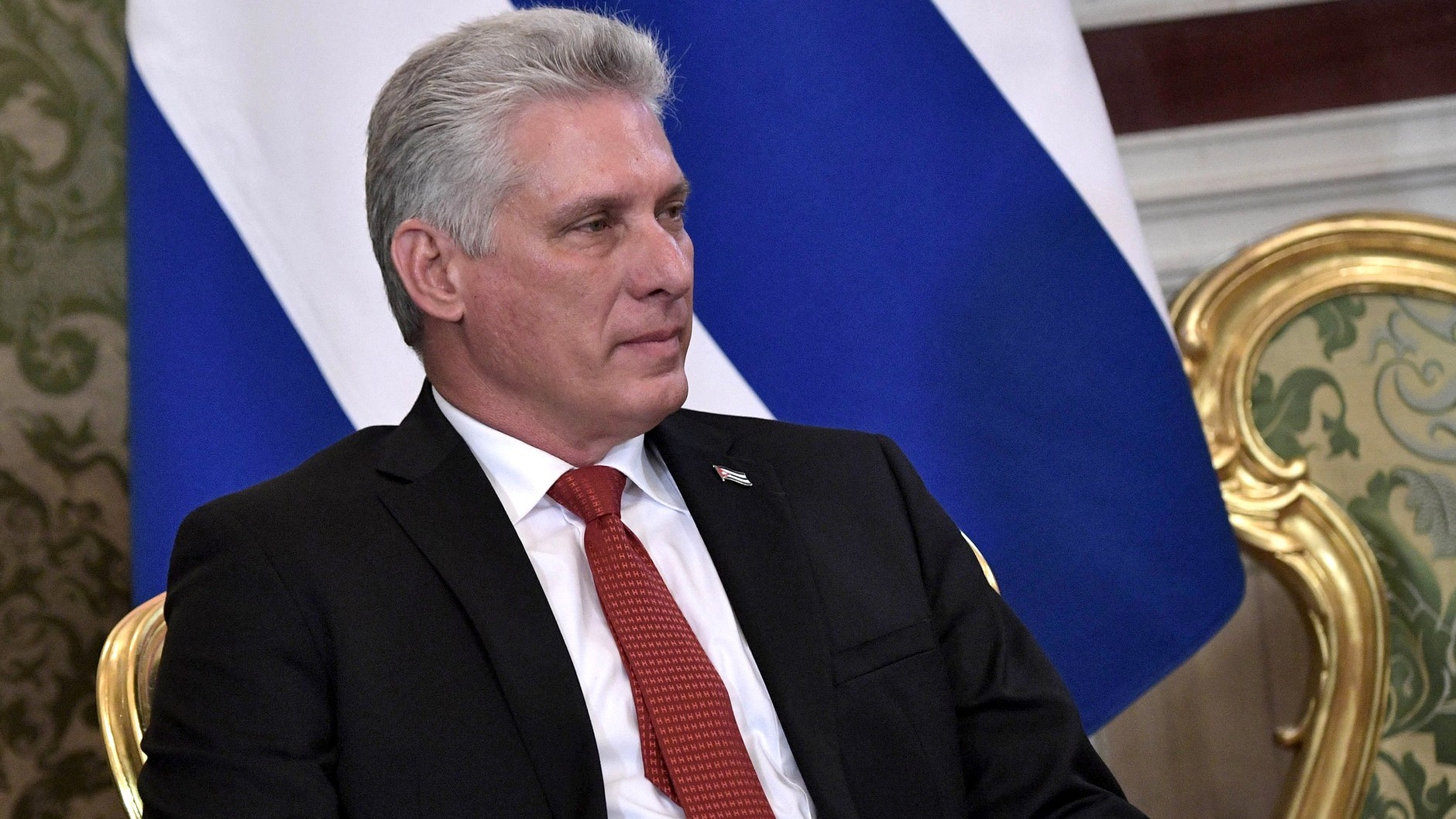
President Miguel Díaz-Canel has framed Donald Trump’s new oil tariff threat as an attempt to “suffocate” Cuba’s economy, casting the move as a direct assault on the island’s sovereignty rather than a narrow sanctions tweak. At stake is not only the survival of Cuba’s already fragile energy system but also a wider test of how far Washington is prepared to go to isolate Havana by targeting third countries.
Trump’s decision to wield tariffs against any nation that sells or delivers crude to the Island has jolted regional diplomacy and revived Cold War style rhetoric on both sides. I see a collision between a United States administration that has formally branded Cuba a security threat and a Cuban leadership that insists “no one dictates what we do,” with ordinary Cubans caught in the middle.
Trump’s ‘national emergency’ and the architecture of the oil tariffs
The starting point for this confrontation is a sweeping executive order in which Trump declared a “national emergency” over Cuba and opened the door to tariffs on goods from countries that “sell or otherwise provide” oil to the island. The order, described in a White House fact sheet under the banner “CONFRONTING THE CUBAN REGIME: Today,” states that President Donald J. Trump is acting to defend American security and foreign policy, recasting Cuba not as a lingering Cold War irritant but as an active threat to the United States. In parallel, reporting on the same directive notes that Trump is tightening the screws on Cuba by threatening tariffs on oil suppliers, a move that explicitly aims to cut off the island nation’s access to fuel.
According to the emergency declaration, the situation in Cuba and its ties to what the document calls “the forces of socialism” justify extraordinary economic tools that go beyond traditional bilateral sanctions. One detailed account explains that Trump’s order targets any country that sells or ships oil to Cuba and would allow tariffs on a broad range of their exports to the United States, while another describes how the measure is framed as a response to a perceived “threat” to US national security. A separate analysis of the same document notes that it authorizes Secretary of State Marco Rubio and Secretary of Commerce Howard Lutnick to take all necessary measures to enforce the new line, underscoring that this is not symbolic posturing but a directive that hands real power to specific officials.
In addition, the executive order is embedded in a broader strategy that US officials describe as a campaign to confront and isolate the Cuban government. One report on Trump’s Cuba policy details how the administration has already tightened restrictions and now seeks to pressure any foreign partner that keeps the island supplied with oil, while another emphasizes that the national emergency language is meant to lock this approach into the core of American foreign policy. By invoking emergency powers, Trump is signaling that Cuba’s access to energy is no longer just a bilateral issue but a test case for how Washington will treat governments that defy its sanctions architecture.
Diaz-Canel’s defiance and the language of “suffocation”
For Cuban President Miguel Díaz-Canel, the new tariffs are not a technical trade measure but an existential threat to a country that already struggles with blackouts and fuel shortages. In public remarks and social media posts, he has accused Trump of trying to “suffocate” Cuba’s economy and has branded the tariff threat “fascist, criminal and genocidal,” arguing that it seeks to punish a population that depends on imported fuel for transport, electricity and basic services. One detailed report on his reaction quotes Cuba’s leader saying that the United States president wants to stop other nations from exercising their right to “sovereignly trade oil” with the island, while another recounts how the Cuban president denounced Trump’s attempt to strangle the island’s economy in a speech on Friday.
Díaz-Canel has paired that denunciation with a broader assertion of independence, insisting that Cuba will not bow to ultimatums from Washington. Earlier in the month, Cuban President Miguel Díaz-Canel used his account on X to declare that “no one dictates what we do,” a pointed response to Trump’s insistence that the communist government abandon its current course in exchange for relief. A separate post shared on Instagram shows Cuban President Miguel Díaz-Canel rejecting Donald Trump’s ultimatum and affirming that Cuba is a free and sovereign nation that will not accept conditions on its right to trade. In another statement highlighted by regional media, he invoked the historic slogan “Homeland or death” and condemned in the strongest terms what he called a new escalation by the United States government against Cuba, arguing that the order allows the United States to seize assets and represents a dangerous approach to US foreign policy.
The rhetoric has spilled beyond official channels into Cuban and international social media. A Facebook post amplifying Díaz-Canel’s criticism, which drew 36 reactions and comments from users such as Sweet Polly and others, cited a local voice named Sabina saying that “a change is needed, a change is needed, and quickly,” referencing a poll of Cubans who fear the impact on hospitals, teachers and security help if fuel supplies collapse. Another national outlet summarized how the Cuban president, speaking on Friday, denounced Trump’s attempt to suffocate the island’s economy and warned that the tariffs would deepen hardship for a population already living with scarcity. In each of these messages, the core argument is the same: that Washington is not simply targeting a government but is weaponizing energy to break a society.
Mexico and regional partners caught in the crossfire
The most immediate diplomatic shockwave has hit Mexico, one of the few countries still sending oil to Cuba and at the same time heavily dependent on exports to the United States. The Mexico president has warned that Trump’s tariffs on Cuba’s oil suppliers could trigger a humanitarian crisis, noting that the Island has only enough fuel for a short period and that any disruption could paralyze transport and essential services. A detailed report on the regional fallout explains that Trump’s threatened tariffs over oil to Cuba have put Mexico in a bind, with analysts Uriel Blanco, Sol Amaya and Michael Rios describing how the measure forces Mexico to choose between solidarity with Havana and the risk of punitive duties on its own goods.
Another account of the same standoff notes that Trump on Thursday signed the executive order threatening to impose the tariffs and declared a national emergency, warning that countries that continue to supply Cuba will face consequences. A separate analysis of the diplomatic challenge for Mexico’s leadership underlines that, on Thursday, Trump issued an order establishing potential tariffs on goods from countries that sell or otherwise provide oil to Cuba, raising fears of gasoline shortages and other disruptions if Mexico cuts shipments. Local coverage from the island adds a human dimension, describing how Cubans queue for fuel as Trump issues his oil ultimatum and pointing out that Trump’s latest gambit is a particular problem for Mexico, which must weigh its role as a lifeline for Cuba against the risk in terms of tariffs on its own economy.
Beyond Mexico, the tariff threat reverberates across Latin America and among other potential suppliers. One regional overview explains that Trump’s move to threaten tariffs on countries supplying Cuba with much needed oil is seen as a warning shot to any government considering energy deals with Havana, since the United States market remains central to their export strategies. Another report on the national emergency declaration stresses that Trump is targeting oil suppliers with new tariffs and that the policy is designed to deter not only current partners but also future ones, effectively turning Cuba’s energy lifeline into a test of loyalty to Washington. In this context, the Mexico president’s warning about a humanitarian crisis is not just a bilateral concern but a signal to other capitals that the cost of helping Cuba may now include a direct clash with the United States.
More From TheDailyOverview
This article was researched with the help of AI, with editors refining and creating the final content.

Grant Mercer covers market dynamics, business trends, and the economic forces driving growth across industries. His analysis connects macro movements with real-world implications for investors, entrepreneurs, and professionals. Through his work at The Daily Overview, Grant helps readers understand how markets function and where opportunities may emerge.


