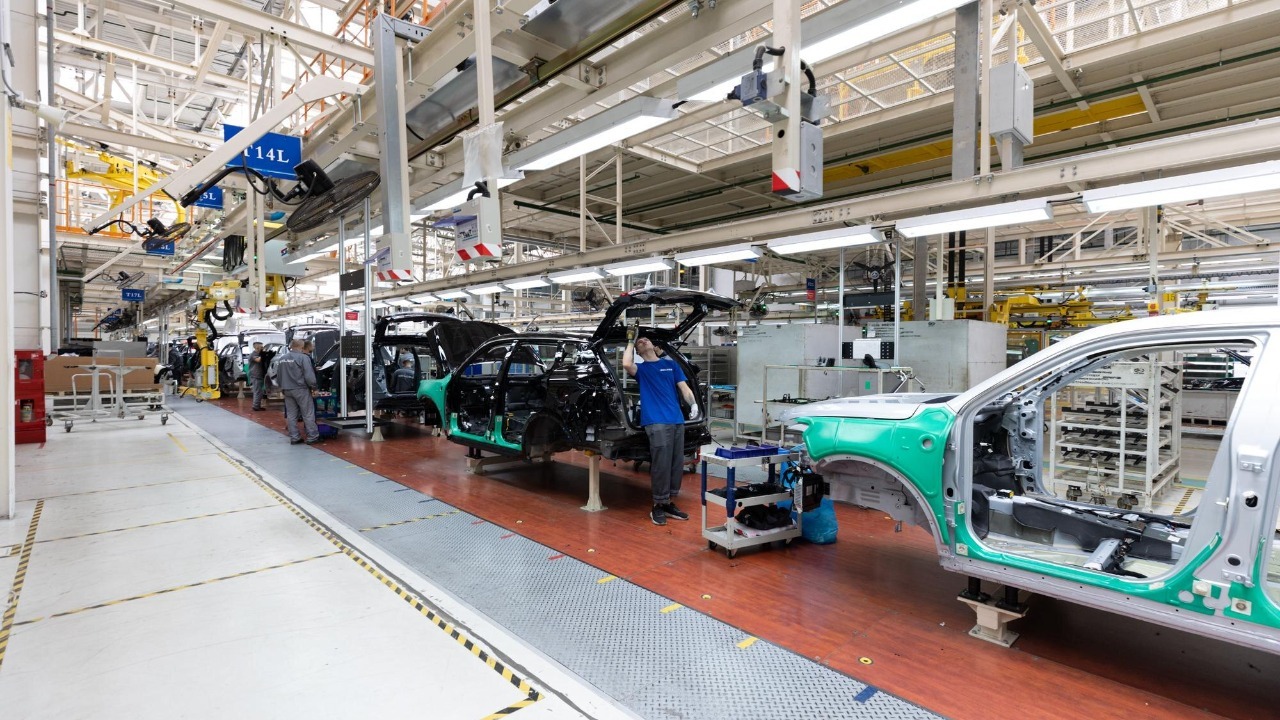
America’s factories were supposed to be the big winners of Donald Trump’s second term. Instead, the country’s most politically prized industry is caught between a tariff shock, a currency gamble, and a supply chain experiment that is still very much in progress. The question now is not whether manufacturing is under strain, but whether the current mix of policies risks doing lasting damage.
From auto plants in Michigan to chip fabs in Arizona, executives are trying to read a White House that talks about revival while embracing tools that raise costs and unsettle global partners. I see an industrial landscape that is being reshaped at high speed, with real gains in strategic sectors but also mounting evidence of job losses, higher prices, and deep uncertainty about what comes next.
The weaker dollar bet collides with factory reality
President Trump has made clear that he is comfortable with a softer currency, arguing that a weaker dollar helps American exporters and levels the playing field. In a recent interview, he welcomed the slide even as some market watchers warned about inflation and capital flight, a stance that prompted Jan and reporter Rafael Nam to spell out how unusual it is for a president to cheer depreciation so openly in peacetime. The logic is simple enough: a cheaper dollar should make U.S. goods more competitive abroad and, in theory, support manufacturing jobs.
The problem is that currency policy does not operate in a vacuum. As Jan and others have noted, President Trump is pursuing this weaker dollar preference at the same time his administration is layering on tariffs and regulatory hurdles that raise input costs for the very factories he says he wants to help. Generally, Generally speaking, higher interest rates tend to push currencies up and lower rates pull them down, but when you add trade barriers and geopolitical risk, the textbook relationships start to fray. Manufacturers that import components priced in euros or yen may get some relief from the exchange rate, only to see that advantage wiped out by new duties and compliance costs.
Tariffs on semiconductors, minerals and medicines
The clearest sign that industrial policy has shifted from rhetoric to hard law is the tariff regime that has rolled out over the past year. On the pharmaceutical side, The Trump administration has announced that branded or patented drugs will face a 100% tariff unless trading partners agree to new terms, a move that The Trump team frames as leverage but that also threatens to raise costs for hospitals and employers that rely on imported treatments. For manufacturers that use these medicines in production, from biotech firms to sterile packaging plants, the risk is that higher prices squeeze margins and slow investment.
On the technology front, the President has leaned heavily on national security authorities. Earlier this month, the President used a Section 232 proclamation to impose a 25% tariff on imports of specified semiconductors, targeting chips that are critical for data centers and advanced manufacturing equipment. In parallel, In the Secretary’s view, the United States must secure supplies of processed critical minerals and derivative products, a judgment that underpins a presidential action on United States imports of PCMDPs. These steps may strengthen domestic control over key inputs, but they also inject new volatility into supply chains that were already strained by pandemic-era disruptions.
AI chips, export controls and the new industrial map
Nowhere is the tension between security and competitiveness more visible than in advanced computing. Jan has become a shorthand in trade circles for the month when the administration’s AI strategy finally took shape, with Commerce required to give the President a detailed update on the semiconductor market used in U.S. data centers by July, a deadline spelled out in a Finally section that also tasks Commerce with exploring tariff relief tied to domestic production. The message to chipmakers is blunt: build more capacity on U.S. soil or face tighter export licensing and fewer carve-outs.
At the same time, On January 14, 2026, President Trump signed a Proclamation that followed the Department of Commerce’s investigation into how processed critical minerals affect national security, a move that formalized the link between resource policy and industrial strategy. The Proclamation directs the Department of Commerce to pursue negotiations that secure supplies while addressing the impairment to national security that overreliance on foreign sources can create. For manufacturers of EV batteries, wind turbines and AI servers, this is both an opportunity and a warning: align with the new sourcing rules and you may benefit from tariff relief and federal support, ignore them and you could find your business model upended.
Manufacturing jobs: promises, layoffs and stalled progress
For workers on the factory floor, the most important metric is not tariff schedules or currency charts, it is whether jobs are growing or shrinking. Domestic Manufacturing Stalled during Trump’s First Year of his Second Term, according to a review that concluded President Donald Trump failed to deliver on domestic manufacturing growth even as he touted reshoring victories. That assessment, titled Domestic Manufacturing Stalled, underscores how far reality has lagged behind the rhetoric of a manufacturing renaissance.
Other data points tell a similar story. Manufacturing employment has declined every month since Trump declared “Liberation Day” in April, when he argued that widespread tariffs would bring factories roaring back, a trend documented in a Manufacturing analysis that tracks job losses in sectors from auto parts to electronics. A separate review from party strategists warned that the manufacturing sector continues to face widespread layoffs and desperate consumers, arguing that Donald Trump’s policies have pushed the economy to new lows. Even video explainers asking “Did Trump’s Tariffs Kill US Manufacturing Jobs?” have become a staple of political debate, with one Jan segment on trump promising that tariffs would bring factories and jobs roaring back while the charts behind the narrator show employment sliding instead.
Autos, small businesses and the consumer squeeze
The auto industry offers a vivid example of how these policies land in the real world. In Michigan, critics of the administration have circulated studies showing that the cost of building a full-size SUV could increase by $9,000 and a pickup truck by $8,000 even if automakers shift some sourcing back to the Midwest, figures highlighted in a Jan post that framed the numbers as proof that Trump’s agenda hurts working families. Those estimates, shared by a Michigan political figure on SUV and truck buyers, suggest that tariffs on steel, aluminum and imported components are feeding directly into sticker shock for popular models like the Chevrolet Tahoe or Ford F-150. When the price of a family vehicle jumps by thousands of dollars, it is not just automakers that feel the pain, it is dealers, suppliers and the diners and hardware stores that depend on their paychecks.
Small manufacturers are feeling the strain as well. Small Businesses Suffer, one trade group warned, citing an October Wall Street Journal/Vistage survey in which 51% of small businesses, including many manufacturers, reported that tariffs had forced them to raise prices or seek new suppliers, a finding that underscores how fragile supply chains remain. That 51% figure is a reminder that policy choices in Washington ripple quickly through shop floors in Ohio and Texas, where owners must decide whether to absorb higher costs or pass them on to customers who are already stretched by inflation.
More From TheDailyOverview
*This article was researched with the help of AI, with human editors creating the final content.

Grant Mercer covers market dynamics, business trends, and the economic forces driving growth across industries. His analysis connects macro movements with real-world implications for investors, entrepreneurs, and professionals. Through his work at The Daily Overview, Grant helps readers understand how markets function and where opportunities may emerge.

