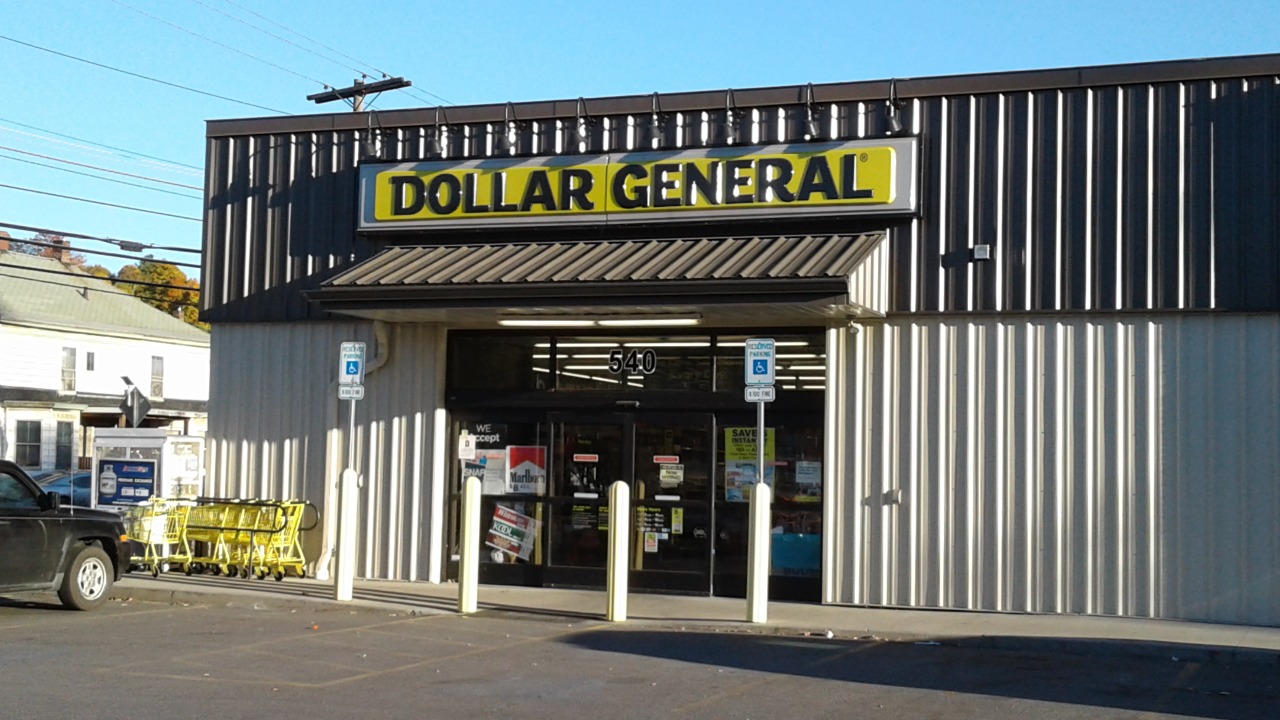
Missouri Attorney General Catherine Hanaway announced on November 18, 2026 that her office has resolved its consumer protection lawsuit against Dollar General. The state accused the chain of charging more at the register than the price shown on the shelf, and the company agreed to pay $5.3 million and to submit nearly 600 Missouri stores to independent price audits.
The agreement is a settlement between the state and the company, not a class action. The announcement describes no refund and no claim form for individual shoppers, so there is nothing for a customer to file. The terms, the way to report a price mismatch in Missouri, and the mistakes that waste a complaint are laid out below.
Where the $5.3 million goes
According to the Missouri Attorney General’s announcement, Dollar General will pay $5.3 million over past pricing inaccuracies at its Missouri stores. Of that, $2.3 million goes to the state through the Attorney General’s Office and $3 million goes to Feeding Missouri by agreement of the parties. Labeled arithmetic: $2.3 million plus $3 million equals $5.3 million.
The release says the agreement resolves all of the state’s claims and calls the sum the largest any state has reached for similar claims. Dollar General contested the allegations, and the release does not name a court or a case caption. The Missouri Department of Agriculture participated, and its inspectors had flagged possible violations to the Attorney General in 2023, with the lawsuit filed on September 13, 2023.
Settlements with a claim and settlements without one: This Missouri agreement pays no individual shopper, which is the opposite of a class settlement with a filing window. The Settlement & Refund Recovery System includes a claim log and payment tracker and the four-date rule for reading a settlement notice, two items that help separate a notice with a real deadline from an outcome with no claim. See The Settlement & Refund Recovery System.
Audits, a three-strike rule and posted signs
The core of the deal is oversight. Independent third-party pricing audits will cover nearly 600 Missouri stores over two fiscal years, and Missouri Department of Agriculture Weights and Measures inspectors will keep inspecting Dollar General stores as well.
A store that fails three audits within a 12-month period must undergo a full-store price check at Dollar General’s expense, and incorrect prices found must be fixed within 48 hours. Store managers and key carriers must complete training on the company’s price accuracy policy within 60 days of their initial store assignment. Missouri stores will also post signs stating the policy of giving customers the lowest price when the shelf price and the register price differ.
Why the shopper gets a sign instead of a check
The settlement resolves a lawsuit brought by the state under its consumer protection powers. The release notes the office may sue under the Missouri Merchandising Practices Act, found in Chapter 407 of the state statutes. Money recovered in that kind of case goes to the state or to a designated recipient, here the AG’s Office and Feeding Missouri, rather than to a pool of customers.
For a shopper, the practical change is the posted lowest-price policy and the audits that make a repeat less likely. No claim deadline, claim website or proof-of-purchase requirement is attached to this settlement in the announcement. Any site or message that asks for a fee, a card number or a Social Security number to claim a Dollar General refund from this case does not match what the state published.
How a Missouri shopper reports a price mismatch
The Attorney General’s release says consumers can call the Consumer Complaint Hotline at 800-392-8222 or file a complaint at ago.mo.gov. The office’s consumer complaint page lists an online form at app.ago.mo.gov/app/consumercomplaint, a downloadable PDF form and the same hotline, 1-800-392-8222.
The page asks complainants to enclose copies, never originals, of documents about the transaction, and warns that incomplete or unclear forms are returned. It adds that the office cannot give legal advice. A receipt and a photo of the shelf tag are the kind of documents that show a gap, though the page itself lists contracts, invoices, warranties, brochures and canceled checks as examples. Labeled illustration with hypothetical figures: a shelf tag reading $3.00 and a register charge of $3.50 is a $0.50 gap, and ten such items in one trip would be $5.00. The posted policy says the lower price applies, and a mismatch is worth raising at the register before leaving.
The federal case is still pending
Separately, the Federal Trade Commission and 20 states sued Dollar General on October 26, 2026 in the U.S. District Court for the Middle District of Tennessee. The FTC announcement alleges register prices above shelf prices over many years and tens of thousands of consumer complaints. The 20 states named on that page do not include Missouri, and the court will decide that case. The Missouri settlement is a different, completed action.
The mistake that costs the most time
The likeliest error is waiting for a refund that the announcement does not provide, or paying anyone to file one. A shopper who is overcharged in Missouri has a faster remedy at the register, where the lowest-price policy applies, and a documented complaint to the Attorney General if the problem repeats. A shopper elsewhere should not assume the Missouri terms cover other states, since the announcement applies to Missouri stores only.
The second error is a complaint with no record. A date, store location, item, shelf price and register price, plus copies of the receipt, give the office something to act on. Notes taken at the time are easier to rely on than memory a month later.
Telling a no-claim settlement from one with a filing window
The Dollar General agreement with Missouri sends its money to the state and to Feeding Missouri, so no shopper has a form to file. The gap it leaves is the next announcement that does carry a claim window, where a missed notice date or a look-alike website is what costs a filing. Keeping a record of which settlements require a claim and which do not is the unfinished job.
The Settlement & Refund Recovery System includes a claim log and payment tracker, the four-date rule for reading a settlement notice, the scam-proof rules and a source vault of 12 official places money sits.
Open the claim log and payment tracker in The Settlement & Refund Recovery System.
This article was created with AI assistance and reviewed for accuracy against the Missouri Attorney General’s announcement and complaint page and the FTC press release read in November 2026.

Elias Broderick specializes in residential and commercial real estate, with a focus on market cycles, property fundamentals, and investment strategy. His writing translates complex housing and development trends into clear insights for both new and experienced investors. At The Daily Overview, Elias explores how real estate fits into long-term wealth planning.