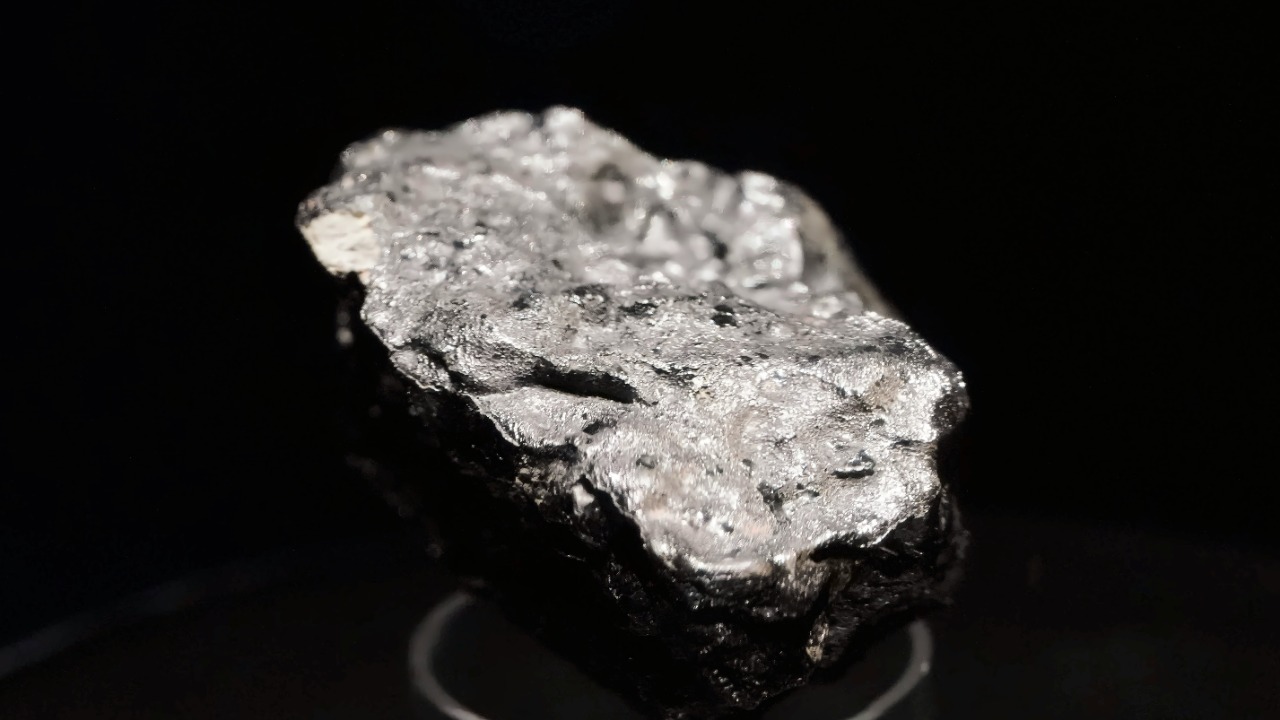
Some of the most coveted metals on the planet are not just expensive, they are almost unimaginably scarce in Earth’s crust and in accessible ore deposits. Their rarity is rooted in deep planetary chemistry, violent stellar origins, and unforgiving economics that make them far harder to obtain than familiar names like gold or silver. I want to unpack how those forces combine to create a tiny club of elements whose scarcity shapes everything from jewelry design to jet engines and electric vehicles.
What actually makes a metal “precious”?
Before I can talk about the rarest of the rare, I need to be clear about what counts as a precious metal in the first place. In practice, a metal earns that label when it is natural, difficult to find, and valuable enough that people are willing to pay a premium for small quantities. That value usually comes from a mix of beauty, resistance to corrosion, and highly specialized industrial uses, so a metal like gold sits in the same broad category as obscure elements that never appear in a jewelry store window. As one overview of bullion markets notes, even within this group there is a spectrum, with some precious metals relatively abundant and others so scarce that they barely register in global production statistics, which is why analysts in Aug and But frame rarity as a sliding scale rather than a simple yes or no.
Geology matters as much as chemistry in deciding which metals become truly precious. Some elements form minerals that concentrate into rich ore bodies, while others are scattered at such low levels that mining them directly is impossible and they can only be recovered as byproducts of more common metals. That is why platinum group metals, for example, are often extracted alongside nickel or copper instead of from their own dedicated mines. When I look at the periodic table through this lens, the metals that stand out are not just those with high prices, but those whose natural occurrence, extraction difficulty, and demand combine to make every gram a strategic resource, a point that underpins the way bullion specialists describe how rare precious metals really are.
Cosmic origins: why some elements are scarce from the start
The story of scarcity starts long before ore is dug from the ground, in the nuclear furnaces of stars. Heavy metals are forged in extreme environments such as supernova explosions or neutron star mergers, and the details of those processes help explain why some elements are vanishingly rare. In discussions among working geologists, you see this point made bluntly: one contributor with the handle komatiitic described how elements produced in only a narrow set of stellar events, especially those involving stars of five solar masses or less, simply end up less common in the universe. That kind of astrophysical context is why another commenter could say it is “Kind of an impossible question” to rank the absolute rarest metals, because abundance depends on both cosmic production and how planets like ours later sort those atoms.
Once those elements are incorporated into a forming planet, gravity and heat start to reshuffle the deck. Many dense metals are siderophile, meaning they prefer to bond with iron and sink into a planet’s core during differentiation, which strips the crust of a large fraction of its original inventory. Others are lithophile and stay in the rocky outer layers, but may still be dispersed so thinly that no ore deposit ever forms. When I read through that same geology discussion, what stands out is how often experts emphasize this two step filter, first in stellar nucleosynthesis and then in planetary differentiation, as the root reason some metals are rare everywhere, not just in human markets.
Rhodium: the poster child for extreme rarity
If there is one metal that captures the idea of being both geologically scarce and economically extreme, it is Rhodium. Chemically, it is a silvery member of the platinum group, but in practical terms it has become famous as Earth’s Rarest and Most Expensive Precious Metal, a description that reflects both its tiny crustal abundance and its volatile price history. Although it is rarely used in pure jewelry form, Rhodium is indispensable in catalytic converters that strip pollutants from car exhaust, and that industrial dependence has repeatedly driven its price far above gold when supply tightens. The element was first isolated from platinum ores, and it is still mainly recovered as a minor byproduct of platinum and nickel mining, which means production cannot easily ramp up when demand spikes.
What makes Rhodium so scarce is not just that there is little of it in the crust, but that it almost never occurs in concentrated deposits that can be mined on their own. Instead, it hides in complex sulfide ores, such as those found in Ontario, Canada, where it is extracted alongside other platinum group metals. That dependence on a handful of ore bodies and processing plants leaves the market exposed to geopolitical risk and technical bottlenecks, which is why analysts repeatedly warn that Rhodium’s supply chain is fragile by design. When I look at the way chemists describe Rhodium on Earth, the throughline is clear: its rarity is baked into both its atomic identity and the geology of the few regions where it can be economically recovered.
Rarest does not always mean useful: Francium and friends
Not every metal that is scarce in nature ends up driving a global industry. Francium is a perfect example, often cited as the rarest metal in the world in terms of how much exists at any given moment, yet it has almost no practical role in technology or finance. The reason is simple: Francium is intensely radioactive, with isotopes that decay so quickly that only trace amounts can ever accumulate in minerals. In fact, estimates suggest that at any instant there may be less than a gram of Francium in Earth’s entire crust, a quantity so small that it can only be studied indirectly rather than stockpiled or traded. That is why jewelers and investors can describe Francium as both highly valuable and extremely rare in theory, while acknowledging that it is irrelevant to everyday markets.
This contrast highlights an important nuance in how I think about precious metals. A metal can be extraordinarily rare in a physical sense, like Francium, yet still be absent from discussions of strategic materials because it is too unstable, too toxic, or too difficult to handle. By comparison, elements such as platinum, palladium, and Rhodium are less rare in absolute terms but far more important because they are stable, workable, and embedded in real products. When a jewelry resource lists Francium among rare metals, it is really underscoring this divide between theoretical rarity and practical significance, a divide that shapes which elements end up in vaults and which remain laboratory curiosities.
Stable but scarce: tantalum, rhenium and other industrial ghosts
Between the extremes of unstable oddities and headline grabbing Rhodium sit a group of metals that are both stable and quietly indispensable. Tantalum is one of the clearest cases, described in technical surveys as the rarest stable metal, a label that reflects its low crustal abundance and the difficulty of finding high grade ores. Despite that scarcity, tantalum is woven into modern life through its role in capacitors for smartphones, laptops, and electric vehicles, where its ability to store charge in a small volume is hard to replace. The same surveys note that the rarest metal on Earth in absolute terms is a different element that has no practical use, which only reinforces how unusual it is for a metal as scarce as tantalum to be so deeply embedded in consumer electronics.
Rhenium tells a similar story in the aerospace sector. Identified in 1925, Rhenium was the last stable element discovered, and it remains one of the rarest elements on the planet, with production measured in tens of tons per year rather than thousands. Its superpower is an exceptionally high melting point and strength at extreme temperatures, which makes it invaluable in turbine blades for jet engines and in certain catalysts for high octane fuels. Because Rhenium is usually recovered as a byproduct of molybdenum and copper mining, its supply is vulnerable to shifts in those larger markets, and analysts routinely warn that price spikes can be driven by a mix of demand, speculation and hoarding. When I read about Rhenium being Identified so late, it underscores how metals that are both stable and rare can hide in plain sight until technology advances enough to need them.
Why “rare earths” are not actually that rare
One of the most confusing phrases in this space is “rare earth elements,” a label that suggests extreme scarcity even though the underlying chemistry tells a different story. The lanthanides and a few related elements are, in many cases, as abundant in Earth’s crust as copper or nickel, yet they are notoriously difficult and expensive to extract. The problem is that rare earths tend to occur together in diffuse minerals rather than in rich, isolated ores, and their ions bind tightly to surrounding materials. As one explanation puts it, copper ore usually occurs as a single mineral, while rare earths are locked into complex mixtures where the attraction between the positive metal and the negative components of the ores together are so strong that separating them requires aggressive chemistry.
That mismatch between name and reality has become a talking point in public debates about supply chains. In a widely viewed explainer, one commentator bluntly calls it the “Big Lie” about rare Earths the name sounds mysterious, then goes on to show that the real challenge is not finding these elements but processing them safely and cheaply. The video walks through how environmental regulations, waste disposal, and geopolitical concentration of refining capacity in a few countries have turned a moderately abundant group of elements into a strategic chokepoint. When I weigh that argument against the underlying geology described in technical discussions of rare earths, the conclusion is clear: their perceived rarity is as much about chemistry and policy as it is about how much of them actually exists.
Engineering our way out of scarcity
Faced with the twin pressures of rising demand and concentrated supply, researchers are increasingly trying to engineer substitutes or new ways to produce critical metals. One striking example comes from work on so called cosmic minerals, where scientists manipulate the atomic structures of iron and nickel to mimic the magnetic properties of rare earth based materials. To make the cosmic mineral, they arrange those atoms in precise patterns that reproduce the behavior of more traditional magnets, an approach that could, in principle, reduce dependence on scarce lanthanides. The researchers behind this work argue that the main barriers are no longer fundamental physics but the industrial scale and will to produce them, a reminder that scarcity can sometimes be addressed through design rather than just more mining.
Similar efforts are underway for other rare metals, from recycling catalysts that contain Rhodium and palladium to developing new alloys that use less Rhenium without sacrificing performance. In each case, the goal is to stretch limited supplies further while buying time for alternative technologies to mature. When I look at the broader landscape of innovation described in reports on the rare earths crisis, I see a pattern: the scarcest metals are pushing engineers to rethink long standing assumptions about which elements are truly irreplaceable and which can be designed around with enough creativity.
Osmium, osmium institutes and the edge of the market
At the fringes of the precious metals world, a handful of elements sit in a gray zone between industrial material and speculative asset. Osmium is one of the most intriguing, a dense, hard member of the platinum group that has historically been used in specialized alloys and electrical contacts. In recent years, promoters have begun marketing crystalline osmium as a kind of ultra rare store of value, arguing that its limited supply and unique properties make it a candidate for high end investment jewelry. That pitch has grown strong enough that dedicated organizations now exist to manage standards and certification, positioning osmium as a metal whose rarity could soon collide with rising demand from collectors.
One of the most visible advocates in this space is Scarlett Klaus the vice director at the Osmium Institute Germany, who appears in educational videos to answer questions about how osmium is produced, cut, and traded. In one such discussion, she warns that the world’s accessible osmium reserves are small enough that the metal could effectively disappear from open markets if hoarding accelerates, a claim that reflects both its low natural abundance and the fact that it is mostly obtained as a byproduct of other mining. When I watch that conversation hosted by the Osmium Institute Germany, I am struck by how it mirrors broader debates about rare metals: a mix of genuine scarcity, marketing hype, and real questions about how to balance industrial needs with speculative investment.
Price signals: when rarity turns into “insane” value
Ultimately, the way most people encounter these metals is through price, and here the numbers can be startling. As the rarest of the platinum group metals, Rhodium occurs at roughly 0.000037 parts per million in the Earth’s crust, while gold is present at significantly higher levels according to the Royal Society of Chemistry. That difference in abundance helps explain why Rhodium has, at times, traded for many times the price of gold per ounce, especially when tightening emissions standards for cars collide with limited refining capacity. Investors who track these markets closely know that such spikes are not just speculative bubbles but reflections of how thin the underlying supply really is.
Other rare metals show similar patterns, with prices that swing wildly in response to small shifts in demand or disruptions at a single mine. Osmium’s promoters, for example, lean heavily on the idea that a finite quantity of crystalline osmium will eventually be locked away in private collections, driving up the value of what remains. In the world of educational content, one video on rare Earths the name sounds mysterious uses this volatility to argue that the label “rare” is often more about market dynamics than pure geology, pointing out that some so called rare earths are more common than copper yet still command strategic attention. When I connect those dots with the hard numbers on As the rarest of the platinum group metals, it becomes clear that price is a noisy but powerful signal of how scarcity, technology, and policy collide in the real world.
How scarcity reshapes technology and geopolitics
The scarcity of these metals is not just a curiosity for collectors, it is a force that shapes entire industries and geopolitical strategies. Automakers redesign catalytic converters to use less Rhodium when prices soar, while jet engine manufacturers experiment with new alloys to reduce their dependence on Rhenium without sacrificing safety. Electronics companies face similar pressures around tantalum and certain rare earths, prompting them to invest in recycling programs and alternative materials. In each case, the underlying driver is the same: a recognition that relying on a tiny number of mines and refineries for critical inputs is a long term vulnerability.
Governments have taken notice as well, adding many of these metals to official lists of critical raw materials and funding research into substitutes and new extraction techniques. Educational campaigns, including videos that frame the debate around the Big Lie about rare Earths the scarcity, are part of a broader effort to demystify which elements are truly rare and which are bottlenecked by processing and politics. Technical briefings that provide a Snapshot of the World of rarest metals help policymakers understand that some elements, like tantalum, are both the rarest stable metal and deeply embedded in supply chains, while others are rare but have no practical use. When I step back from the periodic table and look at the full picture, the metals that are truly “insanely scarce” are those where cosmic history, crustal chemistry, and human demand all converge to make every atom count.
More From TheDailyOverview

Grant Mercer covers market dynamics, business trends, and the economic forces driving growth across industries. His analysis connects macro movements with real-world implications for investors, entrepreneurs, and professionals. Through his work at The Daily Overview, Grant helps readers understand how markets function and where opportunities may emerge.

