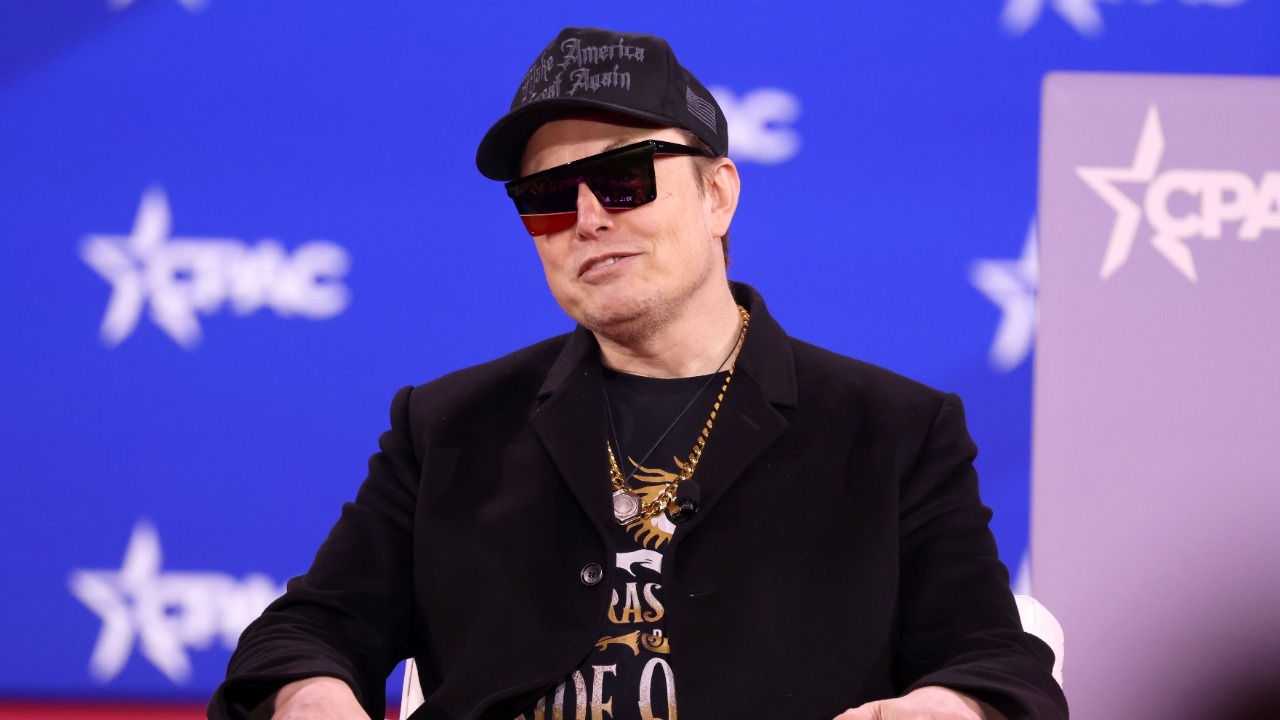
Elon Musk is escalating his warnings that a left-wing economic agenda gaining traction in New York City would not only squeeze local businesses but also undermine the case for universal basic income across the United States. Framing Zohran Mamdani’s proposals as a shortcut to stagnation rather than shared prosperity, he argues that aggressive redistribution paired with a “low” guaranteed income would erode living standards instead of protecting them.
I see Musk’s intervention as part of a broader fight over what kind of safety net the country should build in an era of automation and inequality, and whether ambitious social programs can coexist with a dynamic private sector. The clash between his techno-capitalist vision and Mamdani’s democratic socialist pitch is quickly becoming a test of how far cities can push redistribution before investors, workers, and voters start to worry about long term growth.
Musk’s “catastrophic decline” warning and the Mamdani agenda
Musk has moved from general skepticism about socialism to a pointed attack on a specific political program, arguing that Mamdani’s mix of higher taxes, expanded public services, and a modest guaranteed income would trigger what he calls a “catastrophic decline” in American living standards. In his view, a city that leans heavily on wealthy residents and high value industries cannot afford to treat capital as an endlessly refillable well, and he is now tying that concern directly to the design of universal basic income, warning that a poorly funded version risks locking people into permanent precarity rather than empowering them. That argument surfaced prominently when Elon Musk warned Mamdani policies and a “low” universal income would cause a “catastrophic decline” in US living standards, explicitly linking local tax-and-spend plans to national economic risk.
At the center of this dispute is Mamdani’s bid for power in New York City, where he has emerged as a leading progressive voice promising to reshape housing, transit, and labor rules in favor of tenants and workers. Musk’s critique is not just that these ideas are expensive, but that they rest on what he sees as a flawed assumption that high earners and companies will simply absorb every new cost without changing behavior. He has argued that if a city like New York pushes too far, capital and talent will migrate to friendlier jurisdictions, leaving behind a shrinking tax base that cannot sustain either generous public services or a meaningful income floor, a concern he has repeated in broader comments on Mamdani’s policies and their impact on living standards.
From “charismatic swindler” to socialist experiment
Musk has not limited himself to dry macroeconomic warnings, he has also gone directly after Mamdani’s political style and ideological lineage. In a recent appearance on the Joe Rogan Experience, Musk described Mamdani as a “charismatic swindler,” casting him as someone who sells voters an emotionally appealing story about justice and fairness while glossing over the hard arithmetic of budgets and growth. By using that phrase, he is signaling that he sees the campaign not just as misguided but as fundamentally deceptive, a charge that raises the stakes for both supporters and critics of the candidate.
He has paired that personal critique with a broader ideological warning, arguing that Mamdani’s platform fits into a long pattern of what he calls failed socialist experiments. In comments reported earlier this month, Musk said that, as has been the case with every socialist experiment, the policies Mamdani is proposing would hurt quality of life in NYC, suggesting that higher taxes and heavier regulation would eventually mean fewer jobs, less investment, and deteriorating public services. I read that as Musk trying to reframe a local mayoral race as a referendum on whether the United States will repeat what he sees as the economic mistakes of other countries that embraced state-led redistribution.
NYC’s high stakes: quality of life, business climate, and UBI
New York City is an unusually high stakes testing ground for this kind of ideological clash, because its prosperity depends on a delicate balance between aggressive public spending and a tax base dominated by finance, tech, and high income professionals. Musk’s argument is that Mamdani’s proposals would tip that balance in a way that ultimately harms the very people they are meant to help, by driving away employers and shrinking the pool of revenue available for social programs. He has warned that Some of Mamdani’s policies, including higher levies on wealth and more aggressive labor protections, would make it harder for businesses to turn a profit, which in turn could mean fewer jobs and less private investment in neighborhoods that need it most.
That local dynamic matters for the national UBI debate because New York is often treated as a bellwether for progressive policy experiments. If a Mamdani administration were to combine a modest guaranteed income with heavier taxes and stricter rules on employers, and the result was slower growth or visible deterioration in services, opponents of UBI would have a ready-made cautionary tale. Musk has already started to draw that line, warning that policies that hurt quality of life in NYC would also undermine public support for any broader income guarantee, because voters would associate the concept with economic decline rather than resilience.
What “low” universal income means in a Yang-era debate
When Musk criticizes a “low” universal income, he is tapping into a debate that predates Mamdani’s rise but has become more urgent as automation and inequality reshape the labor market. Advocates like Andrew Yang have long argued that a robust monthly payment can give people the freedom to retrain, start businesses, or care for family without falling into poverty, but they have also warned that a token amount risks becoming a political excuse to cut other supports. In an interview reported on Nov 21, 2025, Yang discussed UBI in the context of stimulus checks and made clear that the size and structure of payments matter as much as the principle itself.
Musk is effectively arguing that Mamdani has embraced the rhetoric of UBI without committing to the scale or economic reforms needed to make it transformative rather than symbolic. In his comments earlier this month, Musk warned that Mamdani’s policies and a low universal income would not protect living standards, suggesting that a small guaranteed payment layered on top of higher taxes and slower growth could leave working families worse off than before. I see that as a challenge not only to Mamdani but to the broader progressive movement, which now has to decide whether it wants UBI to be a bold reimagining of the social contract or a modest supplement that risks becoming a political fig leaf.
A national test of tech optimism versus democratic socialism
Behind the sharp language and specific policy disputes, the Musk–Mamdani clash is really a contest between two stories about the future of work and welfare in the United States. Musk’s story is that technological progress, from electric vehicles to reusable rockets and AI, can deliver abundance if governments keep taxes predictable and regulation light enough for innovation to flourish, with a well designed UBI potentially serving as a cushion for those displaced by automation. Mamdani’s story is that markets left to their own devices will not deliver fairness or security, so cities must use aggressive taxation and public investment to correct structural imbalances, even if that means confronting powerful corporate interests. Those narratives are now colliding in a very specific place, as Elon Musk and Mamdani trade arguments over what kind of safety net New York, and by extension the country, should build.
I do not see an easy resolution to that conflict, because both sides are responding to real pressures: the fear of economic stagnation if investment dries up, and the fear of deepening inequality if wages and housing costs continue to diverge. What is clear is that the outcome of this debate will shape not only one city’s budget but also the political viability of universal basic income as a national project. If Musk is right and Mamdani’s approach produces visible strain, opponents of UBI will have a powerful new talking point. If Mamdani can prove that a more redistributive model can coexist with growth, then the warnings of “catastrophic decline” will look less like sober analysis and more like a defensive reaction from a tech elite wary of sharing power.
More From TheDailyOverview
- Dave Ramsey says these two simple questions show whether you’re rich or poor
- Retired But Want To Work? Try These 18 Jobs for Seniors That Pay Weekly
- IRS raises capital gains thresholds for 2026 and what’s new
- 12 ways to make $5,000 fast that actually work

Grant Mercer covers market dynamics, business trends, and the economic forces driving growth across industries. His analysis connects macro movements with real-world implications for investors, entrepreneurs, and professionals. Through his work at The Daily Overview, Grant helps readers understand how markets function and where opportunities may emerge.

