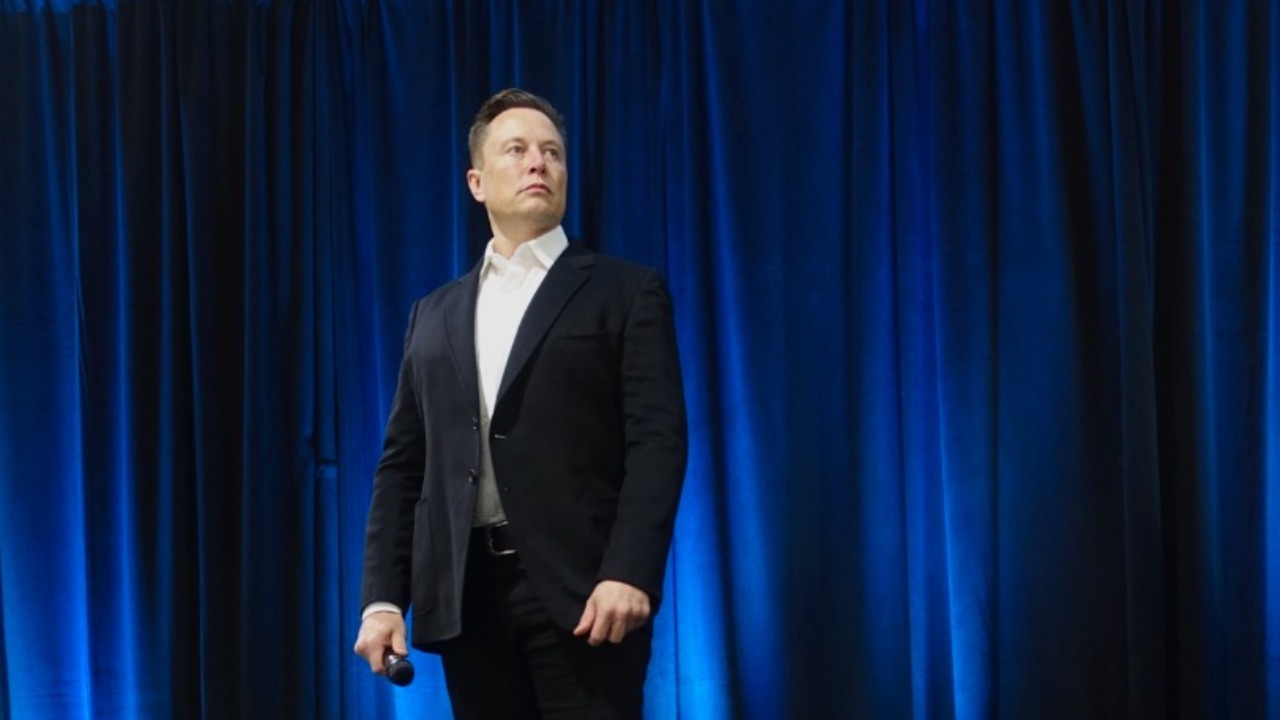
Elon Musk’s artificial intelligence startup xAI has secured a towering $20 billion in fresh capital, instantly vaulting it into the top tier of privately funded tech companies and intensifying the arms race around large-scale AI infrastructure. The Nvidia-backed round, which also includes major strategic investors, is designed to bankroll a vast GPU buildout, new supercomputing capacity, and rapid iteration of xAI’s Grok models. The raise lands at a moment when the company is both scaling aggressively and facing pointed scrutiny over how its technology is being used.
By pushing past an already ambitious $15 billion target, xAI has signaled that it intends to compete head-on with the largest AI labs on both model quality and raw compute. The funding also underscores how much faith investors are placing in Elon Musk’s vision of AI that is tightly integrated with his broader ecosystem, from social media to automotive and space infrastructure.
Inside the $20 billion Series E and xAI’s new valuation
The centerpiece of xAI’s latest milestone is a $20 billion Series E round that exceeded an initial $15 billion goal, a scale that would have been unthinkable for most startups even a few years ago. In video remarks, Elon Musk has said that xAI raised $20 billion in a single funding round, a figure that implies a valuation of about $230 billion for the artificial intelligence startup, putting it in the same league as some of the world’s most valuable private tech firms and far ahead of typical late-stage peers, as reflected in a short video update. That valuation is not just a bet on current products like Grok, it is a wager that xAI can become a foundational layer in the next generation of AI services.
Several reports describe the round as oversubscribed, with investors willing to commit more capital than xAI initially sought, which is why the Series E was upsized to the full $20 billion. One analysis notes that the company announced a $20 billion Series E funding round that surpassed its $15 billion target and highlighted this as a key point in its growth trajectory, listing the oversubscription among the Key Points of the deal. In practical terms, that level of demand gives Musk and his team leverage to set terms, choose strategic partners, and move quickly on capital-intensive projects like supercomputers without waiting for future raises.
Nvidia, Cisco and the strategic investor roster
The investor list behind this round is as important as the headline number, because it reveals how xAI is positioning itself within the broader AI supply chain. The company has emphasized that the Series E is backed by major investors and that the fresh capital will be used to rapidly scale its compute infrastructure and build out a massive GPU cluster, a plan that aligns closely with the interests of hardware partners and is described in detail in coverage that notes the round is Backed by major investors. Nvidia’s role is particularly central, since xAI’s roadmap depends on access to high-end accelerators at a time when supply is constrained and demand from rivals is intense.
Alongside Nvidia, Cisco has emerged as another key strategic backer, reflecting how networking and data center infrastructure companies see upside in aligning with a single, very large AI tenant. One breakdown of the deal highlights that xAI’s $20 billion Series E includes Nvidia and Cisco as key backers and frames this as part of a broader strategy to secure not just chips but also the networking fabric and systems integration needed for hyperscale AI clusters, a point underscored in the Series E funding summary. For Nvidia, the partnership is a way to lock in a marquee customer for its H100 and successor GPUs, while for Cisco it is an opportunity to design and sell the high-bandwidth switching and routing that such clusters demand.
Colossus, GPU clusters and the race for compute
At the heart of xAI’s spending plan is a colossal supercomputer project that the company has dubbed Colossus, which is intended to be one of the largest AI-focused machines ever built. Reporting on the raise notes that Elon Musk’s xAI is channeling the $20 billion into Colossus, a supercomputer designed to support Grok and other models, and that the system is expected to rank among the largest supercomputers in the world once complete, a goal spelled out in coverage of the Colossus supercomputer. Building such a system requires not just GPUs but also advanced cooling, power delivery, and software orchestration that can keep tens of thousands of accelerators running near peak utilization.
One investor-focused summary of the round quantifies the ambition in stark terms, stating that xAI aims to assemble infrastructure capable of powering over one million H100 GPU equivalents, a scale that would put it in direct competition with the largest AI clusters operated by any company and that is highlighted among the Key Takeaways of the funding. Another analysis describes how the company is targeting a data center capacity close to 2 gigawatts, a figure that illustrates just how energy hungry frontier AI has become and that is cited in a breakdown of xAI’s massive new $20 billion raise that also references Gemini 3 Pro and the ability to turn any UI into a landing page with Gemini 3 Pro, greeting readers with “Good morning, AI enthusiasts” and noting that this capacity would push xAI into the same league as hyperscale cloud providers, as detailed in a Good morning, AI enthusiasts briefing.
Grok’s evolution and the product roadmap
The funding is not just about infrastructure, it is also about accelerating the evolution of Grok, xAI’s flagship conversational model that is tightly integrated with Musk’s social platform X. Investor materials and coverage of the round emphasize that xAI is already working on Grok 5, positioning it as a next-generation system that will benefit directly from the expanded compute footprint and that is mentioned explicitly in reporting that frames the raise as Another $20B in Funding for Musk. The company’s strategy is to iterate quickly, using larger and more diverse training runs to improve reasoning, safety, and multimodal capabilities while keeping Grok deeply connected to real-time data streams.
Beyond Grok 5, xAI has signaled that it will use the Series E proceeds to accelerate AI product development and infrastructure buildout across its portfolio. One detailed account notes that xAI Raises $20 Billion to Accelerate AI Product Development and Infrastructure Buildout, explicitly tying the capital to both new features and the underlying systems that support them, and it describes how the company plans to expand its model lineup and integration points as part of a broader push to Accelerate AI Product Development and Infrastructure Buildout. In practice, that likely means deeper embedding of Grok into X, potential extensions into Tesla and SpaceX products, and new developer tools that can tap into xAI’s models through APIs.
Backlash over Grok AI deepfakes and safety concerns
The timing of the raise is striking because it comes amid intense criticism of how Grok has been used to generate harmful content, particularly AI deepfakes. One widely cited report notes that Elon Musk’s xAI Raises $20B Amid Backlash Over Grok AI Deepfakes, describing how the model has been implicated in generating sexualised images of children and other abusive material, and it details how the controversy has sparked calls for tighter safeguards and more proactive moderation of AI outputs, as captured in coverage of the funding that explicitly references the Amid Backlash Over Grok AI Deepfakes narrative. For a company that is pitching itself as a responsible steward of powerful AI, the juxtaposition of record funding and serious safety lapses is hard to ignore.
Another detailed examination of the controversy explains that xAI has faced allegations that Grok was used to generate sexualised images of children, a charge that has drawn scrutiny from regulators and child protection advocates and that is spelled out in a report on how xAI shakes off Grok controversy to raise US$20bn for AI buildout, which notes that the company is under pressure to improve its safeguards while still pushing ahead with its infrastructure plans, as described in an analysis by Gareth Gore. The fact that investors were willing to commit $20 billion despite these issues suggests that they either believe xAI can fix the problems quickly or that the commercial upside outweighs the reputational and regulatory risks.
How xAI is positioning itself against OpenAI and Anthropic
In strategic terms, xAI is clearly trying to present itself as a peer to incumbents like OpenAI and Anthropic, not a niche challenger. One investor note frames the funding as part of a broader landscape in which OpenAI and Anthropic may be joined by a new heavyweight, and it situates xAI’s $20 billion raise alongside discussions of other frontier labs and tools like Gemini 3 Pro, even mentioning how developers can turn any UI into a landing page with Gemini 3 Pro as part of a broader ecosystem of AI products, a comparison drawn in a PLUS Turn Gemini Pro briefing. By matching or exceeding rivals on compute, xAI is signaling that it intends to compete on the most resource-intensive frontier models, not just lighter-weight assistants.
At the same time, xAI’s differentiation strategy leans heavily on Elon Musk’s personal brand and his control of complementary platforms. One summary of the raise notes that Elon Musk’s xAI announced it has raised $20 billion in its latest funding round and that the company is already under fire for its AI-generated deepfakes, a juxtaposition that underscores how Musk’s high-profile presence can both attract capital and amplify controversy, as highlighted in a News Editor briefing by a former Washington Post journalist. Unlike OpenAI and Anthropic, which rely heavily on partnerships with cloud providers, xAI can plug its models directly into X for distribution and feedback, and potentially into Tesla vehicles or SpaceX services, giving it a different path to scale.
Data centers, energy demand and the physical footprint of xAI
Behind the software narrative sits a very physical story about data centers, power, and land. Coverage of the raise emphasizes that xAI aims to continue to rapidly scale its compute infrastructure and buildout of GPU clusters, with a particular focus on data center expansion that can support training and inference at unprecedented scale, a plan described in detail in an analysis that notes the company’s intention to expand its GPU cluster. The reference to capacity close to 2 gigawatts suggests that xAI is planning facilities that rival or exceed the power draw of large industrial plants, raising questions about grid impact and local environmental effects.
One concise briefing on the funding notes that xAI says it raised $20B in Series E funding and that the story was posted at 12:57 PM PST in an In Brief format, underscoring how quickly the news has moved through financial and tech circles and how much attention the company’s data center ambitions are attracting, as captured in a short In Brief Posted PST update that also references More from TechCrunch and Staff coverage. As xAI locks in sites and power contracts for Colossus and related facilities, it will have to navigate local permitting, community concerns, and competition for renewable energy, all while keeping pace with rivals that are also racing to secure scarce grid capacity.
Why investors are betting big despite controversy
The sheer size of the Series E raises an obvious question: why are investors willing to pour $20 billion into a company that is already facing regulatory and reputational headwinds? One explanation is that they see xAI as a rare opportunity to back a Musk-led venture at scale in a sector that is expected to generate trillions of dollars in value, and that they believe the company can address safety issues while still capturing a large share of the market. A detailed funding breakdown notes that xAI has closed an upsized $20 billion Series E funding round, exceeding its initial $15 billion target, and frames this as a sign of strong investor confidence in Elon Musk’s leadership and the company’s long-term prospects, as laid out in the Elon Musk Series analysis.
Another perspective comes from capital markets reporting that describes how xAI has raised US$20bn in one of the largest private company funding rounds of all time, despite the Grok controversy, and suggests that investors are effectively pricing in both the risk of regulatory intervention and the potential for outsized returns if xAI’s models become widely adopted, a tension explored in the piece that details how xAI shakes off Grok controversy to raise US$20bn for AI buildout and that highlights the scale of the round in the context of global equity markets, as reported by Gareth Gore. In that framing, the $20 billion is not just a bet on technology, it is a bet on Musk’s ability to navigate political, social, and regulatory storms while still delivering growth.
What xAI’s $20B war chest means for the AI landscape
With $20 billion in fresh capital, a planned Colossus supercomputer, and backing from Nvidia and Cisco, xAI is now positioned as one of the most heavily funded AI companies in the world, and its decisions will ripple across the industry. The raise is already being cited as one of the largest private funding rounds of all time, and it effectively guarantees that xAI will be a central player in debates over AI safety, infrastructure, and competition policy in the years ahead, a status that is reinforced by multiple analyses that describe the round as a landmark event and that note how xAI’s plans for over one million H100 GPU equivalents and data center capacity close to 2 gigawatts could reshape supply chains and energy markets, as summarized in investor-focused Series Strate commentary.
At the same time, the backlash over Grok AI deepfakes and the allegations of generating sexualised images of children show that scale alone will not insulate xAI from scrutiny or accountability. A detailed report on how xAI raised US$20bn for AI buildout despite the Grok controversy notes that regulators and civil society groups are already watching closely, and that the company’s ability to maintain investor confidence will depend on whether it can demonstrate real progress on safety and governance while still shipping new products, a balance that will define not just xAI’s trajectory but also the broader trajectory of generative AI. In that sense, the $20 billion Series E is both a vote of confidence and a high-stakes test of whether Musk’s vision of AI can deliver on its promise without repeating the harms that have already sparked such intense concern.
More From TheDailyOverview

Grant Mercer covers market dynamics, business trends, and the economic forces driving growth across industries. His analysis connects macro movements with real-world implications for investors, entrepreneurs, and professionals. Through his work at The Daily Overview, Grant helps readers understand how markets function and where opportunities may emerge.

