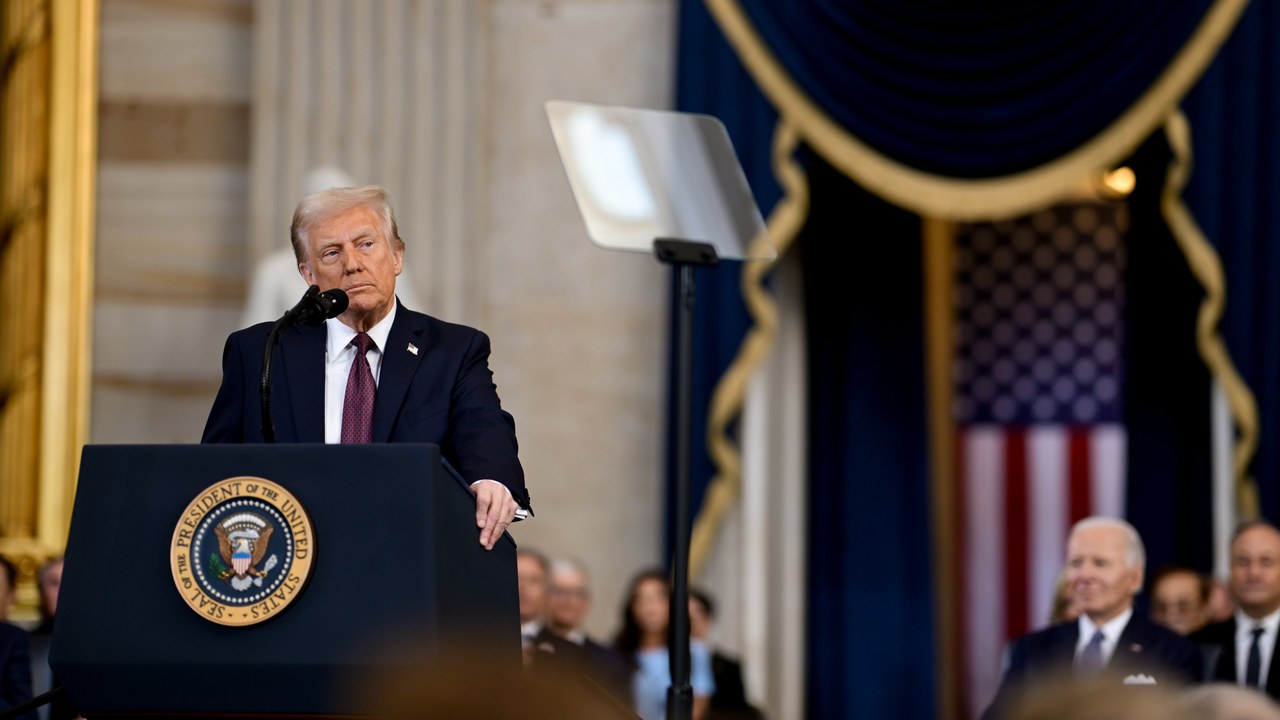
The fight over Greenland has jolted transatlantic relations into their most dangerous phase in years, with President Donald Trump using tariffs to punish NATO partners and the European Union quietly readying a powerful countermeasure. European officials now talk openly about a secretive “trade bazooka” that could slam U.S. exports and services if Washington refuses to back down. What began as a dispute over control of a remote Arctic territory is rapidly morphing into a test of whether economic coercion will replace alliance politics at the core of the West.
At stake is not only who influences Greenland, but whether Jan’s crisis cements a new era in which tariffs and export controls become routine tools between allies. As Trump leans on NATO partners to accept U.S. ambitions in the Arctic, European leaders are signaling that they will not be bullied into selling territory or abandoning their own legal and security red lines.
Trump’s Greenland tariffs turn NATO into a battleground
Trump has chosen to weaponize trade against security partners, tying market access directly to their stance on Greenland. Earlier this year he announced 10% tariffs on eight NATO countries that support Danish control of the island, with the measures set to rise to 25% if his demands are not met. According to detailed accounts, the 10% tariffs against the eight countries are scheduled to take effect on Feb. 1, a move that officials say is explicitly linked to opposition to U.S. control of Greenland and was first flagged in a social media post by Trump himself, as reported by Isabella Murray and Ivan.
Trump has framed the confrontation as a simple choice for allies: sell Greenland to the United States or face escalating economic pain. In one account, Trump said eight European nations would see tariffs rise to 25% if Greenland is not sold, a threat that has deepened existing NATO strains and raised the specter of legal battles over whether such pressure violates alliance commitments, according to reporting on Trump, European and. By tying punitive tariffs to a territorial demand, President Donald Trump has effectively turned NATO into the arena for a high-stakes trade and sovereignty showdown.
European leaders close ranks and talk of a ‘bazooka’
European leaders have responded by closing ranks, treating the tariffs as a challenge to their collective sovereignty rather than a bilateral spat with Washington. Senior officials from multiple capitals have stressed that European countries will not be blackmailed into trading territory for tariff relief, and that the alliance’s credibility is on the line if they yield to pressure over Greenland. Reporting on the diplomatic pushback describes how European leaders stand united against Trump’s tariff threats on Greenland, even as they juggle domestic political and economic pressures at home, a stance captured in detailed coverage of the European response to.
Behind the scenes, that unity is being translated into concrete planning for retaliation. European countries are reportedly considering a sweeping package of counter-tariffs and export controls, described by some officials as a trade “bazooka” that could be aimed squarely at sensitive U.S. sectors if Trump refuses to relent. One detailed account notes that Jan discussions have focused on a powerful anti-coercion instrument that could be deployed against the United States, with particular attention to how it might hit key American exports to the U.K., the Netherlands and Finland, according to reporting on European retaliatory tariffs. In that context, the “bazooka” label is less about theatrics and more about signaling that Europe is prepared to match U.S. escalation step for step.
The secret ‘trade bazooka’ and the $107 billion threat
The heart of Europe’s strategy is a legal and economic tool designed for exactly this kind of crisis, a mechanism that would allow the bloc to respond swiftly to what it sees as economic duress from another country. The EU’s so-called bazooka trade tool would give The EU significant leeway to impose export controls, slap tariffs on services and goods, and restrict access to public procurement markets if it judges that a partner is using trade to coerce its policies, according to detailed descriptions of The EU options. Officials see the Greenland dispute as a textbook case for deploying that instrument, since Trump has explicitly linked tariffs to a demand for territorial transfer.
European capitals are already sketching out the scale of retaliation they might unleash. According to live updates on the crisis, EU officials have discussed retaliation tariffs against the United States totaling $107B, a figure that underscores how far they are prepared to go if Washington does not reverse course. The same reporting notes that European capitals may coordinate sectoral hits on politically sensitive U.S. exports, a strategy that would aim to maximize leverage while keeping the door open to negotiation, as described in coverage by Rian Howlett of the $107 billion plan. In parallel, another segment of the same live reporting highlights how European leaders, to no one’s surprise, have reacted sharply to Trump’s threat, with one Dutch official describing the move in stark terms during an interview on national television, a reaction captured in the section on European outrage.
Greenland, Manfred Weber and the politics of escalation
For many in Europe, the Greenland dispute is about more than tariffs, it is about preventing a precedent in which major powers can use economic pressure to force territorial changes. Trump has insisted that the Danish government should agree to sell Greenland to the United States and has argued that he can compel the territory’s transfer through these tariffs, a position described in detail by NHK WORLD. That framing has alarmed European leaders who see Greenland as strategically vital for Arctic security, climate research and shipping routes, and who fear that conceding now would invite similar tactics elsewhere.
Within the European Parliament, figures such as Manfred Weber have become central voices in the debate over how hard to hit back. Weber, who leads a major political group, has been cited as one of the champions of the “trade bazooka” approach, arguing that only a credible threat of large-scale retaliation will deter Trump from further escalation over Greenland. One detailed report describes how Europe threatens a trade “bazooka” against the United States after Trump slapped tariffs tied to his Greenland ambition, highlighting Weber’s role in pushing for a robust response and framing the standoff as a defining test of European resolve, as captured in coverage of Manfred Weber. In that sense, the politics of escalation are now as much about internal European credibility as they are about managing relations with Washington.
Economic fallout and the risk of a full-blown trade war
Behind the rhetoric, the economic stakes are enormous for both sides. Analysis By Auzinea Bacon has warned that This Greenland standoff could get ugly fast, with modeling suggesting that a prolonged tariff war between the United States and Europe could shave growth from both economies and disrupt global supply chains. The same Analysis notes that if no deal is reached by June 1, the cumulative impact of tariffs and counter-tariffs could start to hit consumer prices, industrial investment and financial markets in ways that are hard to reverse, a scenario laid out in detail in the 202 economic modeling.
European policymakers are acutely aware of those risks, which is why some leaders are trying to pair firmness with calls for dialogue. In the U.K., for example, Labour leader Starmer has said that “a trade war is in no one’s interest” and has appeared to rule out unilateral British retaliation tariffs, emphasizing that the U.K. believes in partnership even as it condemns Trump’s approach. That position was highlighted in coverage by Tara Cobham at 45 minutes past the hour, which detailed how Tara reported on Starmer’s attempt to balance solidarity with European partners and a desire to avoid further escalation, as described in the account of Tara and Starmer. The tension between deterrence and de-escalation is now at the heart of Europe’s internal debate over how and when to fire its trade bazooka.
More From TheDailyOverview

Grant Mercer covers market dynamics, business trends, and the economic forces driving growth across industries. His analysis connects macro movements with real-world implications for investors, entrepreneurs, and professionals. Through his work at The Daily Overview, Grant helps readers understand how markets function and where opportunities may emerge.