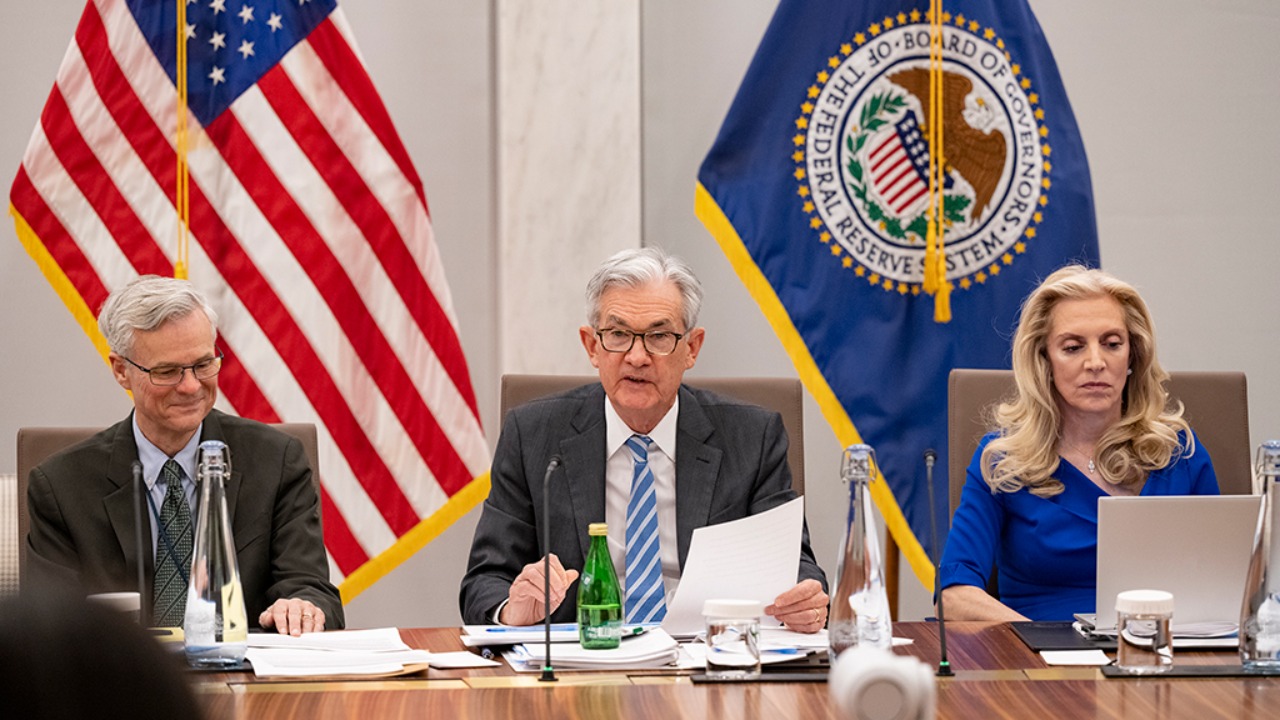
The U.S. government shutdown is poised to solidify additional interest rate cuts by the Federal Reserve, as suggested by recent market trends and economic indicators. Despite the shutdown, the Dow and S&P 500 have reached record highs, reflecting Wall Street’s increased confidence in future rate cuts. Meanwhile, the U.S. dollar has weakened, influenced by disappointing jobs data and the looming shutdown.
Impact of the Government Shutdown on the Federal Reserve’s Decisions
The ongoing government shutdown has heightened the likelihood of further interest rate cuts by the Federal Reserve. This development is driven by the economic uncertainty the shutdown has introduced, prompting the Fed to consider measures to mitigate potential negative impacts. According to CNBC, the Fed is closely monitoring the situation, as the shutdown’s economic ramifications could necessitate a more accommodative monetary policy stance.
As the shutdown continues, the Fed’s decision-making process is increasingly influenced by the need to stabilize the economy. The uncertainty surrounding government operations has created a challenging environment for policymakers, who must weigh the risks of prolonged economic disruption against the benefits of maintaining current interest rate levels. This delicate balance underscores the Fed’s cautious approach in navigating the current economic landscape.
Market Reactions Amid the Shutdown

Despite the government shutdown, the Dow and S&P 500 have achieved record highs, signaling investor confidence in the prospect of future rate cuts. Wall Street’s resilience in the face of the shutdown is evident, as increased bets on rate cuts have driven market performance. As reported by Yahoo Finance, investors appear to be largely unfazed by the shutdown, focusing instead on the potential for monetary easing.
This optimistic market sentiment reflects a broader expectation that the Fed will act to support economic growth amid the shutdown. The anticipation of rate cuts has bolstered investor confidence, contributing to the stock market’s robust performance. This dynamic highlights the complex interplay between fiscal policy uncertainties and monetary policy expectations.
Furthermore, the resilience of the stock market amid the shutdown can be attributed to investors’ belief in the Federal Reserve’s willingness to intervene if necessary. The expectation of monetary policy adjustments has provided a cushion against the potential economic fallout from the shutdown. Analysts suggest that this confidence is rooted in the Fed’s historical responsiveness to economic disruptions, which has reassured investors that appropriate measures will be taken to sustain growth.
Additionally, sectors such as technology and consumer goods have shown particular strength, as investors anticipate that these industries will continue to thrive even in a challenging economic environment. The focus on these sectors reflects a strategic shift among investors towards areas perceived as more resilient to government-related uncertainties. This strategic realignment underscores the market’s adaptability in the face of fiscal challenges.
Economic Indicators and Currency Movements
The U.S. dollar has experienced a decline, influenced by poor jobs data and the impact of the government shutdown. According to Reuters, the dollar’s weakness was anticipated as the shutdown loomed, affecting investor sentiment and currency markets. This decline underscores the broader economic challenges posed by the shutdown, as currency fluctuations reflect underlying economic vulnerabilities.
In addition to the dollar’s decline, the shutdown has contributed to increased caution among investors. As noted by Bloomberg, the dollar’s fall was exacerbated by concerns over U.S. payrolls and the potential for prolonged government inaction. These factors have combined to create a challenging environment for currency markets, as investors navigate the uncertainties associated with the shutdown.
The weakening of the U.S. dollar has also been influenced by global economic trends, which have compounded the effects of domestic uncertainties. As international markets react to the U.S. shutdown, the dollar’s position as a safe-haven currency has been challenged, leading to shifts in currency portfolios worldwide. This situation has prompted central banks and investors to reassess their strategies, taking into account the potential long-term implications of the shutdown on global trade and economic stability.
Moreover, the interplay between the dollar’s decline and other currencies has led to increased volatility in foreign exchange markets. As noted by Bloomberg, this volatility is further exacerbated by geopolitical tensions and trade negotiations, which have added layers of complexity to currency movements. Investors are closely monitoring these developments, as they navigate the intricate dynamics of international finance amid the ongoing U.S. government shutdown.
Treasury Yields and Economic Data Blackout
Treasury yields have remained relatively unchanged as investors face an economic data blackout due to the shutdown. This lack of data has increased uncertainty in the markets, affecting investor decisions and yield movements. As reported by CNBC, the absence of key economic indicators has left investors grappling with limited information, complicating their ability to assess market conditions accurately.
The data blackout has further compounded the challenges posed by the shutdown, as investors are forced to rely on incomplete information to make informed decisions. This situation highlights the critical role that timely and accurate economic data plays in guiding market expectations and shaping investment strategies.
The stability of Treasury yields during the shutdown is partly due to investors’ cautious approach in the absence of critical economic data. With key reports delayed, market participants have turned to alternative indicators, such as corporate earnings and international economic trends, to gauge the health of the economy. This reliance on secondary data sources highlights the challenges faced by investors in making informed decisions without the usual breadth of information.
Furthermore, the economic data blackout has prompted discussions about the need for more robust contingency plans to ensure data availability during government disruptions. Policymakers and financial institutions are exploring ways to mitigate the impact of future shutdowns on data dissemination, recognizing the vital role that timely information plays in maintaining market stability. This proactive approach aims to enhance resilience against similar disruptions in the future, safeguarding the flow of critical economic insights.
Broader Economic Implications

The government shutdown has fueled caution among investors, impacting various sectors of the economy. According to Forex Factory, the shutdown’s broader economic implications are likely to affect future policymaking decisions and market stability. As the shutdown continues, its effects are expected to ripple through the economy, influencing everything from consumer spending to business investment.
These broader implications underscore the importance of resolving the shutdown promptly to minimize its economic impact. The longer the shutdown persists, the greater the potential for lasting damage to the economy, as uncertainty and disruption take their toll on economic activity. This situation emphasizes the need for policymakers to address the underlying issues driving the shutdown and work towards a resolution that supports economic stability.

Grant Mercer covers market dynamics, business trends, and the economic forces driving growth across industries. His analysis connects macro movements with real-world implications for investors, entrepreneurs, and professionals. Through his work at The Daily Overview, Grant helps readers understand how markets function and where opportunities may emerge.

