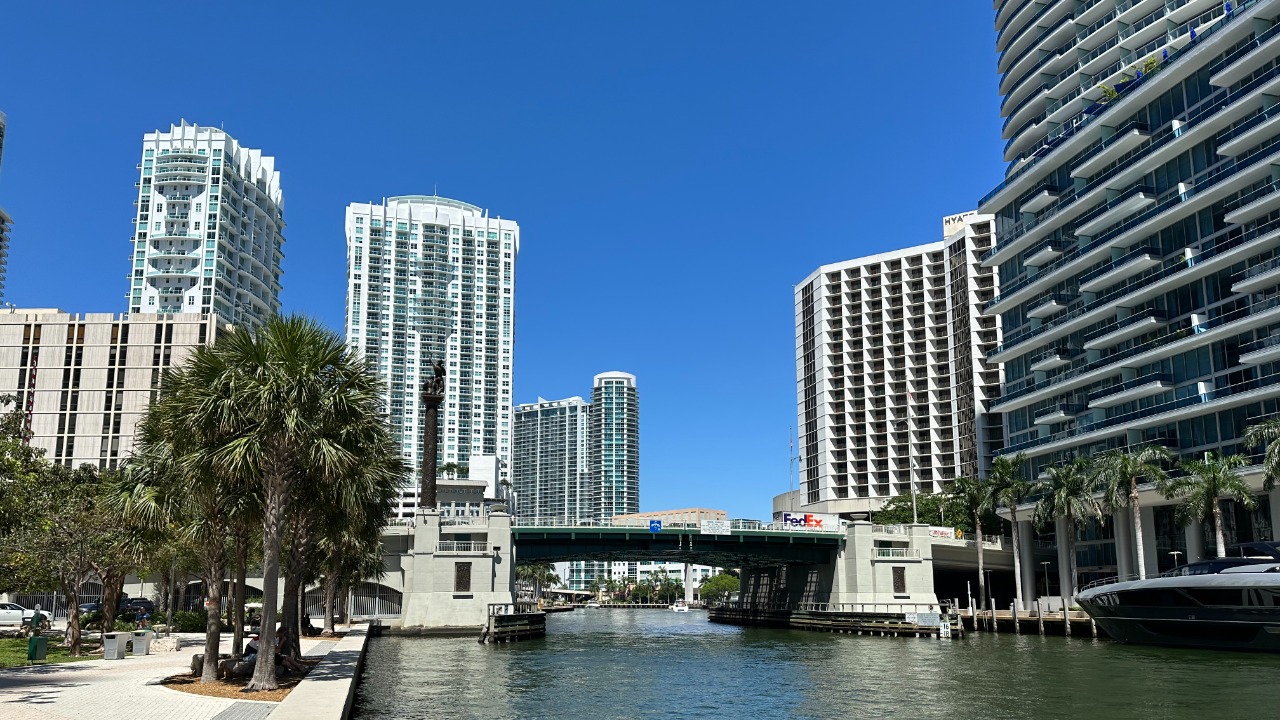
Florida’s condo market is in the middle of its sharpest reset since the last housing crash, with prices sliding at a pace that would have seemed unthinkable just a few years ago. After a long run of bidding wars and investor speculation, the state is now seeing a rare combination of falling values, rising costs of ownership, and shifting buyer psychology. For owners, the adjustment is painful; for patient buyers, it may be the first real opening in a decade.
The scale of the downturn is clearest in the numbers: condo prices in Florida have dropped 9.9 percent in the last 12 months, the steepest annual decline since the post‑2008 bust, according to reporting dated Nov 20, 2025. That reversal is colliding with new safety rules, higher insurance premiums, and a broader national cooling in urban condo markets, turning what once looked like a one‑way bet into a far more complicated equation.
The steepest slide since the housing crash
The headline story is the magnitude of the price drop. After years of relentless appreciation, a 9.9 percent decline in Florida condo values over a single year marks a decisive break from the pandemic boom and even from the more modest softening that followed. I see that figure as more than a blip: it is the kind of move that forces sellers to reset expectations, lenders to revisit appraisals, and buyers to rethink whether they really need to rush into a deal. The fact that this is described as the largest decline in a year since the housing crash underscores how unusual it is in the context of the past decade of easy money and tight inventory, and it is explicitly tied to Nov 20, 2025 in the underlying reporting on Florida condo prices.
To understand why that matters, it helps to remember what a similar percentage move meant during the last downturn. Back then, a comparable annual drop often signaled distress sales, overleveraged investors, and a wave of units hitting the market at once. I am not seeing the same systemic shock today, but the comparison is still instructive. When a market that had been defined by scarcity suddenly posts a 9.9 percent slide, it tells me that demand has not just cooled, it has been outpaced by a surge in supply and a shift in risk perception. The reference to a 21.8 percent drop in 2009 in the same dataset provides a sobering benchmark, suggesting that while Florida is not reliving the worst of the crash, it is experiencing the sharpest correction since that era.
Local pressures: safety rules, insurance, and the Surfside effect
Florida’s condo slump is not simply a story of higher interest rates or a national housing cooldown. It is also the product of uniquely local pressures that have reshaped the economics of owning an apartment in a high‑rise. After the tragic Surfside collapse, new safety regulations introduced in Florida began to filter through association budgets, reserve studies, and special assessments. Those rules, which were designed to prevent another catastrophe, have raised the cost of maintaining older buildings and made buyers far more cautious about the structural health of any tower they consider. Reporting from Jul 16, 2025 on Why Are Condo Prices Falling ties the new regulatory environment directly to the recent price declines, highlighting how the Surfside legacy now hangs over the entire condo landscape.
Layered on top of those safety mandates are spiraling insurance costs and stricter underwriting standards, which have hit coastal and older buildings hardest. I hear from agents who describe buyers walking away once they see the true monthly carrying costs, which now include not only higher premiums but also beefed‑up reserves and looming repair projects. The combination has created a two‑tier market: newer, well‑capitalized buildings that can still command solid prices, and aging complexes where owners are effectively competing with one another to offload units before the next assessment notice arrives. The Nov 15, 2025 analysis framed under “Introduction” in a piece on Florida condo prices falling points to these structural and cost pressures as main drivers of the sudden drop, especially in certain Florida areas where buyer interest has thinned.
Florida’s downturn in a national condo context
Florida is not alone in seeing condos lose altitude, but it is at the sharp end of a broader national pattern. Across the country, mid‑tier condo prices have been slipping in many large urban markets as buyers gravitate toward single‑family homes or newer, amenity‑rich developments. A detailed breakdown of Year‑over‑year price declines in 24 bigger cities shows that Prices of mid‑tier condos fell in 23 of them through October, with some markets posting double‑digit drops. That national snapshot, dated Nov 18, 2025, places Florida’s experience within a wider cooling of the condo segment, as documented in an analysis of Year over year price declines across major cities.
What sets Florida apart is the intensity of its swing and the specific mix of factors behind it. In many other cities, the story is primarily about remote work, changing lifestyle preferences, and a modest oversupply of small units. In Florida, those forces intersect with climate risk, insurance volatility, and the post‑Surfside regulatory overhaul. When I compare the 9.9 percent statewide drop to the range of 12 to 29 percent declines seen in some individual metro condo markets nationally, it becomes clear that Florida is both a bellwether and an outlier. It is a bellwether because it shows how quickly sentiment can turn in a market that was once a magnet for investors, and an outlier because the policy and cost shocks hitting its condo sector are more severe than in most inland cities.
Is this a buying opportunity or a value trap?
For would‑be buyers, the natural question is whether this is the moment to pounce or a warning to stay patient. On paper, a 9.9 percent price cut looks like a discount, especially for households that were priced out during the frenzy of 2021 and 2022. Yet the same forces that pushed prices down, from rising association fees to structural repair obligations, can quickly erode any apparent bargain. I find it useful to separate short‑term price moves from longer‑term affordability: a cheaper purchase price does not help much if monthly costs and future assessments keep climbing faster than incomes.
Market forecasts for Florida housing more broadly suggest a gradual cooling rather than a full‑blown crash, which complicates the narrative of a once‑in‑a‑lifetime buying window. An in‑depth guide titled Is Now the Best Time to Buy a House in Florida, dated Nov 11, 2025, notes that experts predict steady normalization, not a dramatic collapse, and that demand could re‑accelerate as rates decline into 2026. That perspective, laid out in a broader Florida housing Market outlook, implies that buyers who wait for a repeat of 2009’s 21.8 percent plunge may be disappointed. Instead, I see a more nuanced setup: selective opportunities in buildings with strong finances and transparent maintenance plans, and real risks in complexes where today’s lower sticker price masks tomorrow’s repair bill.
What the reset means for owners, investors, and the state
The current downturn is forcing every stakeholder in Florida’s condo ecosystem to adjust. For existing owners, especially retirees who bought at or near the peak, the 9.9 percent slide can feel like a direct hit to their nest egg. Some will choose to ride out the cycle, betting that population growth and limited land will eventually support prices again. Others, particularly those facing steep special assessments, may decide that selling into a falling market is still better than writing another five‑figure check to the association. Investors who treated condos as short‑term rental machines are also rethinking their math as local regulations tighten and nightly rates soften in saturated tourist corridors.
At the state and local level, the condo reset is already influencing policy debates around building safety, insurance reform, and land use. Officials who pushed for tougher post‑Surfside rules now have to balance safety with affordability, since every new requirement ultimately flows through to owners’ balance sheets and, by extension, to market prices. I expect more pressure on insurers and lawmakers to stabilize premiums, as well as renewed interest in redevelopment of aging waterfront towers that can no longer justify the cost of bringing them up to modern standards. The Nov reporting threads, from the Nov 20, 2025 data on the biggest decline since the crash to the Nov 15, 2025 “Introduction” analysis of Florida’s shifting condo dynamics, all point to the same conclusion: the state’s condo market is not just cycling through a routine correction, it is being structurally reshaped in ways that will define who can afford to live on its coasts for years to come.
More From TheDailyOverview
- Dave Ramsey warns to stop 401(k) contributions
- 11 night jobs you can do from home (not exciting but steady)
- Small U.S. cities ready to boom next
- 19 things boomers should never sell no matter what

Elias Broderick specializes in residential and commercial real estate, with a focus on market cycles, property fundamentals, and investment strategy. His writing translates complex housing and development trends into clear insights for both new and experienced investors. At The Daily Overview, Elias explores how real estate fits into long-term wealth planning.

