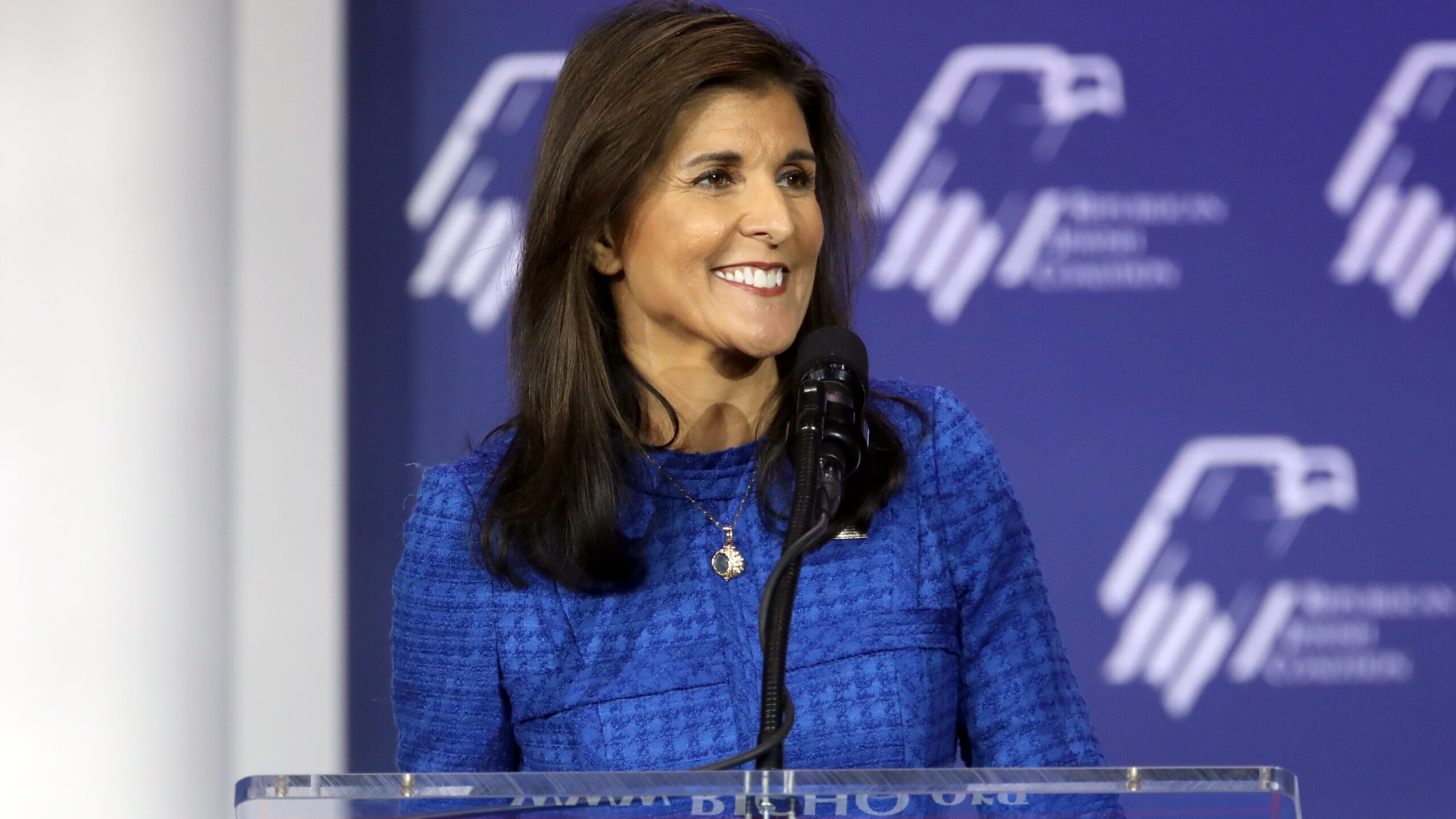
Nikki Haley is turning her party’s favorite talking point on its head, arguing that the Trump economy is not the success story Republicans keep selling but a strain that leaves families without a sense of progress. Her warning is blunt: if voters do not start to feel genuine hope about their own finances, the GOP will pay the price at the ballot box. By pairing that critique with praise for President Trump’s hard line abroad, she is sketching a different kind of Republican message, one that tries to marry hawkish strength overseas with a more candid conversation about affordability at home.
Haley’s challenge lands at a delicate moment for Republicans, with midterm races already taking shape and the party still organized around the idea that the Trump years delivered unmatched prosperity. She is not just quibbling with statistics, she is questioning whether the party’s economic story matches what people see when they open their rent bill or grocery app. That tension, between a triumphant narrative and a grinding reality, is where her critique hits hardest.
From Fox News warnings to a broader GOP course correction
In her latest televised appearance, Haley used the friendly setting of a conservative interview to deliver an unfriendly message to party strategists. She argued that the Trump economy has become a hollow boast, pointing to households that feel squeezed even as Republicans repeat talking points about growth and jobs. Her argument is less about quarterly numbers than about mood: if voters feel like they are running in place, she suggested, no amount of self-congratulation from Washington will convince them otherwise.
That theme has been building for some time. In an earlier Fox News interview, she said voters “want someone who’s going to care about them,” stressing that people are looking for leaders who focus on their daily struggles rather than partisan score‑settling. Her latest comments, captured in a report by Zachary Leeman, sharpen that critique into a direct warning that “we will lose” if Americans do not start to “feel some hope,” a phrase that turns the usual Republican bragging about the Trump years into a liability rather than an asset.
Affordability as the new Republican fault line
Haley’s focus on hope is really a focus on affordability. She has framed the cost of living as the central test of whether the American dream still feels attainable, arguing that it is slipping away for younger families who see housing, child care, and health costs outpacing their paychecks. That is not a niche concern; it is the connective tissue between suburban parents juggling multiple jobs and younger workers who feel locked out of homeownership.
On social media, she has been even more explicit, writing that “as we enter 2026, affordability should be our top priority” and that leaders “need to be honest about what’s putting the American dream out of reach” as burdens “grow heavier for our kids,” a message she pushed in a Dec post. She returned to the same theme in another American dream message, underscoring that this is not a one‑off sound bite but a deliberate attempt to reframe what Republican economic success should mean. In effect, she is telling her party that if it cannot explain how its policies will make rent, groceries, and gas feel manageable again, it should not expect voters to buy the story that everything is fine.
Midterm stakes and the risk of an “economy mirage”
Haley’s warning is not abstract. With midterms approaching, she is arguing that Republicans are misreading the electorate if they assume nostalgia for the Trump economy will carry them through. Her phrase about the party losing if people do not feel hope is a direct challenge to the idea that macroeconomic indicators alone can win campaigns. It is also a reminder that voters often judge incumbents less on charts than on whether their own bank accounts feel less fragile than they did a few years ago.
In a video segment that has circulated widely, she delivers what one clip describes as a stern midterm warning, tying the party’s fate to whether it can connect on cost‑of‑living anxiety rather than just culture‑war themes, a point highlighted in coverage of Nikki Haley Trashes. A related report on the same appearance notes that her comments were updated on a Tue afternoon in the Pacific time zone, underscoring how quickly her critique became part of the broader conversation about what kind of message Republicans will take into competitive districts. If the party treats the Trump economy as a finished product rather than a work in progress, she implies, it risks discovering that what looked like a strength was actually an “economy mirage” that leaves swing voters cold.
Haley’s Iran stance and the “two‑track” Trump critique
What makes Haley’s argument more complex, and potentially more potent, is that she is not a blanket critic of President Trump. On foreign policy, she has often sounded like one of his most forceful defenders, especially on Iran. She has urged him to treat recent moves against Tehran as a chance to cement his legacy, praising a hard line that she says could reshape the regional balance of power and send a message to adversaries that the United States will not tolerate nuclear brinkmanship.
In one interview, she said that “this Iran move could be a ‘legacy‑defining’ moment for President Trump,” framing the confrontation as an opportunity for a lasting achievement, a view detailed in a This Iran segment that also identified her as a “Former U.S. ambassador to the United Nat.” A separate account of her comments notes that Nikki Haley pressed Trump on Iran in a conversation reported by Nora Moriarty, which referenced “202” in the context of the broader political stakes and identified the key players as Nikki Haley, Trump, and Iran. Taken together, those comments show a two‑track approach: she is willing to celebrate Trump’s toughness abroad even as she questions whether his domestic economic record is as solid as Republicans claim.
A new coalition or a lonely warning?
The strategic question is whether Haley is out ahead of her party or simply saying out loud what many Republican candidates are already hearing in private. Her insistence that affordability must be the “top priority” suggests she sees a gap between the party’s rhetoric and the lived experience of voters who feel that bills are rising faster than wages. For a suburban family in Phoenix trying to keep up with a 2021 Toyota RAV4 payment, daycare fees, and a variable‑rate mortgage, the idea of a booming Trump economy can sound abstract at best and insulting at worst.
Her earlier argument that Republicans “need serious shift to win” in a Fox News appearance hinted at the same tension, long before her latest economic broadside. If party leaders embrace her blend of hawkish foreign policy and populist‑sounding concern for household budgets, I expect a new coalition of security‑minded moderates and disaffected working‑class voters to emerge around that message, especially in swing suburbs. If they ignore her and keep leaning on a glossy version of the Trump economy, the more likely outcome is that her warning becomes a post‑mortem talking point after disappointing midterm results rather than a roadmap that helped the GOP adapt in time.
More From The Daily Overview
*This article was researched with the help of AI, with human editors creating the final content.

Grant Mercer covers market dynamics, business trends, and the economic forces driving growth across industries. His analysis connects macro movements with real-world implications for investors, entrepreneurs, and professionals. Through his work at The Daily Overview, Grant helps readers understand how markets function and where opportunities may emerge.

