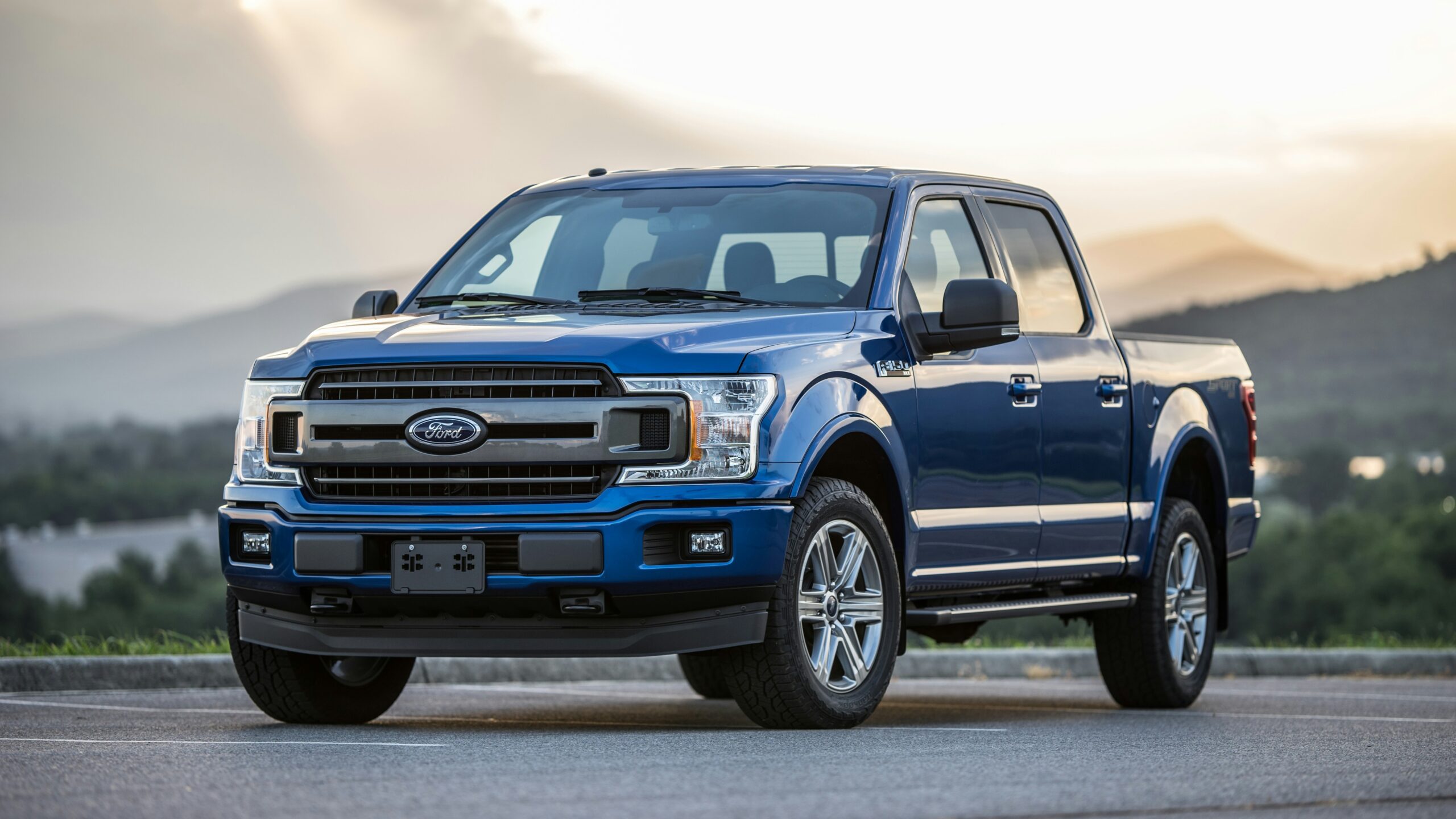
Ford is betting that the next revolution in cars will not start with a battery or a screen, but with how the vehicle itself snaps together. The company is pouring billions into a midsize electric truck, targeting a roughly $30,000 price, built from large modules that fit like flat-pack furniture rather than inching down a traditional line. The strategy is as much about reimagining factory work as it is about cutting sticker prices, and it arrives just as Ford retreats from its first generation of all-electric pickups.
The stakes are obvious: if Ford can make EVs cheap, profitable, and easy to build in multiple configurations, it could reset expectations for what an American electric truck looks like in small towns as well as big cities. If it cannot, the company risks repeating the story of the F-150 Lightning, a well-reviewed but money-losing halo product that never quite matched its hype with sustainable economics.
The “assembly tree” that snaps together a $30,000 truck
At the core of Ford’s plan is a new “universal” EV platform that treats the truck like a set of large building blocks instead of thousands of tiny parts. Executives describe a structure with roughly 20 percent fewer components than a typical vehicle, organized into major modules for the underbody, cabin, and powertrain that can be joined in different combinations. The goal is a midsize, four-door electric pickup scheduled to launch in 2027 at about $30,000, a price point that would undercut many current compact trucks, let alone battery-powered ones.
To make that math work, Ford is replacing the century-old moving line with what engineers call an “assembly tree,” where those big modules are built in parallel and then married near the end of the process. Company materials describe the universal platform as a flexible base for a whole family of vehicles, not just one truck, which spreads development costs and lets factories switch between variants with less downtime. In theory, this is the EV equivalent of a smartphone maker using one motherboard across multiple models, then changing only the casing and a few key features.
Ford is pairing that architecture with lithium iron phosphate packs produced through new U.S. supply chains, a move the company frames as both a cost play and a political one. Official statements describe a simple, efficient ecosystem that leans on domestic LFP batteries and software-defined controls to keep prices low while still enabling over-the-air upgrades. That combination, if it works, could make the truck feel more like a configurable device than a fixed appliance, with owners in farm country choosing different software and hardware bundles than buyers in dense suburbs.
Reinventing Ford’s own factory floor
The more radical change may be inside Ford’s plants, where the company that once defined the moving line is now trying to walk away from it. Analysts who have toured the system describe the break with 100 as a shift from workers chasing vehicles down a conveyor to teams stationed at cells, pulling in modules as needed. Ford says this “assembly tree” could build the new midsize electric pickup 40% faster than current methods, a figure that, if realized, would ripple through labor planning, training, and plant footprints.
Company briefings emphasize that the new production system is designed to be less physically punishing and more predictable for employees, with more in-and-out work instead of constant motion. Internal descriptions of how Ford is reinventing assembly highlight ergonomic gains and the potential for higher-skilled roles around robotics and quality control. That sounds promising, but it also implies a significant retraining effort and a different mix of jobs, especially in legacy plants that were never designed for modular EVs.
The geographic politics are just as important as the process charts. Ford has framed the program as a roughly $5 billion bet on American manufacturing, including new investments in Kentucky that state leaders such as Andy Beshear have touted as among the largest on record, tied to a wave of new U.S.-based suppliers. That network is meant to shorten logistics chains and stabilize costs, but it also gives Ford a talking point in a political climate where domestic content and factory jobs are central to any EV pitch.
From Lightning retreat to rural EV opportunity
All of this is unfolding in the shadow of Ford’s decision to end production of the F-150 Lightning, a move that has fueled claims the company is backing away from full battery vehicles. Ford has taken a $19.5 billion charge tied to a restructuring that shifts emphasis toward hybrids and commercial vans, and reporting notes that the all-electric F-150 Lightning was well received but never profitable. Critics see a retreat. I see a pivot: Ford is abandoning an expensive, full-size showcase in favor of a smaller, cheaper platform that might actually scale.
More From The Daily Overview
*This article was researched with the help of AI, with human editors creating the final content.

Grant Mercer covers market dynamics, business trends, and the economic forces driving growth across industries. His analysis connects macro movements with real-world implications for investors, entrepreneurs, and professionals. Through his work at The Daily Overview, Grant helps readers understand how markets function and where opportunities may emerge.

