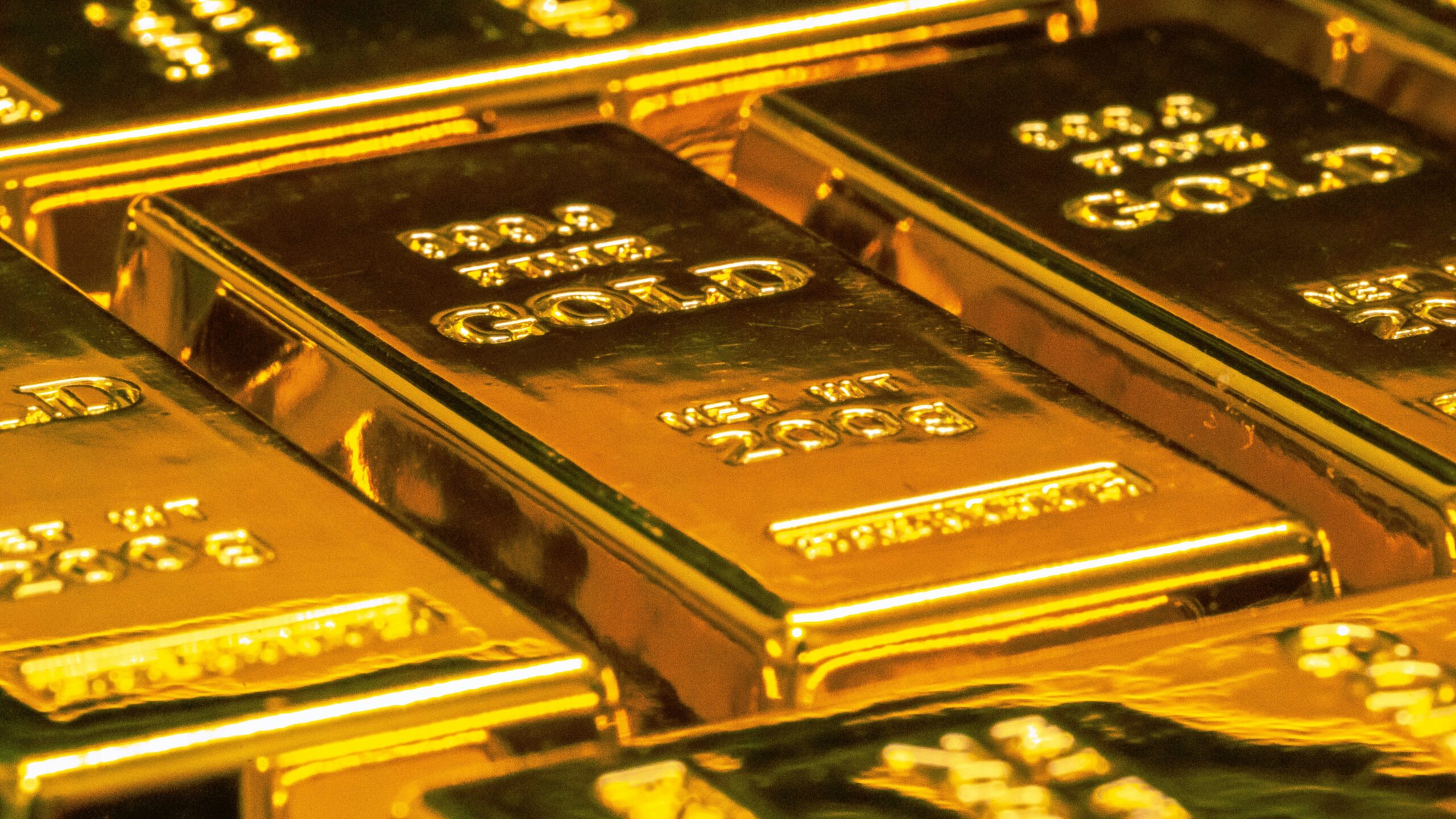
Gold has smashed through the psychological ceiling of $5,000, while silver has vaulted into triple digits, turning a once sleepy corner of the market into the most fevered trade of early 2026. The move has the hallmarks of both a rational flight to safety and a speculative blow‑off, with safe‑haven buyers, central banks, and momentum traders all piling in at once. The question now is whether this surge marks a durable repricing of precious metals or the late stages of a mania that will leave latecomers nursing heavy losses.
To answer that, I am looking at what is actually driving prices, how deep the demand really runs, and what history tells us about similar spikes. The evidence points to powerful structural forces behind gold’s breakout, but silver’s “gold on steroids” behavior looks far more vulnerable to a sharp reversal if sentiment turns.
From safe haven to front‑page frenzy
Gold’s move is not just another incremental high, it is a regime shift. Benchmark prices have vaulted above $5,000 per ounce for the first time, with some reports noting intraday spikes as high as $5,111 per ounce. Silver has followed with its own breakout, crossing $100 and then surging beyond $110 as the rally broadened. What began as a classic response to geopolitical anxiety and monetary uncertainty has now spilled into the mainstream, with both metals setting records in rapid succession.
The backdrop is a world grappling with elevated tensions and doubts about the long‑term value of fiat currencies. Analysts point to a mix of geopolitical stress, expectations of Federal Reserve rate cuts, and persistent inflation worries as key reasons why gold prices surged above $5,000 per ounce. At the same time, silver has been pulled higher not only by its traditional role as gold’s high‑beta cousin but also by its importance to green technologies and electronics, which has tightened physical supply just as investment demand has exploded.
Trump risk, central banks and the new gold floor
Politics have poured fuel on this fire. Gold futures have “smashed” $5,000 as investors react to what traders describe as “Trump risks,” with the current president’s warnings about the United States and its adversaries amplifying safe‑haven demand. Spot silver has ridden the same wave, jumping 4.5% to $107.75, briefly touching $108.60 as traders scrambled for protection. The political backdrop has turned every flare‑up in Washington or abroad into another catalyst for metals buying.
Behind the headlines, structural buyers are quietly reshaping the market. Analysts highlight sustained central bank purchases, with one detailed breakdown noting that official institutions have been adding nearly 6 hundred tons of gold annually, helping to drive prices to $5,081 while silver trades around $110. Strategists at one major bank argue that, while the rally will not be linear, the forces behind this “rebasing” of gold include de‑dollarization, long term inflation hedging, and the metal’s role as insurance in times of geopolitical stress.
Fiscal fears, rate cuts and the inflation hedge story
Monetary policy and government finances are the other big engines of this move. Economists warn that rising debt and heavy government spending in the United States could reignite inflation, pushing investors toward hard assets. Some forecasts now openly suggest that gold could reach $6,000 by year end if fiscal worries intensify and the dollar weakens further. Expectations that the Federal Reserve will cut interest rates again this year, as highlighted in coverage of gold’s move through $5,000, have reinforced the appeal of non‑yielding assets like bullion.
Market technicians note that gold has been grinding higher for months, with multiple record highs and all‑time weekly closes above $4,000 setting the stage for the latest breakout. Forecast models that look out to 2030 argue that the metal’s surge has been amplified by persistent geopolitical uncertainty, shifting monetary policies, and growing institutional interest, all of which have helped push prices to unprecedented levels. In that framework, $5,000 is less a spike than a new trading range, albeit one that could still see violent swings.
Silver, “gold on steroids,” and the squeeze narrative
If gold is being repriced, silver is being reimagined. Derivative flows and retail enthusiasm have turned it into what one research firm calls “gold on steroids”, with Investors now more obsessed with silver than with the artificial intelligence trade, according to Vanda and Citi. The metal has not only crossed $100 for the first time, it has blasted past $110 in what some traders are calling a “silver squeeze.” One detailed analysis argues that silver is the top performing major asset of 2026, with the current “silver squeeze” tightening physical availability and pushing prices toward $110 as gold trades around $5,081.
The industrial side of the story is just as important. Silver is critical for solar panels, electric vehicles, and electronics, and ongoing supply deficits have made each incremental ounce more valuable. One market commentary notes that these deficits are “given” in the current environment, helping to explain why silver has outpaced gold in percentage terms, while another report describes the January 2026 surge as a “moonshot” that has exposed the fragility of just‑in‑time inventories. Even Tesla boss Elon Musk has weighed in, warning on X that “this is not good” because silver is needed in many industrial processes, a concern echoed by analyst Tony Sycamore in coverage of the silver rally.
Mania or new normal?
Every bubble feels like a paradigm shift until it pops, and silver in particular has a history of brutal reversals. One review of past cycles notes that silver soared 144% in 2025, and that similar rallies have often been followed by crashes as new supply comes online and speculative demand evaporates, a pattern highlighted using data from the Wall Street Journal. Another analysis argues that silver crossing $125 looks increasingly likely as the 2026 “silver squeeze” tightens, and that such a move should be seen as a base case rather than an outlier, with the question “Will Silver cross $125?” framed as a realistic scenario. That kind of language is exactly what you tend to hear near peaks, when extrapolation replaces caution.
Gold looks more grounded, but it is not immune to air pockets. One detailed breakdown of the current move describes the rally above $5,000 as both “breathtaking” and “profoundly scary,” a nod to how stretched positioning has become. Another report notes that gold is trading just below $5,000 per ounce as momentum becomes “increasingly stretched,” even as central bank buying and tight physical supply continue to underpin the market. A separate analysis of why gold and silver have surged in 2026 points to several international events that have pushed both metals higher, reinforcing the idea that the current price is as much about fear as fundamentals, a point underscored in a review of Why Have Gold 2026.
For now, the mania has its own momentum. One detailed Q&A on the current spike notes that Jan, Why and Gold are the names on every trader’s lips as they debate whether bullion can reach $6,000 next and whether Silver can sustain triple digits. Another synthesis of the move argues that gold’s surge above $5,000 reflects a long term repricing of risk, not just a speculative blow‑off. The truth is likely somewhere in between: a genuine shift in how investors value gold as a hedge, layered with a speculative frenzy in silver that could unwind violently once the fear and excitement that launched this rally begin to fade.
More From TheDailyOverview
*This article was researched with the help of AI, with human editors creating the final content.

Grant Mercer covers market dynamics, business trends, and the economic forces driving growth across industries. His analysis connects macro movements with real-world implications for investors, entrepreneurs, and professionals. Through his work at The Daily Overview, Grant helps readers understand how markets function and where opportunities may emerge.

