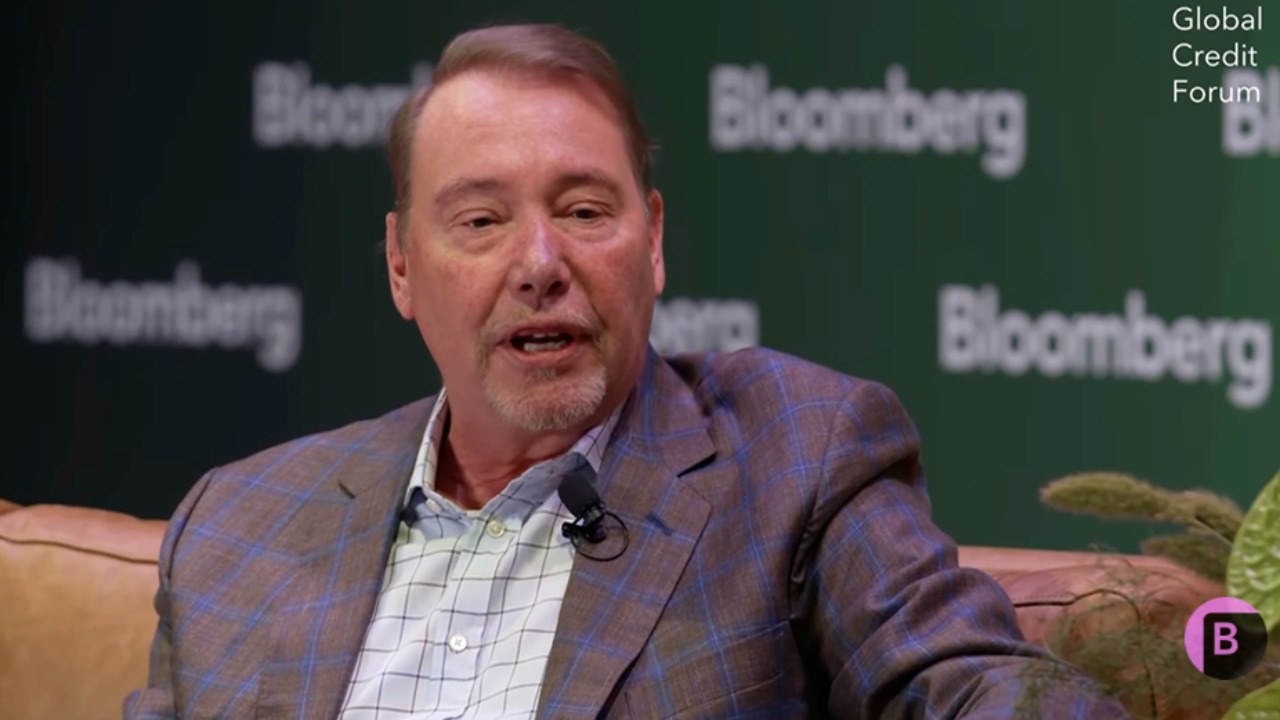
Jeffrey Gundlach is sounding an alarm that should feel uncomfortably familiar to anyone who remembers the run-up to the Great Recession. Instead of subprime mortgages, he argues, the weak link this time is a private credit boom built on what he calls “garbage lending,” and he is warning that the damage will not stay contained inside niche funds. I see his critique as a broader indictment of how risk has migrated from public markets into opaque corners of finance where yield-hungry investors are again trusting structures they do not fully understand.
Gundlach’s new crisis call and why it matters now
When a veteran bond investor with a history of calling major turns says the next financial crisis is already taking shape, I pay attention. Jeffrey Gundlach has been explicit that he thinks private credit will be the flash point of the next systemic shock, arguing that the structures and incentives around these loans echo the worst habits of the pre-2008 era. In his view, the problem is not just that risk has increased, but that it has been repackaged and sold in ways that obscure how fragile some of these borrowers really are, a pattern that should sound familiar to anyone who watched subprime mortgage securities unravel.
That warning has been sharpened in recent interviews in which Jeffrey Gundlach thinks private credit has taken on the same kind of role that subprime mortgage repackaging had in 2006. He is not alone in worrying about leverage and complexity, but he is unusually blunt in tying today’s private deals to yesterday’s collateralized debt obligations. I see his intervention as a challenge to the complacent narrative that private markets are inherently safer simply because they are insulated from daily trading and headline-driven volatility.
From “Bond King” to private credit skeptic
Gundlach’s critique carries weight because it comes from someone who has spent decades inside the fixed income machinery rather than sniping from the sidelines. As the founder and leader of DoubleLine, he built his reputation by navigating mortgage-backed securities before and after the housing bust, which gives him a granular sense of how lending standards can quietly erode when money is easy and investors are desperate for yield. When he now turns that same forensic lens on private credit, I read it as a sign that the market’s internal plumbing is once again starting to rattle.
On Nov 17, 2025, coverage of Key Takeaways highlighted how Jeffrey Gundlach, often described as a bond market veteran and “Bond King,” explicitly linked private credit to the next big financial crisis. In a separate appearance on Nov 17, 2025, the role of DoubleLine’s leader was underscored again when a video interview described the DoubleLine Capital CEO and founder Jeffrey Gundlach outlining why he sees private credit as the next big crisis for financial markets, a point he made while speaking to Bloomberg’s Joe Weisenthal and Tracy Alloway in a segment that can be seen in Capital CEO and. I view that consistency across formats as important: he is not floating a casual conference soundbite, he is building a sustained case that the industry’s current trajectory is unsustainable.
How “garbage lending” migrated from Wall Street to private funds
The phrase that has cut through Gundlach’s recent commentary is his description of a boom in “garbage lending,” which he argues has shifted from public bond markets into private credit vehicles. Before the Great Recession, he notes, the worst underwriting practices were visible in public securitizations that eventually blew up in full view of regulators and investors. Today, he says, similar low-quality loans are being made and packaged away from the spotlight, inside funds that promise steady returns but disclose far less about the underlying borrowers.
On Nov 18, 2025, reporting on Gundlach’s remarks explained that he believes the “garbage lending” that plagued public markets before the Great Recession has in recent years migrated into private credit structures, where it is harder for outsiders to track how standards are slipping and how exposures are concentrated, a point captured in coverage of Gundlach, Great Recession. I see that shift as crucial: when risky loans are tucked into private vehicles, the feedback loop that normally disciplines bad lending, such as widening credit spreads or falling bond prices, is muted. That can let problems grow larger before anyone is forced to recognize losses.
The $1.7 trillion question hanging over private credit
Scale is what turns a niche problem into a systemic one, and private credit is no longer a small corner of the market. Gundlach has stressed that this is not a boutique strategy for a handful of sophisticated institutions, but a sprawling ecosystem that now touches pensions, insurers, and wealthy individuals who have been told they are buying a smoother ride than public bonds. When I look at the numbers he cites, it is clear why he thinks the stakes are high enough to threaten broader financial stability.
In comments reported on Nov 17, 2025, Gundlach said he is especially worried about the rapid growth of private credit, describing it as a $1.7 trillion market that lends directly to companies outside traditional banks. When a market reaches that size, I see it as deeply intertwined with corporate funding, employment, and investment decisions across the economy. If even a fraction of that $1.7 trillion is tied up in loans that cannot be refinanced or repaid as interest rates stay high, the resulting losses will not be confined to a few aggressive funds, they will ripple through portfolios that were sold as conservative diversifiers.
Echoes of 2006: subprime trappings in a new wrapper
What makes Gundlach’s warning especially pointed is his insistence that private credit now exhibits the same “trappings” as subprime mortgage products did in 2006. He is not just drawing a loose analogy, he is arguing that the combination of complex structures, optimistic assumptions, and investor hunger for yield has recreated the conditions that preceded the last major crisis. From my perspective, the most troubling part of that comparison is the suggestion that investors are once again relying on models and intermediaries instead of doing the hard work of assessing borrower quality themselves.
On Nov 17, 2025, one detailed account of his remarks noted that Jeffrey Gundlach thinks private credit has taken on the same kind of role that subprime mortgage repackaging had back in 2006, a view that was highlighted in coverage that described how Follow Samuel, Brient reported his comments on the parallels between the two eras. I interpret that historical framing as a warning against complacency: just because the acronyms and legal structures have changed does not mean the underlying behavior is any less risky. If anything, the shift into private vehicles may make it harder for regulators and investors to spot the buildup of leverage until it is too late.
Speculation, yield hunger, and the mechanics of “garbage” deals
At the heart of Gundlach’s critique is his view that the private credit boom has become “incredibly speculative,” with lenders stretching terms and structures to win deals in a crowded field. When capital is abundant and competition is fierce, it becomes tempting to loosen covenants, accept optimistic projections, and rely on future refinancing to bail out today’s aggressive underwriting. I see that dynamic as the textbook recipe for “garbage lending,” where the primary goal is to put money to work rather than to be repaid in full and on time.
On Nov 17, 2025, one report quoted him saying that “the market is incredibly speculative and speculative markets always go to insanely high levels. It happens every time,” a line that captured his view that private credit is being driven more by momentum than by sober analysis of borrower fundamentals, as reflected in coverage of garbage lending. When I connect that observation to the broader growth of the asset class, I see a feedback loop in which rising inflows force managers to keep finding new deals, which in turn pushes them further down the quality spectrum. The longer that loop runs, the more painful the eventual adjustment is likely to be.
Why opacity in private markets magnifies systemic risk
One of the selling points of private credit has been its insulation from daily market swings, but Gundlach’s warnings highlight the flip side of that calm surface. When prices are not marked to market every day, losses can be slow to appear, and investors may not realize how much risk they are carrying until cash flows actually falter. I see that opacity as a key reason he believes the next crisis will emerge from private markets rather than from the more transparent public bond arena.
On Nov 17, 2025, a summary of his views emphasized that DoubleLine’s leader sees private credit as the next big crisis for financial markets, a point that was made explicitly when the DoubleLine Capital CEO and founder Jeffrey Gundlach described private credit as the likely source of the next major shock in the interview available through Jeffrey Gundlach. I interpret his focus on private structures as a warning that regulators and investors may be flying blind: without timely pricing and detailed disclosure, it is difficult to gauge how concentrated exposures are, how correlated borrowers might be, or how quickly liquidity could evaporate if redemptions spike.
Spillover risks for stocks, pensions, and everyday investors
Gundlach’s critique of private credit does not exist in isolation; he has also described the current equity environment as one of the “least healthy” stock markets of his career. When I put those views together, I see a broader concern that risk has been mispriced across asset classes, with investors crowding into both expensive stocks and opaque private loans in search of returns that may not be sustainable. If private credit cracks, the resulting loss of confidence could easily spill into public markets that are already stretched.
On Nov 17, 2025, reporting on his market outlook noted that Gundlach sees one of the least healthy stock markets of his career and tied that concern directly to his worries about the rapid growth of the $1.7 trillion private credit market, as described in coverage of Gundlach. I see that linkage as a reminder that private credit is not a sealed compartment: pensions that allocate to private funds also hold public equities, insurers that buy private loans also own corporate bonds, and wealthy individuals who have embraced private strategies often have significant stock portfolios. A shock in one corner of the market can quickly force selling in another as investors scramble to raise cash.
What Gundlach’s warning means for risk management now
For investors and policymakers, the practical question is how to respond to Gundlach’s alarm without overreacting to a single voice, however prominent. I think his message is less about predicting an exact timing for the next crisis and more about urging a reassessment of how much faith has been placed in private structures that have not yet been tested by a full credit cycle. If “garbage lending” is indeed embedded in a significant slice of private credit, then stress testing, transparency, and more conservative assumptions about recovery values should be front and center.
On Nov 17, 2025, one report captured how Gundlach sees a boom in “garbage lending” heading toward a bust, describing Jeffrey Gundlach, one of Wall Street’s bond kings, as warning that the current wave of speculative private deals is likely to end badly, a view summarized in coverage of Wall Street. I take that as a call for investors to look past the smooth return streams and marketing gloss that often accompany private credit offerings and instead ask hard questions about underwriting standards, leverage, and exit strategies. If the last cycle taught anything, it is that ignoring early warnings from seasoned credit analysts can be far more costly than trimming exposure a bit too soon.
More From TheDailyOverview
- Dave Ramsey warns to stop 401(k) contributions
- 11 night jobs you can do from home (not exciting but steady)
- Small U.S. cities ready to boom next
- 19 things boomers should never sell no matter what

Grant Mercer covers market dynamics, business trends, and the economic forces driving growth across industries. His analysis connects macro movements with real-world implications for investors, entrepreneurs, and professionals. Through his work at The Daily Overview, Grant helps readers understand how markets function and where opportunities may emerge.

