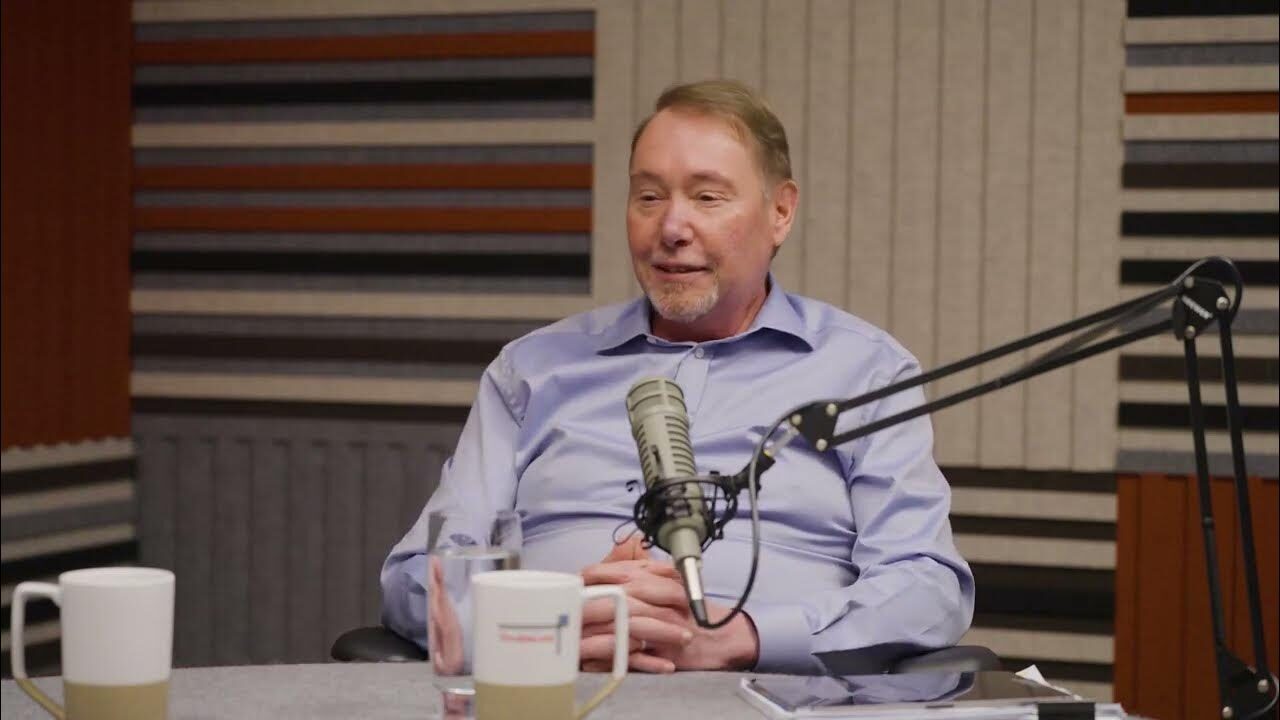
Jeffrey Gundlach is once again sounding like the skunk at Wall Street’s garden party, arguing that in late 2025 almost every major asset class has been bid beyond its fundamentals. From stocks and bonds to private credit and the dollar itself, the veteran bond investor is warning that investors are paying too much for too little prospective return. His critique is not just about stretched valuations, it is about what those prices reveal about a market psychology he now openly describes as a mania.
When someone with Gundlach’s track record says most assets are mispriced, I read it as a call to interrogate what is driving this cycle and how fragile it might be. His recent interviews and appearances sketch a coherent, if unsettling, picture of an economy propped up by cheap money’s afterglow, a political system running enormous deficits, and a financial industry that has migrated risk into corners that feel new but rhyme with past crises.
The bond king’s sweeping overvaluation call
Gundlach has never been shy about bold macro calls, but his latest message is unusually sweeping: he now argues that almost all financial assets are too expensive relative to the risks they carry. In a recent conversation framed around the idea that “Stocks are overpriced. Bonds are overpriced,” he went so far as to say that almost all financial assets are now overvalued, a formulation that leaves little room for safe havens in the traditional portfolio mix. That view is consistent with his long running skepticism about the sustainability of low yields and high equity multiples in an environment where underlying growth and productivity do not appear to justify such optimism.
He has sharpened that critique in recent days, telling investors that the current pricing of markets reflects a kind of collective denial about risk rather than a sober assessment of future cash flows. In one detailed interview, he argued that both stocks and bonds are priced as if the cost of capital will remain benign even as fiscal deficits balloon and central banks retreat from emergency policies, a tension he believes will eventually have to resolve in favor of higher yields and lower valuations. That is why he has been willing to say, in plain language, that almost all financial assets are now overvalued, not just a handful of speculative corners.
One of the “least healthy” stock markets of his career
Gundlach’s broad valuation warning is rooted in a specific judgment about equities, which he now describes as among the weakest he has seen in terms of underlying quality. As Jeffrey Gundlach, CEO of DoubleLine Capital LP, he has lived through multiple booms and busts, yet he recently told CNBC on the floor at the New York Stoc that this is one of the “least healthy” stock markets of his career. What he means by unhealthy is not simply that indexes are high, but that leadership is narrow, speculative fervor is concentrated in a few themes, and many investors appear to be buying because prices have gone up rather than because they see durable earnings power.
That diagnosis lines up with his broader concern that the equity market has become a momentum machine, heavily influenced by flows into passive vehicles and thematic trades rather than fundamental analysis. He has pointed to the way investors crowd into the same mega cap names and fashionable sectors, particularly around artificial intelligence, as evidence that the market’s internal plumbing is more fragile than headline levels suggest. In his telling, the fact that benchmarks can look strong while he still sees one of the least healthy environments of his career is precisely the kind of divergence that tends to precede sharp repricings rather than gentle mean reversion.
From “garbage lending” to private credit boom
Equities are only one part of Gundlach’s worry list. He has been increasingly vocal about what he sees in credit markets, especially the rapid expansion of nonbank lending. In a pointed warning delivered in mid November, he described parts of the private lending boom as “Garbage Lending” as Private Credit Booms, arguing that the search for yield has pushed capital into deals that would not pass muster in a more disciplined environment. He linked that trend to looser underwriting standards, weaker covenants, and a willingness to finance borrowers that public markets might reject, all of which can look fine until the cycle turns.
His critique is not that private credit is inherently flawed, but that the speed and scale of its growth have outpaced the risk controls and transparency that typically develop over time. When investors pour money into funds that promise equity like returns with bond like safety, managers face intense pressure to put that capital to work, which is how “garbage lending” can creep into portfolios that are marketed as conservative. Gundlach’s concern is that this shadow banking system has become large enough that a wave of defaults or downgrades could reverberate back into public markets, especially if it coincides with stress in more traditional corporate debt.
Debt, the dollar, and the next financial crisis
Behind Gundlach’s asset specific worries sits a larger macro story about debt and currency. He has been blunt that the United States is running an experiment with its balance sheet, warning that the combination of a massive U.S. national debt and soaring interest expenses is creating what he calls a setup for the next systemic shock. In one recent interview, he framed it starkly as a moment “When the impossible is about to happen”, suggesting that investors have grown too comfortable assuming that the government can always roll over its obligations without consequence.
That fiscal backdrop feeds directly into his skepticism about the dollar as a long term store of value. He has argued that investors who assume the greenback will remain unchallenged are underestimating how sustained deficits and political polarization can erode confidence in a currency. In a pointed comment picked up in mid November, he said Investors will lose money ‘betting on the dollar as a dominant asset’, a line that encapsulates his view that the traditional “risk free” anchor of global portfolios is less secure than it appears. If he is right, the repricing he anticipates would not be confined to a single market, it would involve a broad rethink of what constitutes safety.
Market mania, AI euphoria, and the appeal of real assets
Gundlach’s language has grown more vivid as he tries to capture the psychology he sees in markets. He now says there is “no doubt” that we’re in a mania, pointing to the enthusiasm around artificial intelligence and other technology themes as emblematic of a broader speculative fever. In his view, investors are extrapolating early successes into near certain dominance, paying prices for some AI linked companies that assume flawless execution and permanent competitive moats. That kind of narrative driven investing can persist for a while, but history suggests it rarely ends with everyone getting out at the top.
In response, he has been steering attention toward assets that are less dependent on optimistic stories about the future and more grounded in physical scarcity. He has highlighted gold in particular as a way to hold something that is not someone else’s liability, arguing that in a world of stretched valuations and rising geopolitical risk, the metal’s lack of counterparty exposure is a feature, not a bug. In one detailed discussion of this shift, he described gold as a kind of “real asset class” with enduring value, contrasting it with financial claims that depend on the continued willingness and ability of others to pay.
Radical portfolio shifts and what investors can actually do
Gundlach is not content to diagnose problems, he is also urging investors to rethink how they allocate capital before the cycle turns. He has spoken of the need for a Radical portfolio shift, arguing that the traditional 60/40 mix of stocks and bonds is poorly suited to a world where both sides of the ledger may be overpriced at the same time. In his view, clinging to that template out of habit is a recipe for disappointment if inflation proves sticky, yields rise, or equity multiples compress from today’s levels. He has suggested that investors consider higher allocations to real assets, more flexible fixed income strategies, and a greater emphasis on liquidity so they can take advantage of dislocations when they arrive.
That advice dovetails with his repeated assertion that Stocks, bonds – pretty much everything is overvalued, a phrase that captures both his frustration with complacency and his belief that the next decade will not look like the last. For individual investors, the practical takeaway is not to panic, but to interrogate the assumptions baked into their portfolios. If returns from a simple index fund and a generic bond ETF are likely to be lower and more volatile than the recent past, then it may be time to think more deliberately about diversification, risk management, and the role of assets that do not move in lockstep with the mainstream benchmarks.
More From TheDailyOverview
- Dave Ramsey warns to stop 401(k) contributions
- 11 night jobs you can do from home (not exciting but steady)
- Small U.S. cities ready to boom next
- 19 things boomers should never sell no matter what

Elias Broderick specializes in residential and commercial real estate, with a focus on market cycles, property fundamentals, and investment strategy. His writing translates complex housing and development trends into clear insights for both new and experienced investors. At The Daily Overview, Elias explores how real estate fits into long-term wealth planning.