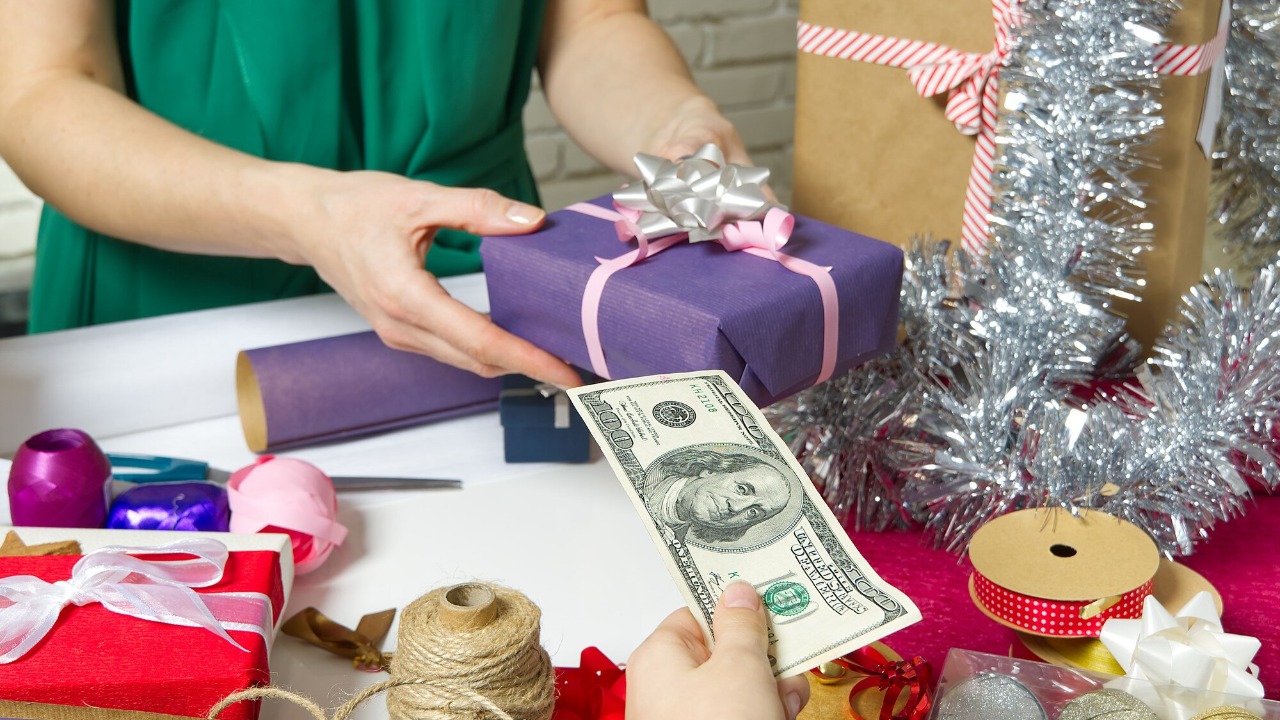
Across the country, families are quietly shrinking their holiday wish lists, trading big-ticket presents for smaller gestures and, in some cases, skipping gifts altogether. Household budgets were already stretched by a broad affordability crisis, but this year the combination of higher prices and targeted trade policies has turned December into a stress test for the middle class. The result is a season where gift budgets are collapsing, and President Donald Trump’s economic choices are a central part of the story.
Instead of the usual end-of-year splurge, many shoppers are treating holiday spending like another bill to be triaged, not a moment of indulgence. I see a pattern emerging in the data and in the politics: inflation and tariffs are colliding with stagnant paychecks, and voters are increasingly connecting that pain to the president who promised to make everything more affordable.
Holiday gifts are suddenly luxury items
The most immediate pressure point is simple: the presents themselves now cost far more than they did just a year ago. A detailed analysis of popular items finds that typical holiday gifts are about 26 percent more expensive under President Donald Trump, a jump that turns once-routine purchases like headphones, tablets, and branded toys into borderline luxury buys for many families. That same research notes that the spike is not just an abstract index shift, it is showing up in the checkout totals that parents see when they try to keep up with their kids’ expectations, and it is backed by New polling from Data for Progress that documents how sharply those costs have risen.
Other breakdowns of the holiday basket show the same pattern, with specific categories moving even faster than the headline number. A column from Washington, D.C. notes that as Americans head into the season, tariffs linked to Trump’s trade agenda have pushed up the price of electronics, toys, and even midrange accessories, with some items like watches increasing by 8 percent in a single year. That analysis, published by the Center for American Progress, ties those jumps directly to the tariff schedule the administration has chosen, not to some mysterious seasonal quirk.
Americans are slashing gift budgets to cope
Faced with those price tags, shoppers are not simply absorbing the hit, they are cutting back. A survey headlined “More Than Half of Americans Plan to Spend Less on Gifts This Holiday Season” finds that a majority of respondents intend to trim their gift budgets, citing “High Prices and Sinking Prospects” as the main reasons. The same polling, which carries the full title “More Than Half of Americans Plan to Spend Less on Gifts This Holiday Season,” reports that Americans blame Trump and his tariffs for making it easier to blow a holiday budget, a rare case where economic data and political accountability are spelled out in the same chart.
Another national snapshot, titled “Americans Say They Can’t Afford Holiday Gifts Under Billionaire Trump,” underscores how personal the squeeze has become. In that report, writer Janna Brancolini describes respondents who say they simply cannot afford the kind of holiday giving they managed when they felt the economy was in good shape, and the framing of “Americans Say They Can’t Afford Holiday Gifts Under Billionaire Trump” captures the resentment that builds when a president’s personal wealth is contrasted with voters’ shrinking shopping lists.
Inflation is the backdrop, but tariffs are the accelerant
To understand why gift budgets are buckling now, it helps to zoom out to the broader inflation picture. Official figures show that in September 2025, prices had increased by 3 percent compared to September 2024, according to the 12‑month percent change in the consumer price index for all goods and services in the United States. That steady climb, documented in a Statista chart on the monthly inflation rate, means families are paying more for everything from groceries to gas before they even think about presents.
Breakdowns of what is driving that inflation show that the biggest culprits over the past year have been housing and medical care, with smaller contributions from other goods and services. A detailed answer to the question “What are the biggest drivers of inflation in the past year?” notes that from September 2024 to September 2025, those categories did the most to push up the overall index, leaving households with less room in their budgets for discretionary spending like holiday gifts even before tariffs are layered on top.
Trump’s economic choices are magnifying the pain
Inflation alone would be enough to make December feel tighter, but Trump’s own policies are amplifying the strain. Long before this holiday season, a group of Nobel laureates warned that his economic plans, particularly on tariffs, taxes, and immigration, would worsen inflation rather than tame it. In a widely cited letter, “The Nobel” economists said that “nonpartisan researchers” predict his approach would push prices higher and undermine a host of other benefits, a warning that has been echoed by analysts like Mark Zandi, the chief economist at Moody’s Analytics, whose concerns are summarized in an assessment of how Trump’s economic plans would worsen inflation.
At the same time, there is an active debate over how much of the current price spike can be pinned directly on tariffs. One detailed breakdown of the August 2025 inflation report argues that tariffs are not the primary cause of higher prices, pointing instead to housing, services, and food supply shocks as the main drivers. That analysis, titled “Tariffs Are Not Causing Inflation, Breaking Down August CPI,” stresses that while tariffs matter for specific goods, they are not the sole villain behind the overall inflation rate, a nuance that matters when assigning blame but does not erase the targeted impact on holiday staples.
Tariffs are hitting the holiday aisle directly
Where tariffs do bite, they bite hard, and the holiday aisle is one of the clearest examples. A widely circulated study finds that holiday gifts are 26 percent more expensive this year thanks to tariffs, with some categories like games and toys facing increases of 32 percent versus last Christmas. Those figures, which underpin a report on how holiday gifts are 26 percent more expensive this year, show how a policy tool often discussed in abstract geopolitical terms is now showing up in the price of a Lego set or a Nintendo Switch.
International coverage has put a similarly sharp point on the impact. One analysis bluntly declares “Goodbye to cheap Christmas in the United States,” calculating that Donald Trump’s tariffs are adding an extra $1,200 per household and listing the Christmas gifts that will be most affected. That piece, which warns that Christmas gifts that will be most affected include electronics, clothing, and toys that are typically given as a gift, makes clear that the policy is not just a negotiating tactic with foreign governments, it is a direct surcharge on American holiday traditions.
Voters are connecting the dots between policy and their tree
As the bills pile up, public opinion is shifting. New polling shows that Americans are growing more pessimistic about the nation’s economy as President Donald Trump oscillates between calling the affordability crisis a “hoax” and insisting that conditions are improving. Analysts note that Americans are turning on Trump as his promises to fix the economy fall flat, with one summary explaining that Americans are growing more pessimistic precisely because their lived experience at the checkout counter does not match the president’s rhetoric.
Other analysts have gone so far as to label the tariff burden a “Christmas tax,” arguing that this holiday season Americans are not just paying for gifts, they are paying a surcharge on nearly everything under the tree. One policy brief calculates that Trump’s trade moves are forcing families to pay 10 to 15 percent more this year for a wide range of imported goods, describing how Americans are paying more this holiday season thanks to what it calls Trump’s Christmas tax, a phrase that captures how directly policy choices are colliding with family rituals.
Uneven impacts, but a shared sense of strain
Not every product is affected equally, and that unevenness is part of what makes the current landscape so confusing for shoppers. Reporting on U.S. tariffs notes that along with the unpredictable tariff schedule, stubborn inflation and weak hiring have shaken consumer confidence in the U.S. economy, even as some categories remain relatively insulated. The same account explains that Along with the unpredictable tariffs, prices for games and toys have jumped more than others, which helps explain why parents feel the pinch more acutely than adults who might be cutting back on their own purchases.
Trump himself has acknowledged that “inflation is back,” but he has tried to pin the blame on Biden-era spending rather than on his own policies. Economic coverage of that argument notes that Trump may be right that the Biden administration spent too much at the wrong time, but economists agree that alone did not cause inflation to spike and that it certainly is not the only factor keeping prices elevated now. Analysts warn that Trump’s current policy mix may make the problem worse, a point underscored in a CNN analysis of Trump, Biden, and inflation that situates the holiday crunch inside a longer arc of policy choices and political messaging.
Put together, the data and the lived experience point in the same direction. Inflation has eroded household purchasing power, housing and medical costs are eating up more of every paycheck, and Trump’s tariffs have turned the toy aisle into a case study in how trade wars filter down to everyday life. As Americans cut back, skip gifts, or lean on buy now, pay later apps just to keep something under the tree, they are not only feeling the squeeze, they are increasingly assigning responsibility to the president whose policies helped make this the most expensive Christmas in recent memory.
More From TheDailyOverview

Cole Whitaker focuses on the fundamentals of money management, helping readers make smarter decisions around income, spending, saving, and long-term financial stability. His writing emphasizes clarity, discipline, and practical systems that work in real life. At The Daily Overview, Cole breaks down personal finance topics into straightforward guidance readers can apply immediately.

